
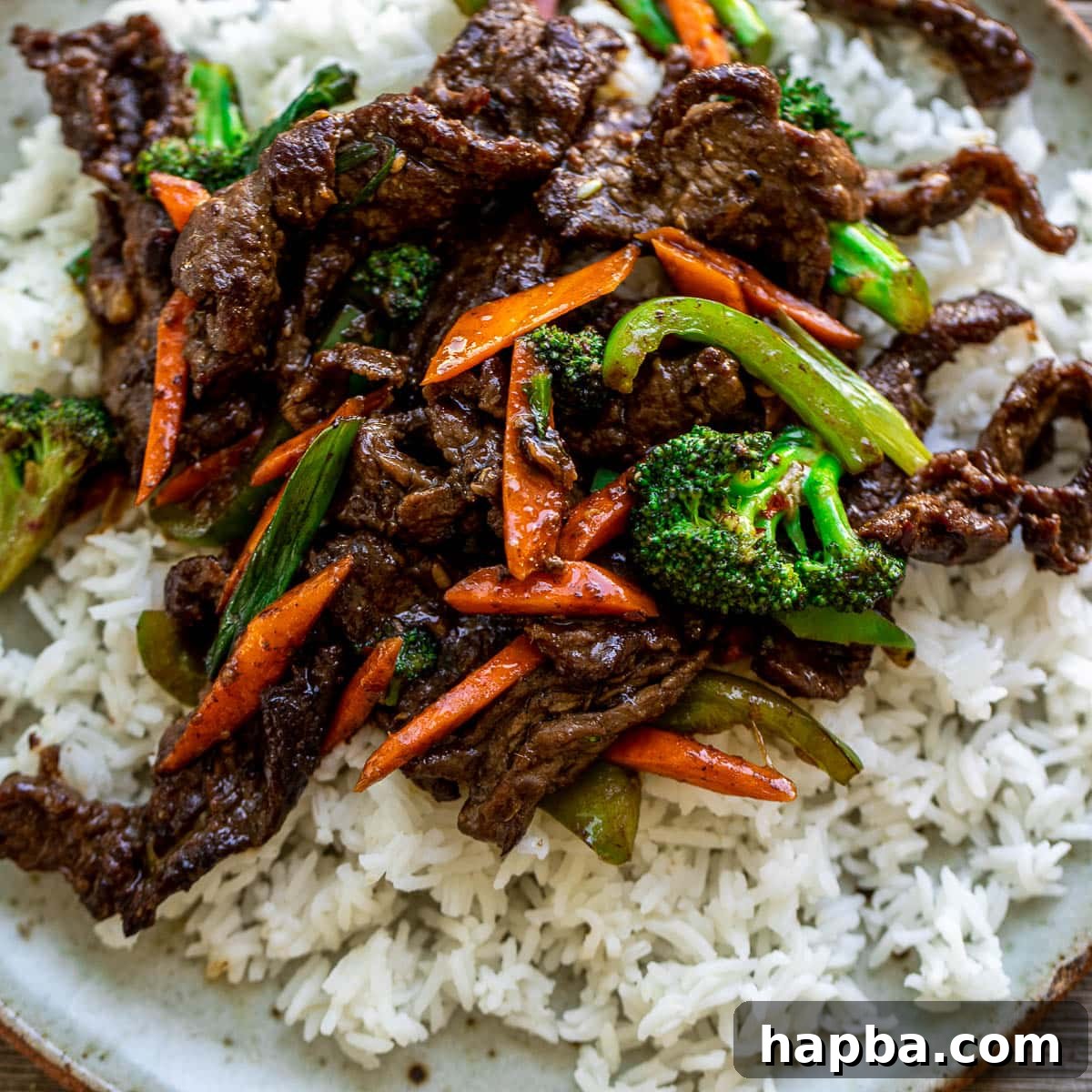
Welcome to your new favorite weeknight dinner! This Easy Beef and Vegetable Stir Fry is a culinary delight, bursting with vibrant flavors and fresh textures, all while being incredibly simple to prepare. Imagine a satisfying meal on your table in just 30 minutes – faster than takeout and undeniably healthier. Perfect for busy evenings, this recipe combines tender strips of beef with crisp, colorful vegetables in a savory, aromatic sauce that will have everyone asking for seconds. Get ready to transform your dinner routine with this ultimate quick cooking solution!
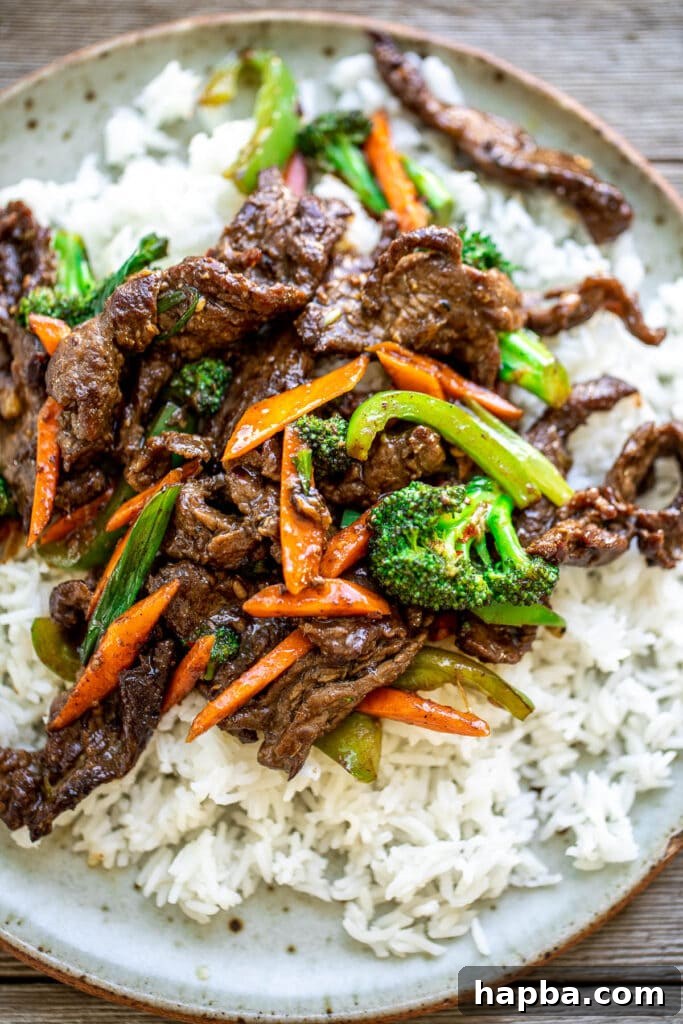
The beauty of stir-frying lies in its efficiency. While your rice or noodles are cooking on one burner, you can have this entire beef and vegetable masterpiece ready to go on another. It’s a synchronized cooking experience that makes preparing a wholesome meal surprisingly stress-free. If you love quick and satisfying Asian-inspired dishes, you’ll also adore our Easy Chicken Stir Fry and our hearty Steak Fried Rice.
This Beef and Vegetable Stir Fry isn’t just easy; it’s also incredibly versatile. It’s an ideal recipe for utilizing whatever fresh vegetables you have on hand in your fridge, making it a sustainable and budget-friendly option. Whether you’re a seasoned chef or a beginner in the kitchen, this easy dinner recipe is designed to be a repeated success, guaranteeing a flavorful and nutritious meal for your family time and time again.
Table of Contents
- Why This Stir Fry is a Must-Try
- The Essential Ingredients for Your Perfect Beef Stir Fry
- Mastering the Art of Stir-Frying: Step-by-Step Guide
- Customizing Your Stir Fry: Substitutions and Variations for Every Taste
- Essential Equipment for Stir Fry Success
- Expert Tips for the Ultimate Stir Fry
- Serving and Storage Suggestions
- Frequently Asked Questions (FAQs)
- Watch How To Make It
- Beef and Vegetable Stir Fry Recipe Card
Why This Stir Fry is a Must-Try
Beyond its incredible speed, this beef and vegetable stir fry offers a myriad of reasons to become a staple in your meal rotation:
- Unbeatable Flavor: A harmonious blend of savory soy sauce, pungent garlic, spicy ginger, and rich sesame oil creates a deeply satisfying flavor profile.
- Nutrient-Packed: Loaded with lean protein from the beef and a generous helping of colorful vegetables, it’s a balanced meal that nourishes your body.
- Healthy & Wholesome: Unlike many processed convenience foods, this homemade stir fry allows you to control the quality of ingredients and minimize unhealthy additives.
- Highly Customizable: Don’t have broccoli? Use snap peas! Not a fan of bell peppers? Try bok choy. The flexibility to adapt to your pantry and preferences is unmatched.
- Impressively Quick: From prep to plate in approximately 30 minutes, it’s the ideal solution for those hectic weeknights when time is of the essence.
- Family Favorite: Its universally appealing flavors and textures make it a hit with both adults and children, often encouraging even picky eaters to enjoy their vegetables.
The Essential Ingredients for Your Perfect Beef Stir Fry
Crafting a truly memorable stir fry begins with selecting the right ingredients. Here’s a closer look at what you’ll need to bring this Beef and Vegetable Stir Fry to life, along with some insightful tips for each:
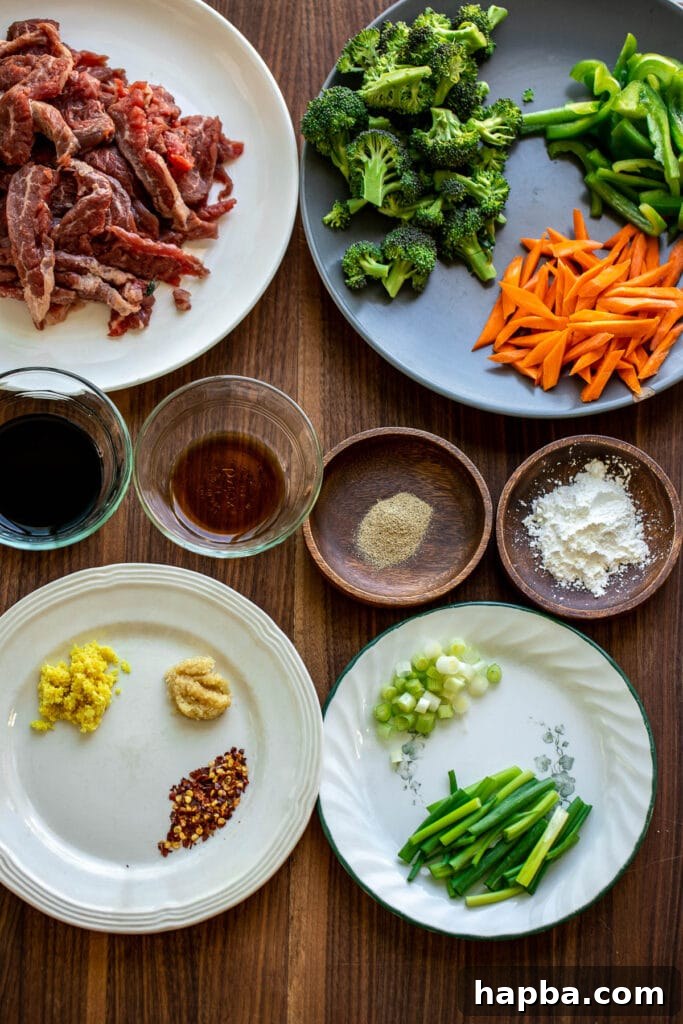
- Beef: The star protein!
- Recommended Cuts: Flank steak or chuck roast are excellent choices for stir-frying due to their robust flavor and texture when sliced thinly. Skirt steak or sirloin can also work.
- Pre-cut Options: Many grocery stores offer pre-cut “stir fry beef” which saves on prep time.
- Butcher’s Tip: Don’t hesitate to ask your butcher to slice the beef into thin strips for you; they often have specialized equipment for this.
- Freezing for Easy Slicing: For perfectly thin strips, partially freeze the beef for about 20-30 minutes before slicing. It makes the meat much firmer and easier to cut against the grain.
- Corn Starch: A crucial ingredient for two reasons:
- Velveting: A small amount tossed with the beef before cooking tenderizes it and creates a silky texture, a classic Chinese cooking technique.
- Thickening Agent: Later, it’s used to create a glossy, thick sauce that beautifully coats the beef and vegetables.
- Black Pepper or White Pepper: For a foundational layer of aromatic spice. White pepper is traditional in many Asian dishes for its subtle heat without visible flecks.
- Soy Sauce: The cornerstone of our savory stir fry sauce. Use a good quality regular or low-sodium soy sauce.
- Olive Oil: Used for stir-frying. Any neutral-tasting, high smoke point oil like peanut oil, sunflower oil, canola oil, or grapeseed oil will also work beautifully.
- Garlic and Ginger: The aromatic backbone of almost any great stir fry. Freshly minced garlic and grated ginger are essential for their pungent, warm, and fragrant notes.
- Green Onions (Scallions): Add a fresh, mild oniony flavor and a vibrant pop of color. We’ll use the whites for sautéing and the green tops for garnish.
- Vegetables: For crunch, vital nutrients, and beautiful color.
- Classic Choices: Broccoli florets, matchstick carrots, and bell peppers (red, yellow, orange, or green) provide a fantastic mix of textures and vitamins.
- Other Ideas: Snow peas, snap peas, bok choy, mushrooms, asparagus, water chestnuts, baby corn, and bamboo shoots are all excellent additions.
- Sesame Oil: Added at the very end, a drizzle of toasted sesame oil provides a distinct nutty aroma and deep umami flavor that finishes the dish perfectly.
For precise measurements, refer to the detailed recipe card at the end of this post. And if you’re exploring other beef recipes, don’t miss our delicious Beef Shawarma Recipe and savory Beef Fried Rice!
Mastering the Art of Stir-Frying: Step-by-Step Guide
Stir-frying is a rapid cooking method that requires a bit of preparation (mise en place) but rewards you with incredible flavor and texture. Follow these steps for a perfectly executed Beef and Vegetable Stir Fry:
1. Preparing Your Beef for Maximum Tenderness
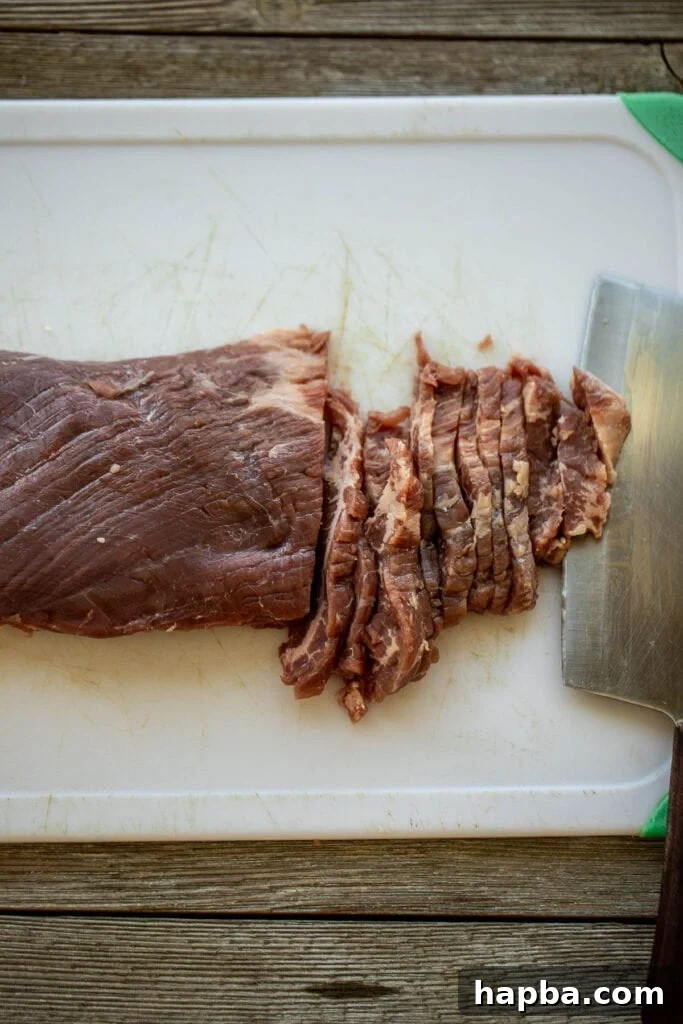
The secret to tender stir-fried beef lies in how you cut and season it. First, always slice the beef against the grain. To do this, look for the parallel lines of muscle fiber running through the meat, then cut perpendicular to them. For tougher cuts like flank steak, slicing it in half lengthwise along the grain first can make it easier to then cut thin strips against the grain. This shortens the muscle fibers, resulting in melt-in-your-mouth tenderness.
Once sliced, transfer the beef to a large mixing bowl. This is where we “velvet” the beef. Toss it with a portion of the cornstarch, soy sauce, and ground pepper. This mixture creates a protective coating that keeps the beef moist and tender during the high-heat cooking process, and also helps the sauce adhere later.
2. The Searing Technique: Achieving Perfect Beef
Heat a wok or large skillet over high heat until it’s smoking hot. Add your chosen neutral oil. When the oil shimmers, add the seasoned beef strips, ensuring they are spread in a single layer. Do not overcrowd the pan! Cooking in batches, if necessary, is crucial for a proper sear. Overcrowding lowers the pan’s temperature, steaming the beef instead of searing it, leading to tough meat. Let the beef sear undisturbed for a minute or two to develop a beautiful crust, then flip and sear the other side until all pieces are cooked through and browned. Remove the beef from the pan and set it aside.
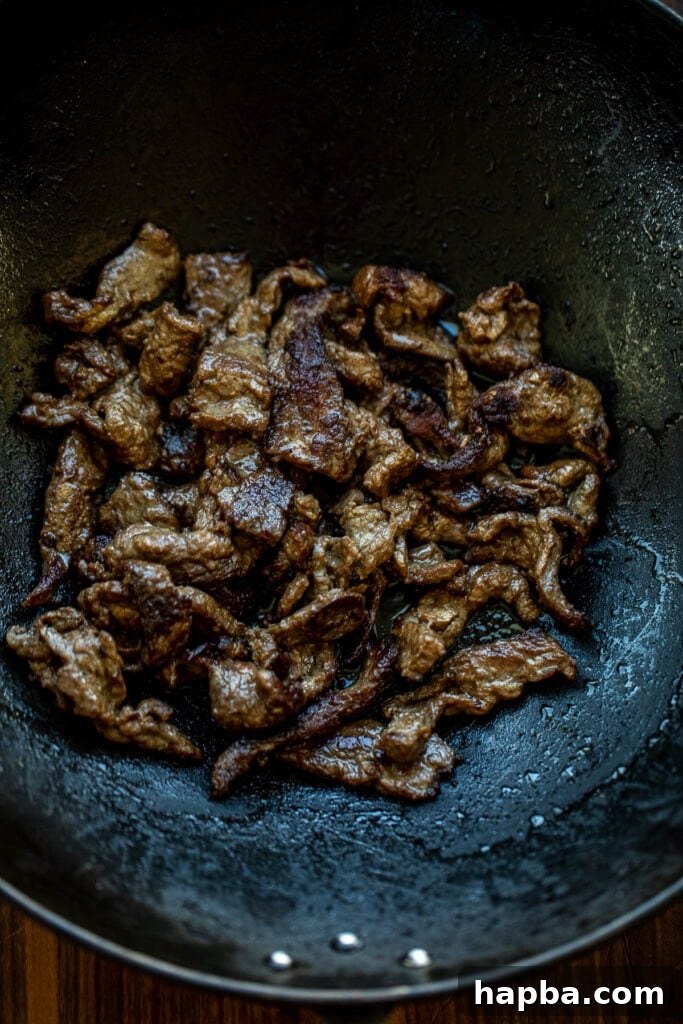
3. Sautéing Aromatics and Vegetables to Perfection
Add a little more oil to the hot pan. Begin by sautéing the whites of the green onions for about a minute until fragrant. Next, add the minced garlic and grated ginger, stirring constantly for another minute until their intoxicating aromas fill your kitchen. Be careful not to burn the garlic and ginger.
Now, it’s time for the vegetables. Always add harder vegetables first, allowing them more time to cook, before adding softer ones. For this recipe, start with carrots and broccoli, stirring constantly for about 2-3 minutes. Then, add the bell peppers and continue to stir-fry for another 1-2 minutes until all vegetables are crisp-tender – vibrant in color with a slight bite.
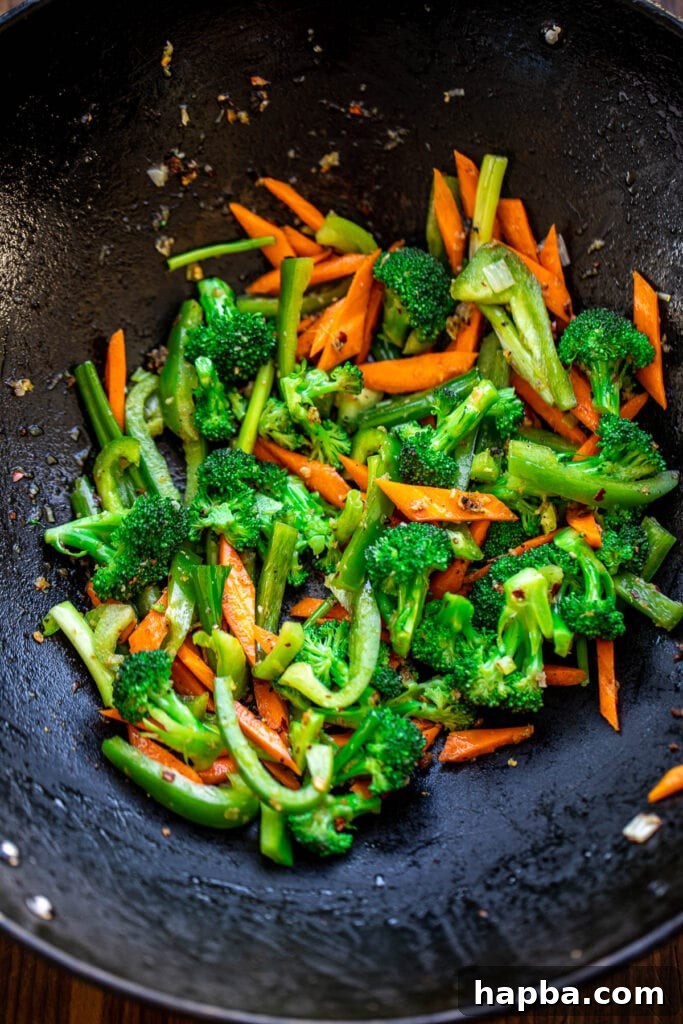
4. Bringing it All Together: The Flavorful Sauce
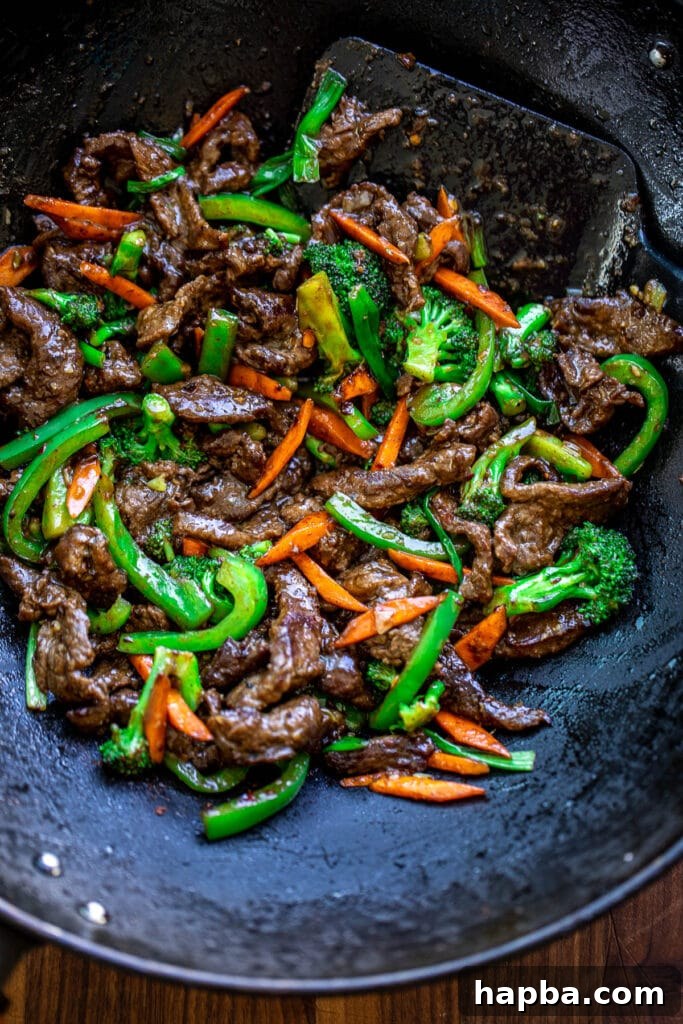
Return the seared beef to the pan with the vegetables. If there are any browned bits stuck to the bottom of the pan (fond), add a splash of water or broth to deglaze it, scraping them up with your spatula – these bits are packed with flavor! In a small bowl, whisk together the remaining cornstarch with a tablespoon of water to create a slurry. Pour this slurry into the pan, stirring constantly. The sauce will begin to thicken almost immediately, creating a glossy coating.
Add the remaining soy sauce, ground white or black pepper, and if you desire a hint of heat, a pinch of red pepper flakes. Toss everything together to ensure the beef and vegetables are evenly coated in the rich, thickened sauce. Continue to cook for about 2-3 minutes, stirring occasionally, until the sauce is bubbly and thickened to your liking. Finally, turn off the heat and drizzle in the toasted sesame oil, tossing once more to infuse its distinct nutty flavor throughout the dish.
Customizing Your Stir Fry: Substitutions and Variations for Every Taste
One of the greatest joys of stir-frying is its incredible adaptability. This recipe is a fantastic template, but feel free to make it truly your own with these creative substitutions and variations:
Protein Swaps:
- Chicken Stir Fry: Easily swap the beef for thinly sliced chicken breast or thighs. Marinate and cook chicken similarly for a lighter alternative.
- Pork Stir Fry: Pork tenderloin or thinly sliced pork butt can be used for a flavorful change.
- Shrimp Stir Fry: For a seafood twist, add raw shrimp during the last few minutes of cooking, just until they turn pink and opaque.
- Vegetarian Options: For a completely meatless meal, swap the beef for firm tofu (pressed, cubed, and pan-fried until crispy), tempeh, or a generous amount of various mushrooms (shiitake, cremini, oyster).
Vegetable Variety:
Feel free to use any combination of vegetables you love or have on hand. Aim for a mix of colors and textures!
- Green Power: Add snap peas, snow peas, green beans, asparagus, or bok choy.
- Crunch Factor: Water chestnuts, bamboo shoots, or thinly sliced celery can add extra crunch.
- Root Vegetables: Jicama or daikon radish can be used for a unique flavor and texture.
- Single Vegetable Focus: You can simplify to a Beef and Broccoli Stir Fry, Beef and Bell Pepper Stir Fry, or even a Beef and Mushroom Stir Fry if you prefer.
Flavor Profile Variations:
- Spicy Stir Fry: Amp up the heat by adding more red pepper flakes, a dash of sriracha, a few slices of fresh chili pepper (like bird’s eye chilies), or a spoonful of chili-garlic sauce.
- Sweet & Savory: A touch of honey or brown sugar can be added to the sauce for a slightly sweeter profile.
- Ginger-Garlic Bomb: Increase the amounts of fresh ginger and garlic for an even more pungent and aromatic experience.
- Umami Boost: A dash of oyster sauce or a pinch of mushroom powder can deepen the savory notes.
Kid-Friendly Adaptations:
To make this stir fry appealing to younger palates:
- Mild Flavors: Reduce or omit the pepper flakes.
- Favorite Veggies: Use only vegetables your kids enjoy, or finely chop them to blend into the dish.
- Serve Separately: Sometimes serving steamed plain vegetables on the side allows children to choose what they eat, making them more open to trying the main dish.
- Fun Shapes: Cut carrots or bell peppers into fun shapes.
If you’re in the mood for other stir-fry inspirations, explore our chicken stir fry, unique spaghetti stir fry, and our popular steak fried rice recipes.
Essential Equipment for Stir Fry Success
Having the right tools can make all the difference in achieving that authentic stir-fry experience:
- Wok: The traditional choice, and for good reason. A wok’s high, sloping sides and rounded bottom allow for excellent heat distribution and easy tossing of ingredients. The high heat capacity helps achieve the coveted “wok hei” (breath of the wok), a smoky aroma and flavor unique to stir-frying. You can often find quality woks at Asian specialty stores or online retailers.
- Large Non-Stick Skillet: If you don’t have a wok, a large, heavy-bottomed non-stick skillet or cast-iron skillet is a perfectly suitable alternative. Ensure it’s big enough to comfortably hold all your ingredients without overcrowding, as this is crucial for effective stir-frying.
- Sharp Chef’s Knife: Essential for thinly slicing the beef and uniformly chopping vegetables, which ensures even cooking.
- Cutting Board: A sturdy cutting board is necessary for safe and efficient prep.
- Measuring Cups and Spoons: For accurate ingredient proportions, especially for the sauce.
- Mixing Bowls: Several bowls for marinating beef and preparing your vegetables and sauce (mise en place).
- Spatula or Wok Spatula: For tossing ingredients efficiently and safely in a hot pan.
Expert Tips for the Ultimate Stir Fry
Unlock the full potential of your stir fry with these professional tips and tricks:
- Mise en Place is Key: “Mise en place” (everything in its place) is critical for stir-frying. Because the cooking process is so fast, you need all your ingredients prepped, measured, and ready to go before you even turn on the heat. This includes slicing beef, chopping vegetables, mincing aromatics, and whisking the sauce.
- Don’t Overcrowd the Pan: This is arguably the most important rule. Overcrowding cools down the pan, causing ingredients to steam instead of sear. This leads to soggy vegetables and tough meat. Cook beef and sometimes even vegetables in batches if necessary, removing them from the pan as they cook and combining everything at the end.
- High Heat is Your Friend: Stir-frying thrives on high heat. Ensure your wok or skillet is piping hot before adding oil, and maintain that heat throughout the cooking process. This creates a beautifully caramelized exterior on your ingredients and prevents them from releasing too much moisture.
- Cut Beef Against the Grain: As mentioned, this ensures the beef is tender and not chewy. A slight partial freeze (20-30 minutes) before slicing makes it even easier to achieve thin, uniform strips.
- Velvet Your Beef: Coating the beef with cornstarch and a little soy sauce and pepper isn’t just for flavor; it creates a protective barrier that locks in moisture, resulting in incredibly tender and succulent beef.
- Order of Vegetables Matters: Add harder, denser vegetables (like carrots and broccoli) first, giving them a head start, then add quicker-cooking vegetables (like bell peppers and leafy greens). This ensures everything is cooked to a crisp-tender perfection.
- Balance Your Sauce: A good stir-fry sauce balances salty, sweet, savory, and sometimes spicy elements. Taste and adjust your sauce before adding it to the pan.
- Add Sesame Oil Last: Toasted sesame oil is best added at the very end, after the heat is off, to preserve its delicate, nutty aroma. Cooking it for too long can diminish its flavor.
Serving and Storage Suggestions
Once your irresistible Beef and Vegetable Stir Fry is ready, it’s time to serve it up and enjoy!
Serving Suggestions:
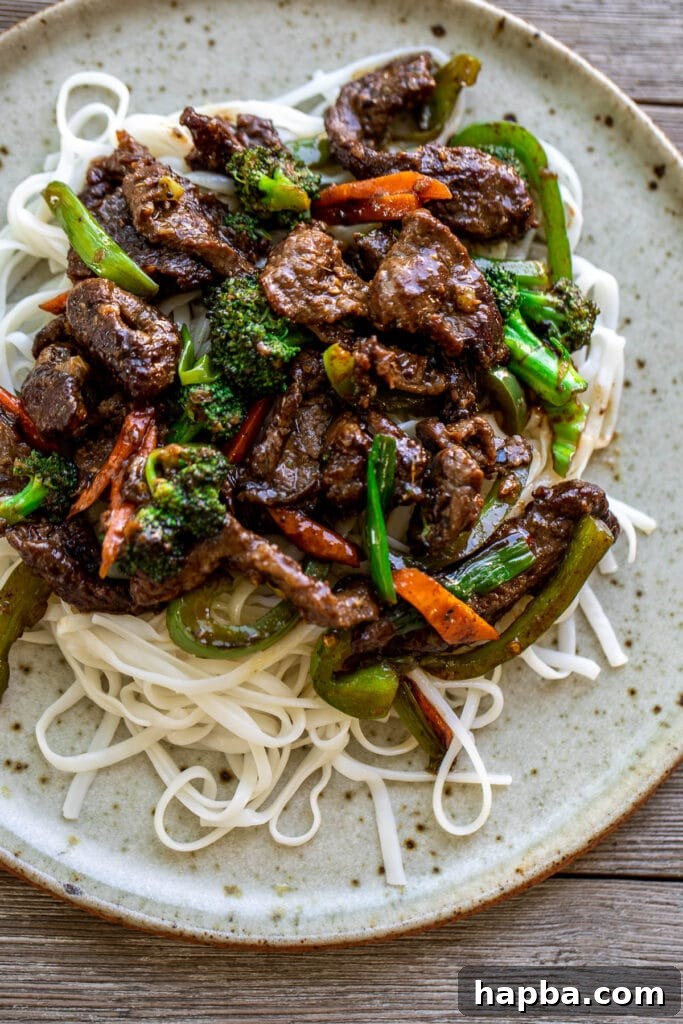
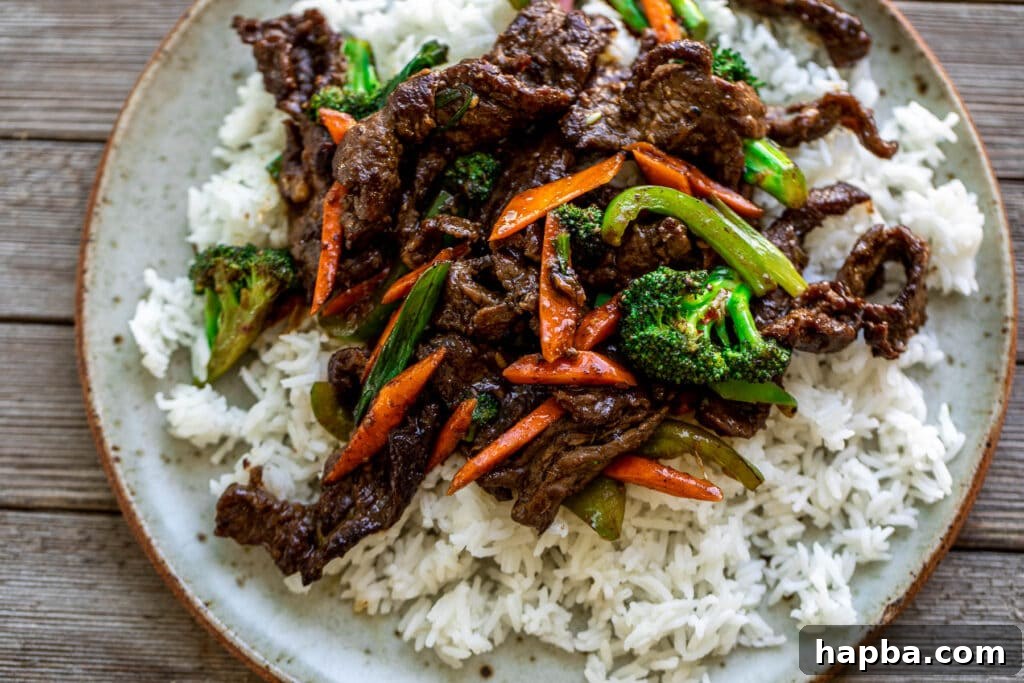
- Classic Rice: Serve over hot, fluffy white rice (like Jasmine or Basmati) or nutrient-rich brown rice. The rice soaks up all the delicious sauce.
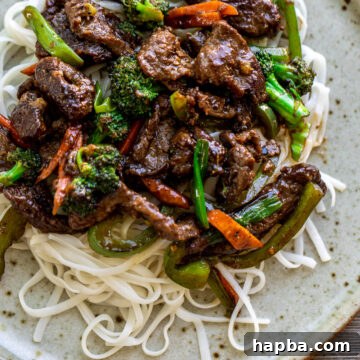
- Noodle Nirvana: For a noodle-based meal, spoon your stir fry over cooked rice noodles, egg noodles, lo mein noodles, or even spaghetti. Our Beef and Vegetable Stir Fry is particularly delightful with rice noodles!
- Low-Carb Options: For a lighter, low-carb meal, serve it over cauliflower rice or zucchini noodles.
- Garnish for Flair: Finish with a sprinkle of toasted sesame seeds, extra chopped green onions, or a fresh cilantro sprig for added flavor and visual appeal.
Storage and Reheating:
- Refrigeration: Leftover stir fry can be stored in an airtight container in the refrigerator for up to 3-4 days.
- Freezing: While technically possible, stir-fried vegetables can become quite soft and watery when thawed. The beef will hold up better. If freezing, cool completely, then store in a freezer-safe container for up to 2-3 months. Thaw overnight in the refrigerator before reheating.
- Reheating: For best results, reheat stir fry in a skillet over medium-high heat with a splash of water or broth, stirring frequently until heated through. Microwaving is also an option but may result in softer vegetables.
Frequently Asked Questions (FAQs)
Here are answers to some common questions about making the perfect Beef and Vegetable Stir Fry:
- Q: Can I prepare stir fry ahead of time?
A: While the actual stir-frying should be done just before serving for the best texture, you can certainly do a lot of prep work in advance. Slice your beef, chop all your vegetables, mince garlic and ginger, and even whisk together your sauce components. Store everything separately in airtight containers in the refrigerator for up to 1-2 days. This will make the actual cooking process incredibly fast.
- Q: What’s the best way to get crispy vegetables in a stir fry?
A: The key to crispy vegetables is high heat and not overcrowding the pan. Ensure your pan is very hot before adding vegetables, and cook them in batches if necessary, allowing enough space for them to sear rather than steam. Don’t overcook them; aim for crisp-tender.
- Q: My stir fry sauce is too thin/thick. How can I fix it?
A: If your sauce is too thin, quickly whisk a small amount (1/2 to 1 teaspoon) of cornstarch with an equal amount of cold water to form a slurry. Stir this into your simmering stir fry until it reaches your desired thickness. If it’s too thick, simply add a tablespoon or two of water or broth until it thins out.
- Q: Can I use frozen vegetables?
A: Yes, you can use frozen stir-fry vegetable mixes. However, they tend to release more water and might not achieve the same crisp-tender texture as fresh vegetables. Add them directly to the hot pan (no need to thaw) and increase cooking time slightly to allow excess moisture to evaporate.
- Q: Is this stir fry gluten-free?
A: To make this recipe gluten-free, ensure you use a gluten-free soy sauce (like tamari) and confirm that your cornstarch is certified gluten-free (most are, but always check). All other ingredients are typically naturally gluten-free.
Watch How To Make It
Sometimes, seeing is believing! Here is a video demonstrating how to make this delicious Beef and Vegetable Stir Fry on my YouTube channel. For more incredible recipes and cooking tips, be sure to subscribe to my YouTube channel so you never miss an upload!
Beef and Vegetable Stir Fry
15
15
30
4 servings
Rate
Print Recipe
Ingredients
- 1 pound beef, cut into thin slices against the grain* (flank steak or chuck roast would work, see Note 1)
- 1 ½ cups broccoli florets (from about 1 head of broccoli)
- 1 Tablespoon cornstarch, separated
- 3 Tablespoons soy sauce, separated
- ½ teaspoon ground white pepper or black pepper
- 1 teaspoon grated/minced garlic (heaping teaspoon)
- 1 teaspoon grated ginger (heaping teaspoon)
- 3 scallions (green onions), chopped, whites separated from greens.
- ½ cup carrot cut into matchsticks (from 2 medium carrots or 1 large carrot)
- 1 cup bell pepper, chopped (about half) (red, yellow, orange, or green bell pepper)
- 1 Tablespoon sesame oil
- 2 Tablespoons neutral oil (such as olive, peanut, or sunflower oil) for stir-frying
Instructions
-
Season Beef: Place beef in a large mixing bowl. Add half a tablespoon of cornstarch, half a tablespoon of soy sauce, and ¼ teaspoon ground white pepper (or black pepper). Toss thoroughly to combine, ensuring all beef strips are coated.
-
Sear Beef: Heat 1 tablespoon of neutral oil in a non-stick wide bottom pan or wok over high heat until smoking hot. Add the beef in a single layer (cook in batches if necessary to avoid overcrowding). Let it sear undisturbed on one side for 1-2 minutes, then flip to sear the other side until all the beef is cooked through and browned. Remove beef from pan and set aside.
-
Sauté Aromatics: Add another 1 tablespoon of oil to the pan. Let it heat up for one minute. Add the whites of the green onions and sauté for 1 minute until fragrant. Add the grated garlic and ginger and sauté for another minute, stirring constantly, being careful not to burn them.
-
Stir-fry Vegetables: Add the carrots and broccoli to the pan. Stir-fry for about 3 minutes until slightly tender but still crisp. Then, add the bell pepper and continue to sauté for about 1-2 minutes until all vegetables are crisp-tender.
-
Combine & Deglaze: Add the seared beef back to the pan with the vegetables. Add a splash of water (about 1-2 tablespoons) to deglaze the pan, scraping up any browned bits from the bottom.
-
Thicken Sauce: In a small bowl, mix the remaining ½ tablespoon of cornstarch with 1 tablespoon of cold water to create a slurry. Pour this into the pan and toss well to combine. The sauce will begin to thicken.
-
Final Seasoning: Add in the remaining 2.5 tablespoons of soy sauce and ¼ teaspoon of ground white pepper (or black pepper). Toss to combine. Let it cook, stirring occasionally, until the cornstarch thickens to a glossy sauce (about 3 minutes). If desired, add a pinch of red pepper flakes for heat.
-
Finish with Sesame Oil: Add the 1 tablespoon of sesame oil and toss to combine thoroughly. Turn off the heat.
-
Serve: Garnish with the green tops of the scallions and serve immediately over hot fluffy cooked rice or noodles. Enjoy!
Notes
2. Pre-cut Beef Option: For convenience, you can use pre-cut beef labeled as “stir fry beef” from your grocery store. This reduces your prep time significantly.
Nutrition
Additional Info
Dinner
Asian
235
Tried this recipe?
Mention @preciouscore or tag #PreciousCore!