
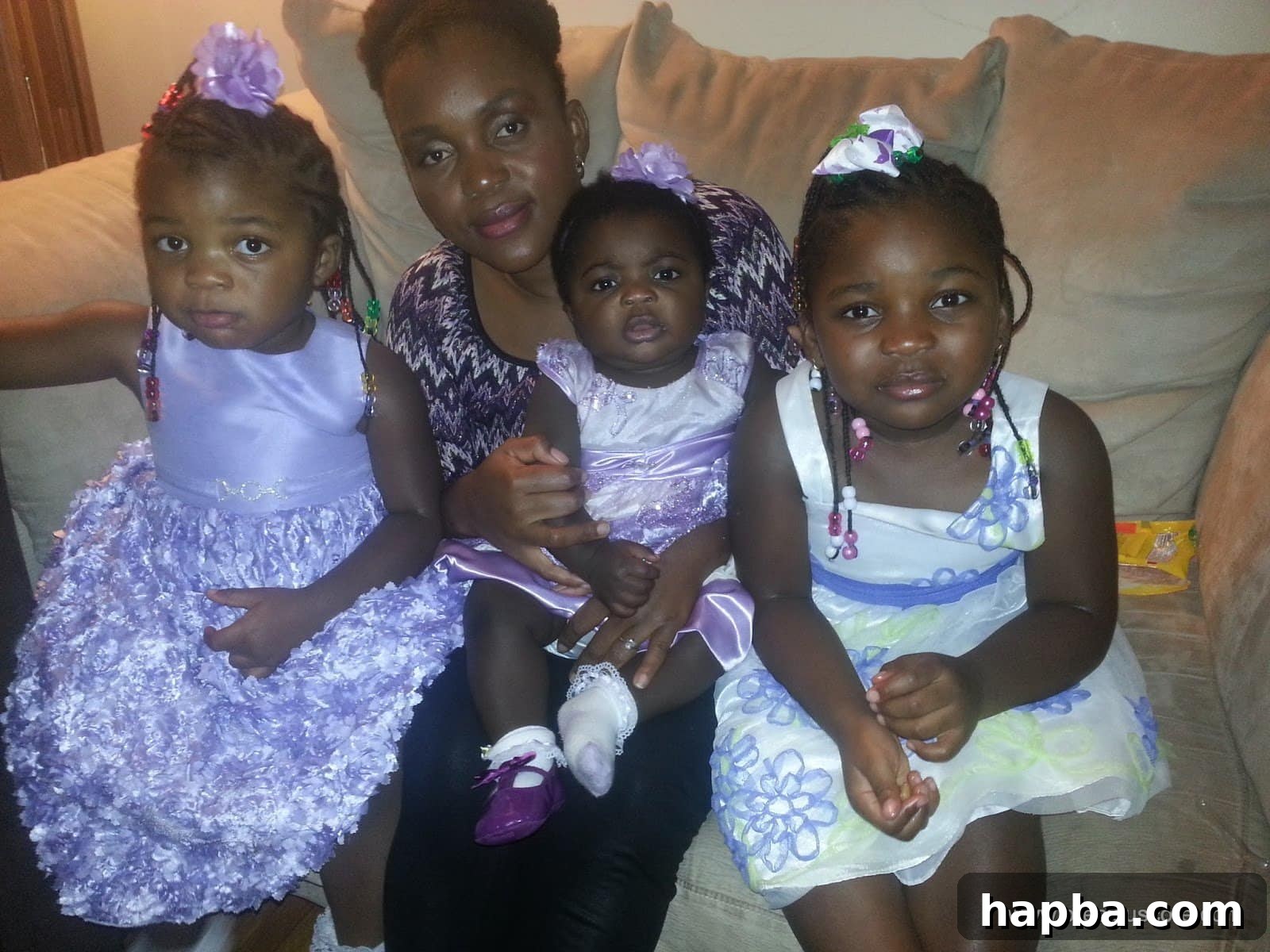
The Priceless Gift of Daughters: Challenging Gender Bias in Motherhood and Society
As Women’s Month concludes, it’s a timely moment to reflect on the profound significance of daughters in our lives and communities. While this period often highlights achievements and ongoing struggles for gender equality, it also serves as a poignant reminder of deeply ingrained biases that persist globally, particularly the societal preference for male children. This article delves into the often-unspoken pressures faced by mothers of daughters and champions the invaluable worth of every girl child, advocating for a world where all children, regardless of gender, are equally cherished and celebrated.
The journey of motherhood is universally celebrated, yet for many women, the joy of bringing a new life into the world can be tinged with societal scrutiny concerning the baby’s gender. I recently encountered a vivid illustration of this dichotomy while scrolling through my social media feed. A dear friend jubilantly announced the birth of her “prince,” her joy palpable and understandable, especially given that this son followed three beloved daughters. Her post was a heartfelt expression of gratitude, a release from years of unvoiced societal pressure.
However, the comments section quickly revealed the underlying cultural expectations. One friend, writing in the distinct cadence of Cameroon Pidgin English, remarked, “You should thank God that you have given birth to your husband’s successor. If you didn’t get a son, your husband would have sent you parking from that marriage.” This statement, while jarring to many, reflects a harsh reality in certain communities where a woman’s value and marital security are tragically linked to her ability to produce male heirs.
The Deep Roots of Gender Preference: Understanding the “Chop Chair” Tradition
In various African societies, including Cameroon, a male child is culturally designated as the “chop chair” of his father. This deeply symbolic term signifies that he is the rightful and primary successor, entrusted with carrying on the family name, traditions, and inheriting property. Daughters, while loved, are frequently relegated to a secondary position, rarely accorded the same esteemed status of succession. This tradition isn’t merely a quaint cultural practice; it’s a powerful force that shapes family dynamics, societal expectations, and even individual self-worth.
The disparity in value becomes starkly evident at birth. When a woman gives birth to a daughter, the reaction, though often polite, can carry an undercurrent of disappointment from family and community members. Conversely, the birth of a son, especially after several daughters, is often met with unrestrained celebration, almost as if the mother has finally emerged from a period of “darkness” into the “light” of male offspring. This narrative perpetuates the harmful idea that daughters are somehow less complete or less desirable additions to a family, impacting their mothers’ perception within the community.
Navigating the “Daughter-Only Syndrome”
The pressure to bear sons can be so intense that it creates what I refer to as the “daughter-only syndrome”—a misconstrued notion that having only female children is a deficiency, a “cankerworm” eroding a woman’s standing. This isn’t just an abstract concept; it’s a lived experience for many, including myself. After the birth of my second daughter, I recall a phone call from my sister-in-law’s wife. Her opening line, delivered with an unmistakable tone of disappointment, was: “We hear you are only giving birth to girls.” Her words, typical of certain traditional African perspectives, conveyed a clear sentiment of disapproval for my perceived failure to produce a “chop chair” for my husband.
Such seemingly innocuous comments are where a subtle yet pervasive form of violence against women begins. From the moment a girl is born, she can be subjected to being undervalued, overlooked, and, in extreme cases, even unwanted. This initial devaluation sets a dangerous precedent, laying the groundwork for broader gender inequality and discrimination that can follow her throughout life, affecting her access to education, opportunities, and even personal safety.
Societal Pressure and Its Devastating Repercussions on Mothers
Society relentlessly pressures mothers to produce sons, often equating a woman’s ability to bear male children with her status as a “real woman.” This immense burden drives many women into rapid successive pregnancies, each new gestation carrying the fervent hope: “It’s a boy this time.” The anxious wait for ultrasound results or the news from the delivery room becomes an agonizing ordeal. When the reply is “It’s a girl again,” the disappointment can be profound, leading to feelings of desperation and inadequacy.
Tragically, this disappointment can sometimes translate into mistreatment or a lack of emotional attachment towards the new baby girl, ironically a “God-sent queen” who deserves nothing but unconditional love. Mothers who only have daughters often develop an inferiority complex, particularly when confronted by those who proudly boast of their “strong boys.” This cycle of external judgment and internal struggle can be incredibly damaging to a woman’s mental health and self-esteem, potentially fostering resentment where there should be joy.
In a relentless quest for a male heir, some women find themselves in a painful loop of repeated pregnancies, producing a chain of female children. With each successive daughter, their initial hope diminishes, replaced by a growing sense of despair and the grim realization that they might be “stuck with daughters only.” The consequences of this perceived failure can be catastrophic for women in culturally conservative societies, often extending beyond mere emotional distress.
Many husbands, influenced by deeply entrenched cultural norms, may resort to taking second wives in the hope that a new spouse will bear them sons. Beyond enduring the immense emotional pain of verbal abuse and the stigma of being “incapable” of producing sons, these women often find themselves locked in bitter battles with competitive co-wives over resources and familial standing. The desperate yearning for a son even drives some to seek supernatural interventions from witch doctors, hoping for a magical cleansing of their wombs to enable them to produce “real” children, highlighting the profound psychological and social torment they face in their quest for acceptance.
A Red Light: How Healthcare Professionals are Challenging Gender Preference
The harmful effects of the stigma attached to women bearing only daughters are undeniable. I call this pervasive issue the “accepted madness,” because despite its clear detriment, it continues to be tolerated and perpetuated. Recognizing the severe implications, some healthcare institutions are stepping up to challenge this tradition directly. One such example is the Mbingo Baptist Health Centre in Douala, Cameroon’s economic capital.
During my first pregnancy, I visited this center for an ultrasound. While I understood the vital medical benefits of viewing my womb under the radiologist’s lenses, like many expectant mothers, I was also eager to know my baby’s sex to plan for “blue stuff or pink stuff.” To my surprise, the medical specialist firmly declined to reveal the baby’s gender. Initially disappointed, I soon understood the wisdom behind their policy, realizing its profound ethical implications.
A midwife at the same hospital’s ante-natal class explained their rationale. They had observed significant negative reactions from mothers who desperately wanted boys but were visibly frustrated and downcast upon learning they were carrying girls. This prenatal rejection, she emphasized, was detrimental to the wellbeing of the unborn child, potentially leading to emotional detachment or even neglect after birth. The maternal health workers at Mbingo Baptist Health Centre strongly uphold the widely known Pidgin English saying, “Pikin na pikin,” meaning “every child is valuable no matter the sex.” This progressive stance aims to protect the unborn from premature gender-based prejudice and foster an environment of unconditional love for every child, promoting healthy bonding from conception.
The Global Reach of Gender Bias: From Inheritance to Baby Factories
The issue of gender preference is not confined to personal anecdotes or local cultural practices; it has wider, systemic implications. A report by the Huffington Post highlighted a chilling discovery in Nigeria months ago: a baby factory in the southeastern region was found to be selling male babies for significantly more money than female babies. This grim reality underscores how deeply ingrained the preference for sons can be, even leading to the commodification and exploitation of human life, revealing a dark side of gender discrimination.
Furthermore, the same report cited Nigerian ex-judge Oby Nwankwo, who shed light on the massive obstacles faced by “widows and daughters when trying to inherit family resources after the death of a patriarch.” This legal and social disadvantage further illustrates why women and girls often feel marginalized and perceive themselves as lacking the same privileges and opportunities afforded to men and boys. The economic disparity and lack of inheritance rights perpetuate a cycle of vulnerability and dependence for many women, hindering their ability to achieve true independence and equality within society.
Reclaiming the Narrative: Celebrating Daughters as Pillars of Strength
Coming from a typical African society, I unequivocally declare that a girl is not, by any measure, a less important child. While I may wish to have a son in the future, it is not born from a feeling of inadequacy as a “girls-only” mom. Instead, it stems from a desire to experience the richness of raising children of both sexes, to appreciate the unique dynamics each brings to a family. My longing for a son is never a quest for validation from the propagators of this “accepted madness” of gender preference; it is merely a desire for a complete family experience.
Indeed, if cherishing and nurturing only daughters is considered a “crime,” then I embrace the role of the culprit with pride. If society perceives it as making a mother inferior, I contend that it only elevates me to a position of superior strength and wisdom. The true measure of a parent lies not in the gender of their children, but in the boundless love, dedicated care, and unwavering values they instill, fostering confident and capable individuals.
Consider the powerful example of former U.S. President Barack Obama, a global icon who, alongside his equally formidable wife Michelle, raised two remarkable daughters. Malia and Sasha are not only beautiful and intelligent but have grown into confident, accomplished young women who navigate the world with grace and purpose. Was Michelle Obama in any way “handicapped” or considered less successful because she bore only girls? The resounding answer is an emphatic, unequivocal “No!” Their family stands as a testament to the fact that daughters are a source of immense pride, joy, and capability, challenging archaic notions of male superiority on a global stage.
A Call to Action: Shifting Perceptions, Cultivating Unconditional Appreciation
Our cultural narratives have, for too long, perpetuated the insidious idea that boys are inherently “better” than girls. It is a deeply unfortunate reality that many mothers, consciously or unconsciously, have internalized and propagated this damaging belief. It is imperative that we, as a society, consciously and actively challenge this “weird line of thinking.” The time for change is now, and it begins within our homes and communities.
Let us begin by celebrating our daughters unconditionally, from the very first flutter in the womb, through their glorious birth, and throughout their journey into adulthood. Let us proudly flaunt their intelligence, their resilience, their kindness, and their unique spirits until those who cling to the outdated belief in male superiority become genuinely envious of the boundless joy and strength that daughters bring. We must actively foster environments where girls feel valued, empowered, and capable of achieving anything they set their minds to, free from the shadow of gender-based discrimination and antiquated expectations.
Just moments ago, my daughter wrapped her small arms around me and, in her sweet, clear voice, declared, “Mummy, I love you.” It’s moments like these that reaffirm an undeniable truth: daughters are truly a special, irreplaceable source of love, comfort, and boundless joy. They are a blessing in every sense of the word, capable of transforming lives and societies with their unique contributions and inherent worth.
“Pikin na pikin and girl pikin na better pikin!”
This beautiful Pidgin English proverb translates to: “Every child is valuable, and girls are super special!” It encapsulates the essence of what we must strive for: a world where every child is seen as a precious gift, and daughters are celebrated for the extraordinary individuals they are, contributing their unique light to the tapestry of humanity.
First published in my journal at WorldPulse.com