
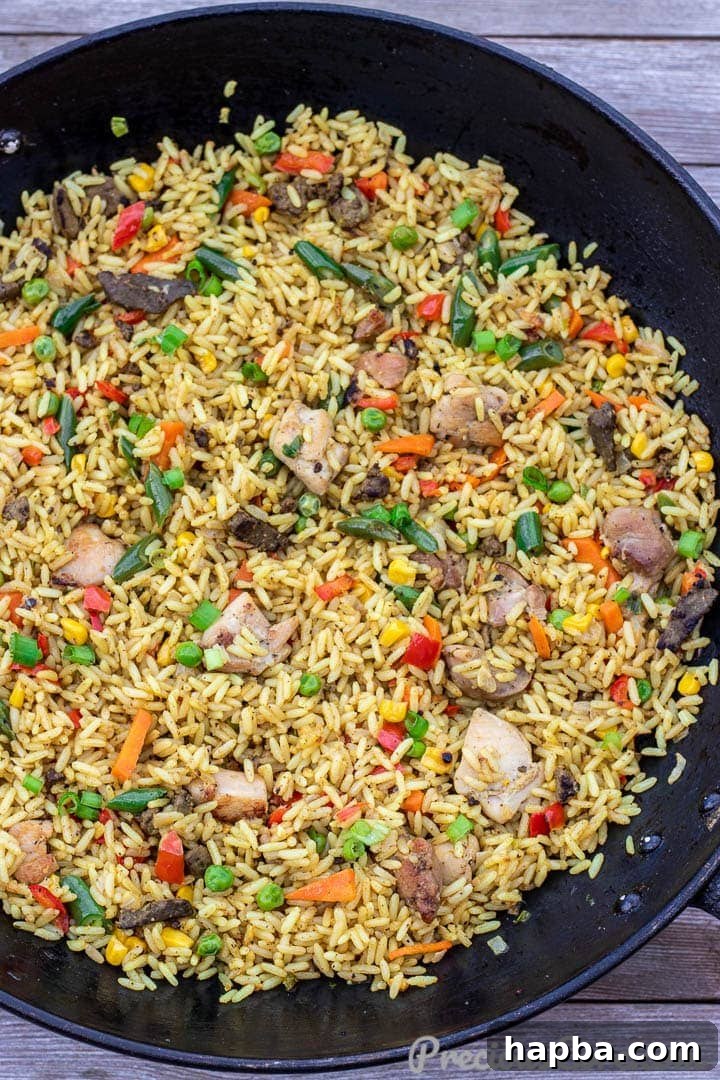
Whether you’re cooking for a cozy family dinner or hosting a lively gathering with friends, this African Fried Rice recipe is guaranteed to be the star of your table! Renowned for its rich, complex flavors and delightful medley of textures, from perfectly crisp vegetables to succulent pieces of chicken and tender beef liver, this dish is truly a celebration in every bite. It’s an iconic staple in West African cuisine, particularly cherished in countries like Nigeria and Cameroon, where it frequently graces festive occasions and everyday meals alike.
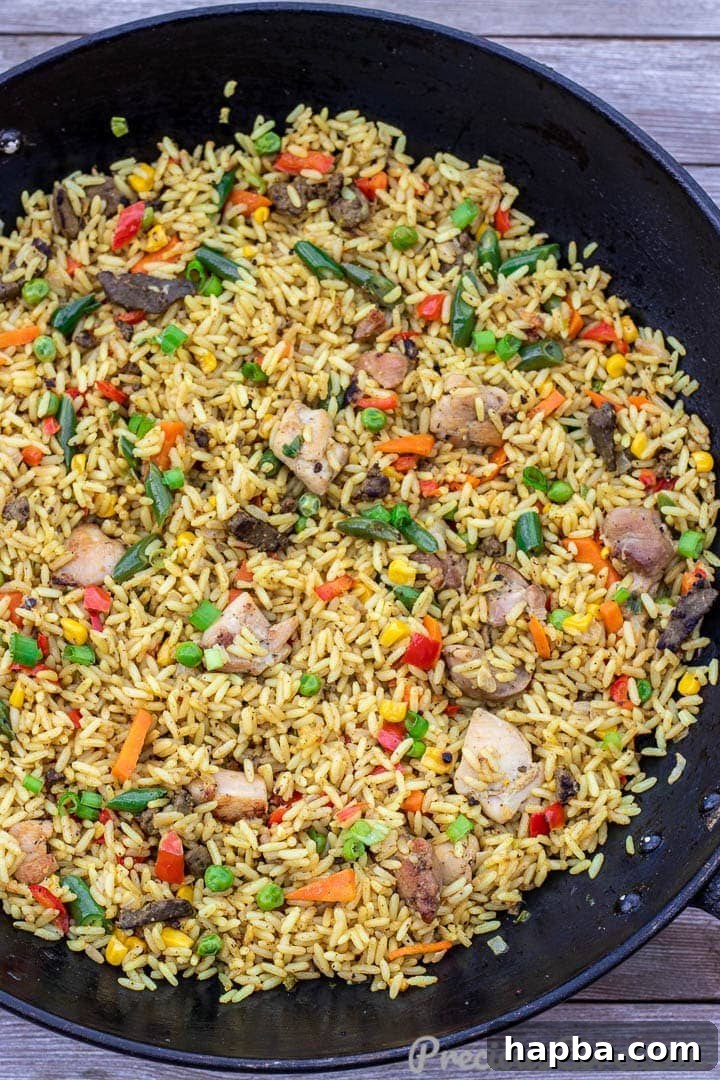
Our passion for authentic African recipes runs deep. From the rich and comforting Nigerian Beef Stew to the universally loved Jollof Rice with Chicken, we find ourselves enjoying the soulful tastes of an African dinner almost every week! If you’re a fan of fried rice in general, you might also enjoy exploring our Steak Fried Rice and the irresistible Shrimp and Chicken Fried Rice for more culinary adventures.
Table of Contents
- Why Is This Called African Fried Rice?
- Essential Ingredients for African Fried Rice
- Crafting African Fried Rice: Step-by-Step Guide
- What to Serve with African Fried Rice
- Pro Tips and Recipe Variations
- Storage and Reheating Tips
- Useful Tools for Making Fried Rice
- Watch Our African Fried Rice Video Tutorial
- More Delicious Rice Dinners to Explore
- Related African Recipes
- Authentic African Fried Rice Recipe Card
Why Is This Called African Fried Rice? Unveiling a Culinary Gem
The name “African Fried Rice” encapsulates a culinary tradition deeply rooted in West African culture. This particular recipe draws its inspiration from my personal experiences with fried rice in two vibrant African nations: Nigeria and Cameroon. In these regions, fried rice isn’t just a side dish; it’s a prominent, celebratory main course, second only to the legendary Nigerian Jollof Rice in popularity.
While the fundamental concept of fried rice exists across many cultures, the African rendition boasts a unique profile characterized by specific spices, cooking techniques, and ingredient combinations. It often features a distinct blend of curry powder, thyme, and bouillon, creating a savory, aromatic base that sets it apart. Unlike some Asian versions that might emphasize soy sauce as the primary seasoning, African fried rice typically relies on a rich, robust flavor development from herbs and chicken or meat stock. What makes this dish truly wonderful is its incredible adaptability. While our recipe provides an authentic foundation, you are encouraged to customize it to your personal preferences. Feel free to incorporate a dash of soy sauce if that’s your style, or utilize leftover rice for an even quicker preparation – a common and highly recommended practice for superior fried rice!
Across the vast continent of Africa, countless variations of fried rice exist, each reflecting local produce and culinary heritage. From the bustling markets of Lagos to the vibrant kitchens of Douala, every household might have its own cherished twist. This recipe is a homage to that diversity and an invitation for you to explore and make it your own.
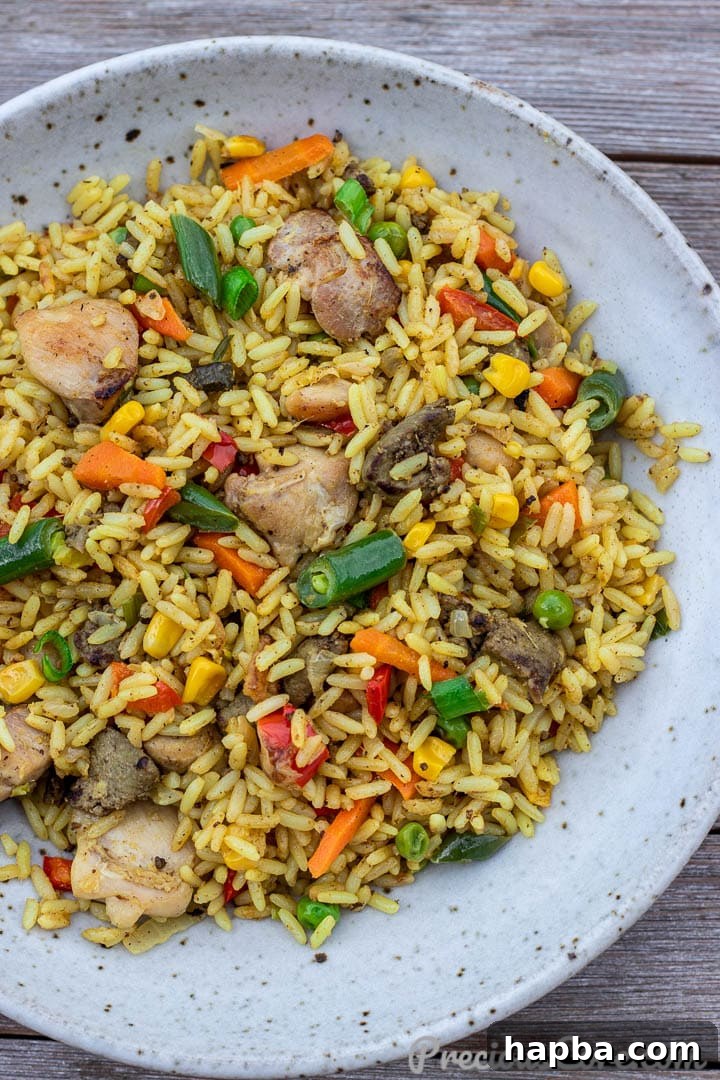
Essential Ingredients for Crafting Authentic African Fried Rice
Creating truly spectacular African Fried Rice starts with selecting the right ingredients. Each component plays a vital role in building the layered flavors and appealing textures that make this dish so irresistible. Here’s a breakdown of the key elements you’ll need, along with tips for optimal results. For precise measurements, please refer to the detailed recipe card below.
1. Parboiled Rice: The Foundation of Perfect Fried Rice
The choice of rice is paramount for fried rice. We specifically recommend parboiled long-grain rice because its sturdy grains hold their shape beautifully, preventing the dish from becoming mushy. This type of rice has been partially boiled in its husk, which not only makes it less sticky but also infuses it with more nutrients. If parboiled rice is unavailable, basmati rice can be a suitable substitute due to its firm texture, but avoid short-grain or sticky rice varieties. For the best results, use day-old, chilled rice as it’s drier and fries up much better.
2. Curry Powder: The Heart of African Flavor
Curry powder is a cornerstone of African fried rice, contributing both its signature golden hue and a complex, aromatic depth of flavor. Invest in a good quality curry powder; its freshness will significantly impact the overall taste of your dish. Don’t underestimate its power to elevate the entire meal.
3. Thyme: Aromatic Herb Essentials
Thyme adds an earthy, subtle flavor that complements the other spices beautifully. While our recipe calls for ground thyme for ease, you can certainly use dried thyme leaves or even fresh thyme sprigs (which you’d remove before serving). The goal is to infuse that distinct herbaceous note.
4. Bay Leaf: Infusing Depth
Adding a bay leaf during the initial cooking of the rice is a simple yet effective way to infuse it with a delicate, fragrant undertone. It provides a subtle aromatic layer that enhances the overall flavor profile.
5. Beef Liver: Richness and Umami
Beef liver is a traditional inclusion in many Nigerian and Cameroonian fried rice recipes, offering a unique meatiness and a distinctive, savory depth. It adds a wonderful umami flavor and a slightly different texture that pairs beautifully with the chicken. If you’re new to cooking with liver, don’t be intimidated – when prepared correctly, it’s incredibly tender and flavorful.
6. Onion: The Flavor Base
Onions are fundamental to building a robust flavor base. They caramelize slightly during sautéing, adding a natural sweetness and aromatic foundation to the dish.
7. White Pepper: Subtle Spice, Clean Finish
White pepper provides a gentle warmth and a peppery kick without leaving visible black specks, which is often preferred for a cleaner aesthetic in many African dishes. You can substitute it with black pepper if white pepper isn’t on hand, but note the visual difference. We generally prefer the smoother, more refined heat of white pepper in most of our recipes.
8. Garlic and Ginger: The Aromatic Duo
Fresh garlic and ginger are non-negotiable for their pungent, warm, and highly aromatic qualities. They form the core flavor base, blooming in hot oil and permeating the entire dish with their irresistible fragrance and taste.
9. Chicken: Succulent Protein Choice
Chicken adds a hearty and satisfying protein component. We prefer boneless, skinless chicken thighs for their tenderness and superior flavor, as they tend to stay juicier during stir-frying. However, chicken breasts can be used as a leaner alternative, just be mindful not to overcook them.
10. Mixed Vegetables: Color, Texture, and Nutrients
A vibrant mix of vegetables not only adds beautiful pops of color but also crucial nutrients and delightful crunch. Our preferred combination includes carrots, green beans, bell peppers (any color for visual appeal!), sweet corn, and green peas. These vegetables provide a balanced sweetness and freshness that elevates the fried rice.
11. Green Onions (Scallions): Fresh Finishing Touch
Green onions, or scallions, are typically added at the end, providing a fresh, mild oniony bite and a bright green garnish that lifts the entire dish.
12. Oil: For Sautéing and Frying
A neutral-tasting oil like vegetable oil, canola oil, or sunflower oil is best for sautéing and stir-frying. It allows the flavors of the other ingredients to shine through without imparting its own strong taste.
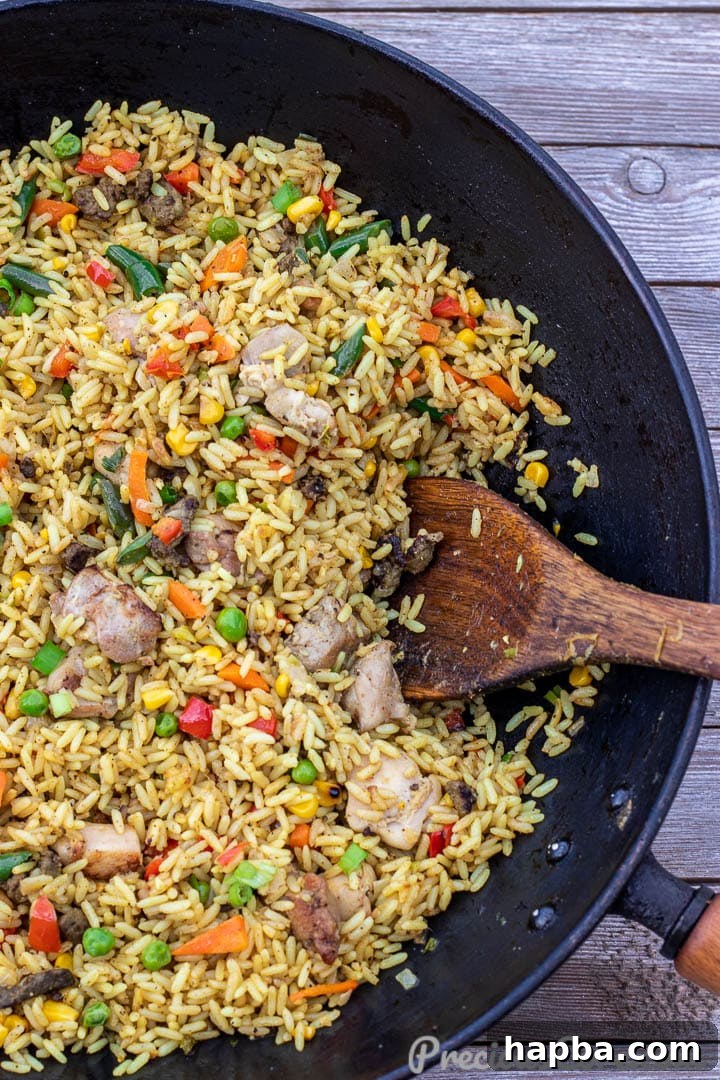
Crafting African Fried Rice: A Step-by-Step Culinary Journey
Making African Fried Rice might seem like a multi-step process, but each stage is straightforward and contributes to the incredible depth of flavor. Follow this summarized guide, and consult the full recipe card below for even more detailed instructions and expert tips.
1. Prepare the Rice: Begin by boiling your parboiled rice. Season the cooking water generously with chicken bouillon powder (or use chicken stock for extra flavor), salt, curry powder, and a bay leaf. This infuses the rice with flavor from the very start. Cook until tender but still firm, then spread it out to cool completely – this is crucial for preventing mushy fried rice.
2. Cook the Proteins:
- Sauté the Chicken: Season your diced chicken thighs with a portion of the garlic-ginger paste, salt, thyme, and white pepper. Sauté in a hot wok until beautifully browned and cooked through. Remove and set aside.
- Cook the Liver: Separately, cook the beef liver in a small amount of water with a dash of seasoning until tender. Once cooked, dice it and then quickly brown it in the wok after the chicken, adding another layer of savory richness. Remove and set aside.
3. Build the Flavor Base: In the same wok, add a little more oil if needed, then sauté the chopped onions until they become translucent and fragrant. This mellows their flavor and provides a sweet base. Next, add the remaining garlic-ginger paste, allowing these powerful aromatics to “bloom” in the hot oil for a couple of minutes, releasing their full fragrance.
4. Stir-Fry the Vegetables: Introduce your medley of chopped vegetables to the wok. Start with the firmer vegetables like carrots, stir-frying for a minute, then add green beans, bell peppers, corn, and peas in quick succession, stirring briefly after each addition to ensure they remain crisp-tender. Finally, toss in the fresh green onions.
5. Season the Vegetables: Sprinkle the remaining curry powder, thyme, and chicken bouillon powder over the vegetables. Stir everything thoroughly to ensure the seasonings are evenly distributed, coating every piece of vegetable with aromatic goodness.
6. Combine and Stir-Fry the Rice: Now for the main event! Add the cooled, cooked rice to the wok in batches, mixing carefully each time. This technique helps ensure all the grains are evenly coated with the seasoned vegetables and spices without clumping or breaking the rice. Continuously stir-fry, allowing the rice to heat through and develop a slightly toasted texture.
7. Reintroduce Proteins and Final Seasoning: Return the cooked chicken and liver to the wok, mixing them gently into the fried rice. Add the final touch of white pepper and stir one last time to fully integrate all the flavors and ingredients.
8. Serve Immediately: Turn off the heat, and your magnificent African Fried Rice is ready to be served! It’s best enjoyed fresh and warm, when the flavors are most vibrant.
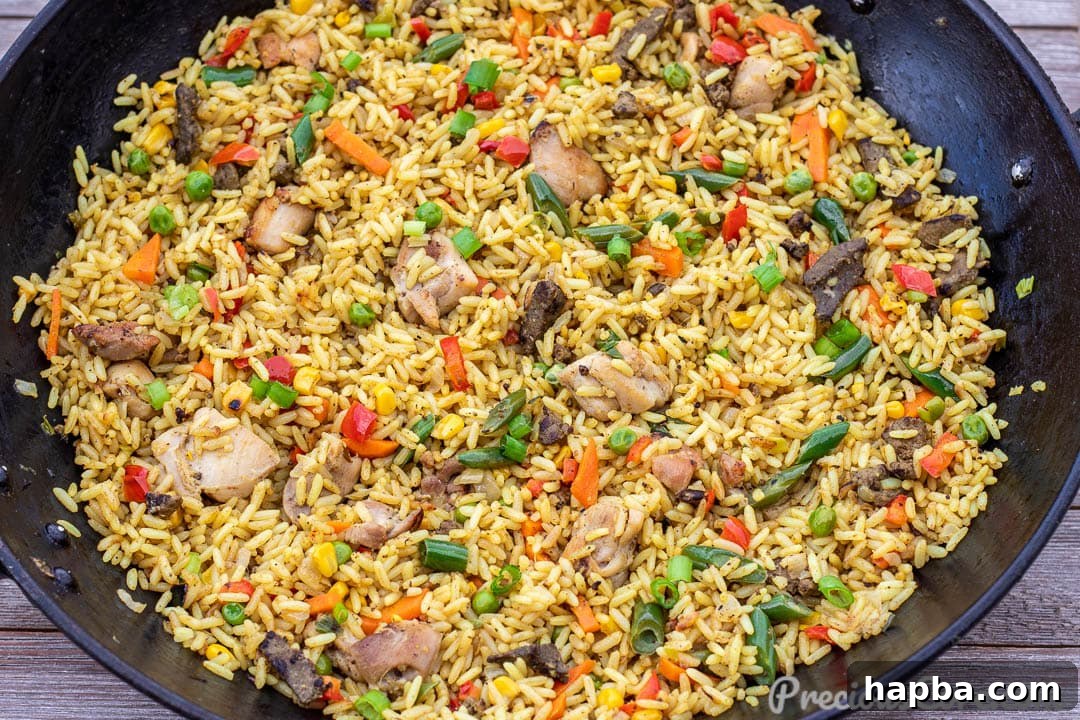
What to Serve with Your Delicious African Fried Rice
African Fried Rice is a wonderfully complete meal all on its own, packed with protein, vegetables, and carbohydrates. However, it also pairs beautifully with a variety of complementary dishes, especially for a larger feast or a more diverse spread. Here are some fantastic serving suggestions to enhance your culinary experience:
- Sweet Fried Plantains: The ultimate classic pairing! The sweet, caramelized flavor of sweet fried plantains offers a delightful contrast to the savory and mildly spicy fried rice.
- Grilled or Baked Chicken: For those who love extra protein, serving your fried rice with perfectly baked chicken, grilled chicken, or even African Chicken Stew is an excellent choice. The tender, juicy chicken complements the rice beautifully.
- Fresh Vegetable Salad: A crisp, light vegetable salad provides a refreshing counterpoint, adding freshness and a different texture to the meal.
- Coleslaw: Creamy coleslaw can also offer a cool, tangy element that balances the richness of the fried rice.
- Peppered Snail or Gizzard: For a truly authentic West African experience, consider serving with sides of peppered snail or gizzard, which are popular appetizers at special events.
Pro Tips and Delicious Recipe Variations for African Fried Rice
Mastering African Fried Rice is all about understanding a few key techniques and feeling confident to customize. Here are some expert tips to ensure your fried rice is always a hit, along with ideas for variations:
- Use Cold, Day-Old Rice: This is perhaps the most crucial tip for any fried rice. Freshly cooked rice has too much moisture, making it prone to clumping and getting mushy. Using rice that has been cooked, cooled, and preferably refrigerated overnight results in individual, firm grains that fry beautifully.
- Don’t Overcrowd the Wok: For a proper stir-fry, it’s essential to cook in batches if your wok or pan isn’t large enough. Overcrowding lowers the temperature, steaming the ingredients instead of frying them, which prevents that desirable slightly charred flavor and crisp texture.
- High Heat is Key: Fried rice needs to be cooked quickly over high heat. This creates that characteristic “wok hei” or breath of the wok, adding a smoky, savory depth.
- Pre-Prep All Ingredients: “Mise en place” (everything in its place) is vital for stir-frying. Have all your vegetables chopped, proteins cooked, and seasonings measured out before you even turn on the heat, as the cooking process moves very fast.
- Adjust Spice Levels: The optional habanero or scotch bonnet pepper adds a significant kick. If you prefer less heat, omit it entirely. For a milder warmth, use just a small piece, or opt for a pinch of cayenne pepper instead.
- Protein Variations: While chicken and liver are traditional, feel free to experiment. You can use shrimp, beef strips, smoked fish, or even a mix of seafood. For a vegetarian option, simply omit the meats and add more vegetables or tofu.
- Vegetable Customization: The vegetable mix is highly flexible. Add mushrooms, broccoli, snap peas, or any other quick-cooking vegetables you enjoy. Frozen mixed vegetables are a convenient shortcut; just ensure they are thawed and drained before adding to prevent excess moisture.
- Flavor Boosters: A splash of soy sauce (light or dark) can add another layer of umami if you enjoy that flavor profile, though it’s not traditional in all African fried rice styles. A touch of sesame oil added at the very end can also introduce a nutty aroma.
Storage and Reheating Tips
Cooked African Fried Rice can be stored safely in the refrigerator for 2-3 days. Make sure to transfer it to an airtight container to maintain freshness and prevent it from absorbing other odors in the fridge.
When reheating, you have a few options:
- Microwave: For a quick reheat, place a single serving in a microwave-safe dish, sprinkle with a tablespoon of water, cover, and heat on high for 1-2 minutes, stirring halfway through.
- Stovetop: For best results, reheat in a pan or wok over medium heat with a tiny bit of oil. Stir-fry until heated through, about 5-7 minutes. This method helps restore some of the original texture and prevents the rice from becoming soggy.
Useful Tools for Making African Fried Rice
- Wok: A large wok is ideal for making fried rice and stir-fries due to its wide, sloped sides, which allow for even cooking and easy tossing of ingredients. A large skillet or Dutch oven can work in a pinch.
- Mortar and Pestle: Excellent for pounding fresh garlic and ginger into a fragrant paste, though a small food processor or blender can also achieve this.
- Pepper Grinder: For freshly ground white or black pepper, which offers a more potent and aromatic flavor than pre-ground varieties.
- Sharp Knife and Cutting Board: Essential for precise chopping of vegetables and proteins.
Watch Our African Fried Rice Video Tutorial
See exactly how to make this mouthwatering African Fried Rice by watching our detailed video tutorial below. We guide you through each step, making it easy to follow along and achieve perfect results. Don’t forget to subscribe to our YouTube channel for more delicious African recipes!
More Delicious Rice Dinners to Explore
- Jollof Rice With Chicken
- Jollof Rice With Shrimp
- One-Pot Beef Fried Rice
- Easy Coconut Rice
- Shrimp and Chicken Fried Rice
Discover More Authentic African Recipes
If you’ve enjoyed the rich flavors of this African Fried Rice, you’ll love exploring other culinary delights from the continent. Here are some more beloved African recipes that are sure to tantalize your taste buds:
- Nigerian Beef Stew
- African Chicken Stew
- African Chicken Peanut Stew
- Steak Fried Rice
We absolutely love hearing from you! If you prepare this African Fried Rice recipe, please take a moment to leave a star rating below or share your creations with us on Instagram. Tag @preciouscore and use the hashtag #PreciousCore so we can see and celebrate your culinary success!
African Fried Rice
Rated 5 out of 5 stars by 5 votes.
African Fried Rice is incredibly flavorful and satisfying, thanks to its vibrant combination of ingredients. It’s the ultimate celebratory fried rice often featured at Nigerian or Cameroonian parties.
- Prep Time: 45 minutes
- Cook Time: 45 minutes
- Total Time: 1 hour 30 minutes
- Servings: 6 servings
Rate
Print Recipe
Ingredients
- 3 cups long grain parboiled rice (see Note 1)
- 1 1/2 teaspoons salt, divided
- 3 teaspoons chicken bouillon powder (see Note 3)
- 2 teaspoons curry powder
- 1 bay leaf
- 1/2 pound beef liver
- 1 medium onion, chopped
- 1/2 teaspoon ground thyme, divided (substitute with dried thyme)
- 1/2 teaspoon white pepper, divided
- 8 garlic cloves, peeled
- 1 1/2 inches ginger root, peeled
- 1 pound boneless skinless chicken thighs, cut into 1-inch pieces
- 1/2 cup vegetable oil or any neutral tasting oil
- 1 cup chopped carrots
- 1/2 cup chopped green beans
- 1 cup chopped bell pepper (from one large bell pepper – red bell pepper used, but any color works)
- 1/2 cup frozen sweet corn, rinsed and thawed
- 1/2 cup frozen sweet peas, rinsed and thawed
- 3 green onions, chopped
- 1 habanero or scotch bonnet pepper, optional (see Note 6)
Instructions
Cook Rice
- Place 6 cups of water into a pot and bring to a boil over high heat. Add 1 teaspoon of salt, 1 teaspoon of chicken bouillon powder, 1 teaspoon of curry powder, and the bay leaf to the boiling water.
- Thoroughly wash the rice (rinse about 3 times to remove excess starch) and add it into the pot. Reduce the heat to medium, cover the pot, and let the rice cook until done (al dente, not mushy).
- Once the rice is cooked, open the pot, fluff the rice with a fork, and spread it out on a large tray or baking sheet to cool completely. Cooling helps prevent the rice from becoming sticky or mushy during frying.
Cook Liver
- Place the liver into a pot set on medium heat. Add half a cup of water, a quarter teaspoon of salt, 2 tablespoons of the chopped onions, one-eighth teaspoon of thyme, and one-eighth teaspoon of white pepper.
- Stir everything to ensure the seasoning is evenly distributed. Cover the pot and let the liver cook until it is tender. Monitor closely and add a little more liquid if the pot dries before the liver is tender.
- Remove the cooked liver from its stock and place it on a plate to cool down. Reserve the stock for other uses or discard.
Make Garlic-Ginger Paste
- Place the peeled garlic cloves and ginger root into a mortar and pound them into a fine paste. Alternatively, place the garlic and ginger into a small blender, add a tiny bit of water, and blend until smooth.
Season Chicken
- In a medium bowl, combine the cut chicken thighs with 1 teaspoon of the freshly made garlic-ginger paste, 1/4 teaspoon of salt, 1/8 teaspoon of thyme, and 1/8 teaspoon of white pepper. Mix everything thoroughly to evenly coat the chicken pieces with the seasoning.
Cut Up Liver and Season
- Once the liver has cooled, dice it into small, bite-sized pieces. To the diced liver, add half a teaspoon of the garlic-ginger paste, one-eighth of a teaspoon of salt, and one-eighth of a teaspoon of white pepper. Mix well to ensure the liver is evenly seasoned.
Make African Fried Rice
- Place a large wok or a wide-bottomed pot over high heat. Add 1 tablespoon of oil to the wok and swirl it around to coat the surface evenly.
- Add the seasoned chicken pieces to the hot wok, spreading them into a single layer. Let them cook undisturbed for 2 minutes to get a good sear, then stir and continue cooking for another 4-5 minutes, stirring occasionally to prevent burning. The chicken should be fully cooked and have developed some golden-brown color. Remove the chicken from the wok and set aside.
- If needed, add another 1 tablespoon of oil to the wok and allow it to heat up for 1-2 minutes. Add the diced liver and stir-fry until it browns lightly but doesn’t burn. Remove the liver from the wok and set aside with the chicken.
- To the same wok, add the remaining oil and heat it up. Add the remaining chopped onions and sauté until they become translucent and fragrant, about 3-5 minutes.
- Stir in the remaining garlic-ginger paste. Let it cook in the oil for about 2 minutes, stirring constantly, to allow the flavors to bloom and release their full aroma.
- Add the vegetables: Begin by adding the chopped carrots and stir-fry for 1 minute. Next, add the green beans and stir for 30 seconds. Then, add the bell peppers and stir for another 30 seconds. Finally, add the frozen sweet corn and peas (rinsed and thawed) and stir for 30 seconds.
- Season the vegetables: Sprinkle the remaining curry powder, thyme, and chicken bouillon powder over the vegetables. Stir everything thoroughly to combine and coat the vegetables evenly with the seasonings.
- Incorporate the rice: Add the cooled, cooked rice to the wok in 4 batches. After each addition, carefully mix everything together to combine, ensuring the rice is well distributed and coated with the vegetables and spices. This method helps prevent clumping.
- Return the cooked chicken and liver to the wok, folding them gently into the fried rice.
- Add the remaining 1/4 teaspoon of white pepper to the rice and mix well to ensure the spice is evenly distributed throughout the dish.
- Turn off the heat. Your delicious African Fried Rice is now ready to serve!
- Serve warm, ideally with sweet fried plantains and grilled chicken for a complete and festive meal.
Notes
1. “Parboiled rice” here refers to the specific type of rice that has been processed (e.g., Uncle Ben’s Parboiled Rice), not rice that you have simply cooked halfway. It’s chosen for its firm, separate grains perfect for fried rice.
2. For convenience, you can easily use frozen mixed vegetables instead of chopping fresh ones from scratch. Ensure they are thawed and well-drained before adding to the wok.
3. Chicken bouillon powder is a flavorful stock powder that significantly enhances the savory depth of the rice. If unavailable, you can cook the rice directly in chicken stock, adjusting salt as needed.
4. Canned corn and peas can be used as alternatives to frozen ones. Drain and rinse them well before adding.
5. Store any leftover African Fried Rice in an airtight container in the refrigerator for 2-3 days. Reheat on the stovetop with a little oil or in the microwave for best results.
6. If using habanero or scotch bonnet pepper for extra heat, you can blend it directly with the garlic-ginger paste for even distribution of spice.
Nutrition Information (per serving)
- Calories: 754 kcal
- Carbohydrates: 88g
- Protein: 29g
- Fat: 31g
- Saturated Fat: 9g
- Polyunsaturated Fat: 7g
- Monounsaturated Fat: 13g
- Trans Fat: 2g
- Cholesterol: 138mg
- Sodium: 1385mg
- Potassium: 667mg
- Fiber: 4g
- Sugar: 4g
- Vitamin A: 12234 IU
- Vitamin C: 44mg
- Calcium: 75mg
- Iron: 6mg
(Nutritional values are estimates and may vary based on specific ingredients and preparation methods.)
Additional Information
- Course: Dinner, Main Dish
- Cuisine: African, West African, Nigerian, Cameroonian
This post contains affiliate links, which means we may earn a small commission if you make a purchase through them, at no extra cost to you. We only recommend products we truly believe in and use ourselves.