
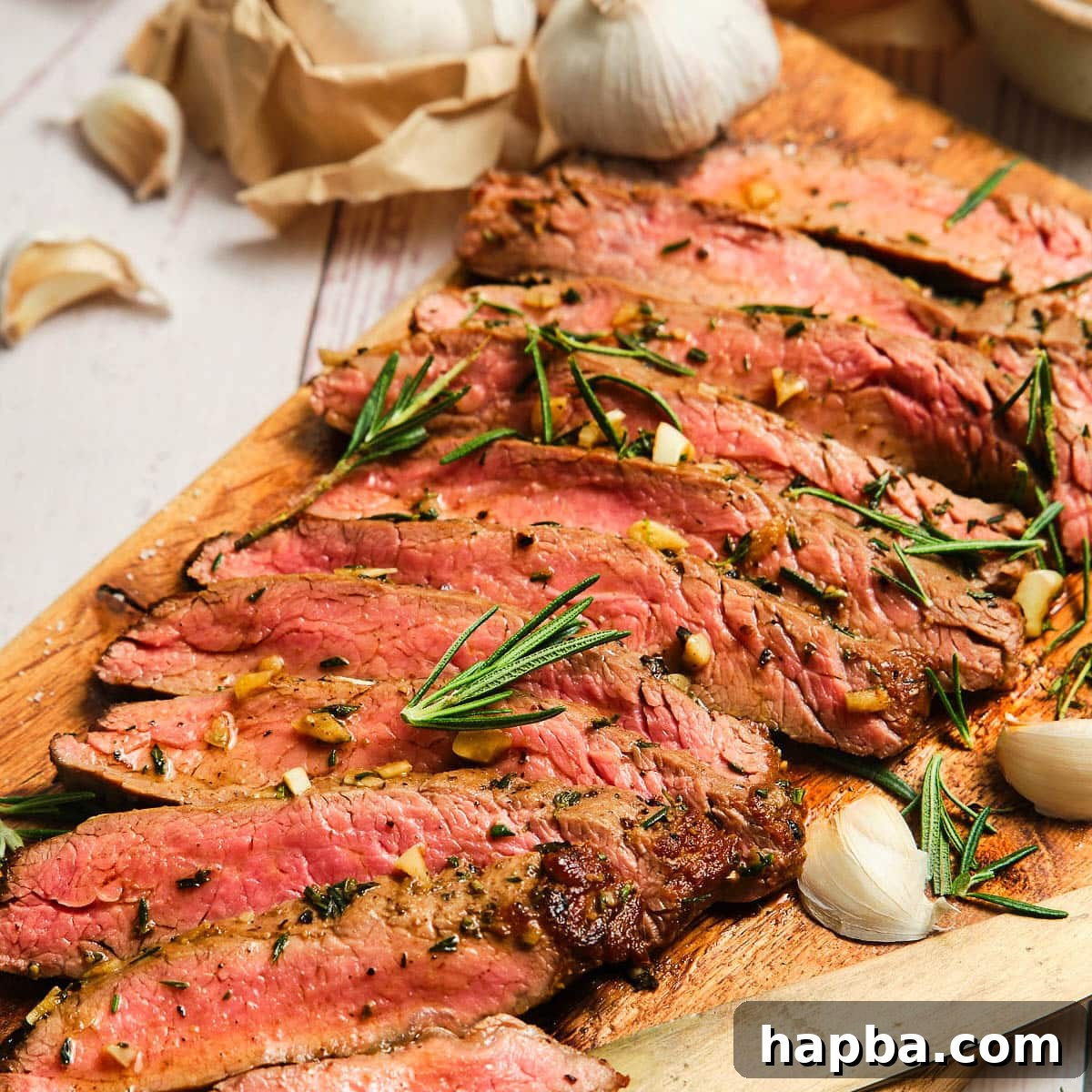
Transform your kitchen into a gourmet steakhouse with this incredibly flavorful and easy-to-make Pan-Seared Flank Steak recipe. Crafted entirely on your stovetop, this dish delivers succulent results in just 17 minutes from start to finish, making it a perfect choice for busy weeknights or special occasions.
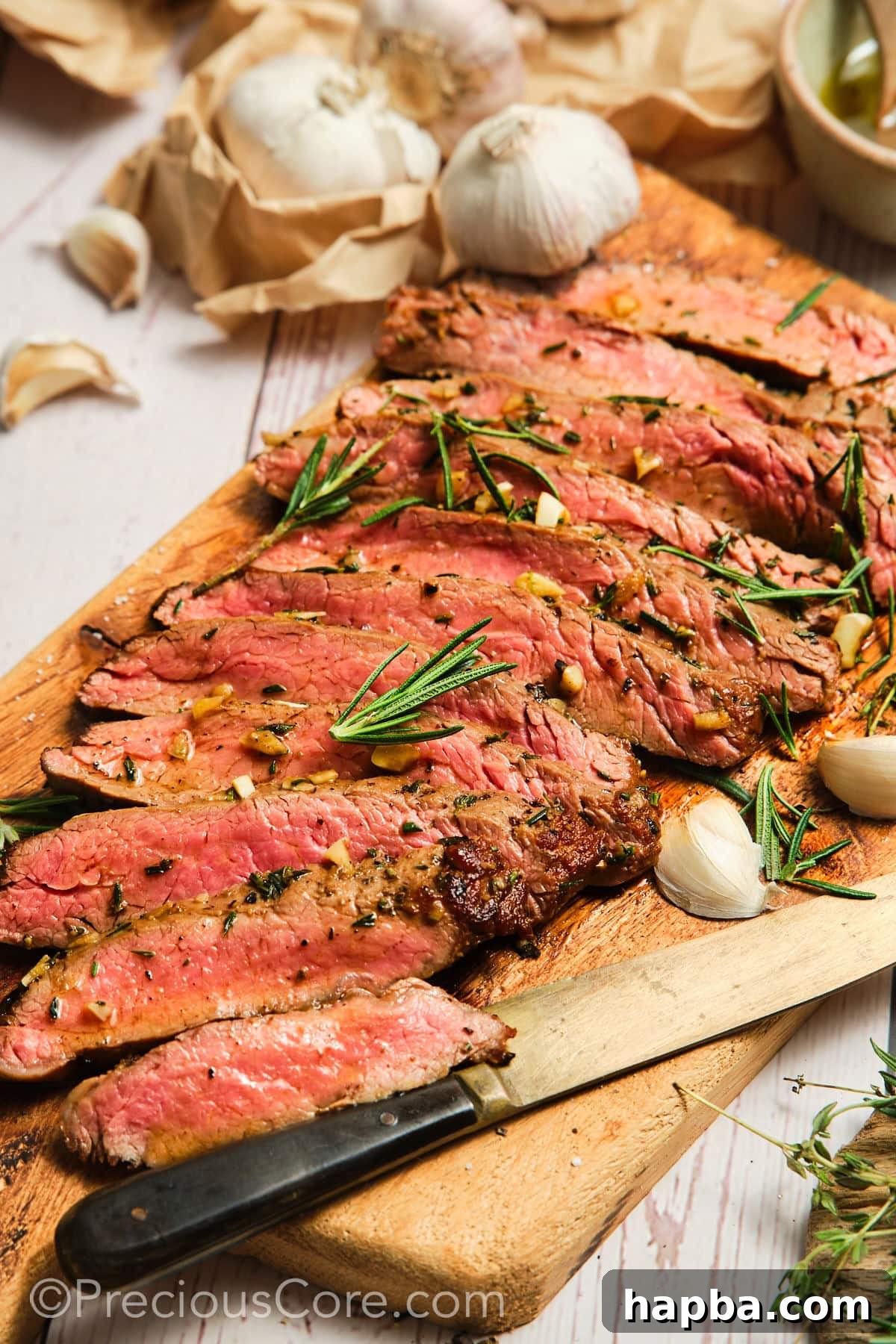
Forget the long waits for oven preheating; this recipe harnesses the power of a screaming hot skillet to create a steak that’s tender on the inside and beautifully seared on the outside. You’ll be amazed at how quickly you can achieve restaurant-quality results right at home.
Flank steak, known for its robust flavor and lean texture, pairs wonderfully with an array of appetizers, side dishes, and even desserts, allowing you to effortlessly assemble a complete and impressive meal. This recipe is a lifesaver for anyone juggling a busy schedule, especially for parents navigating demanding weeknights.
If you’ve enjoyed my popular Pan-Seared Ribeye Steak or the delightful Pan-Seared Boneless Pork Chops, then you already know my commitment to quick, easy, yet exceptionally delicious dishes. This flank steak recipe upholds that tradition, promising a memorable flavor experience that will linger long after the last bite.
Cooking flank steak doesn’t have to be intimidating or complex. This recipe simplifies the process without sacrificing taste, making it accessible for home cooks of all skill levels. It’s a testament to the idea that simple ingredients and straightforward techniques can yield extraordinary culinary results.
For a vibrant and refreshing dinner, especially ideal for warmer weather, consider serving this pan-seared flank steak alongside my crisp Red Cabbage Slaw and the refreshing Corn Avocado Salad. These pairings create a harmonious balance of flavors and textures.
Table of Contents
- Mastering Pan-Seared Flank Steak at Home
- Why This Pan-Seared Flank Steak Recipe Is a Must-Try
- Essential Ingredients for Your Flank Steak
- How to Achieve the Perfect Pan-Sear on Flank Steak
- Step 1: Prepare Your Steak for Optimal Sear
- Step 2: Achieve Optimal Skillet Temperature
- Step 3: Expertly Season Your Flank Steak
- Step 4: The Art of Searing and Basting
- Step 5: Infuse with Garlic and Herbs
- Step 6: The Crucial Resting Period
- Step 7: Slice and Serve Against the Grain
- Creative Variations and Substitutions for Flank Steak
- Pro Tips for an Unforgettable Pan-Seared Flank Steak
- Flank Steak Doneness: Internal Temperature Guide
- Frequently Asked Questions About Pan-Seared Flank Steak
- Perfect Pairings for Your Pan-Seared Flank Steak
- Explore More Steak Recipes
- Pan Seared Flank Steak Recipe
Mastering Pan-Seared Flank Steak at Home
Flank steak is a fascinating cut of beef, originating from the abdominal muscles of the cow, beneath the loin and sirloin. Characterized by its lean profile and robust beefy flavor, it stands out due to its long, distinct muscle fibers that run lengthwise through the cut. This unique grain dictates how it should be prepared and sliced to achieve maximum tenderness.
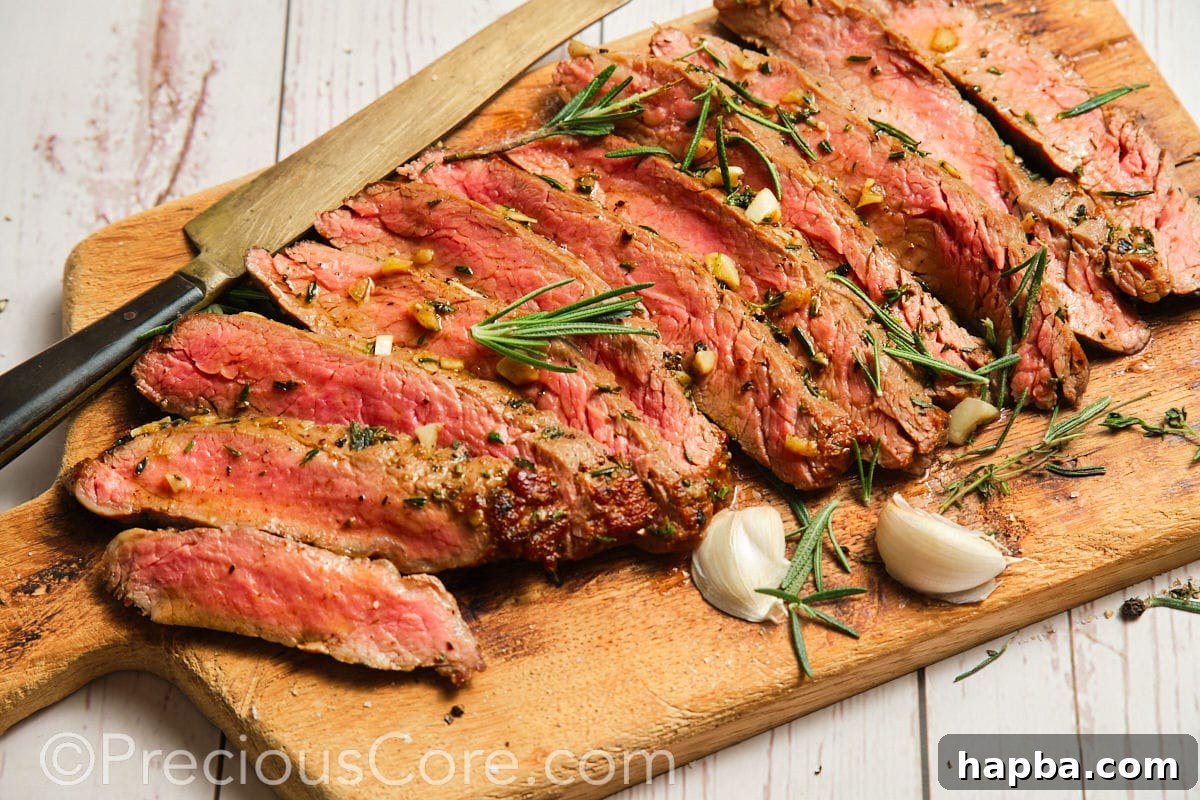
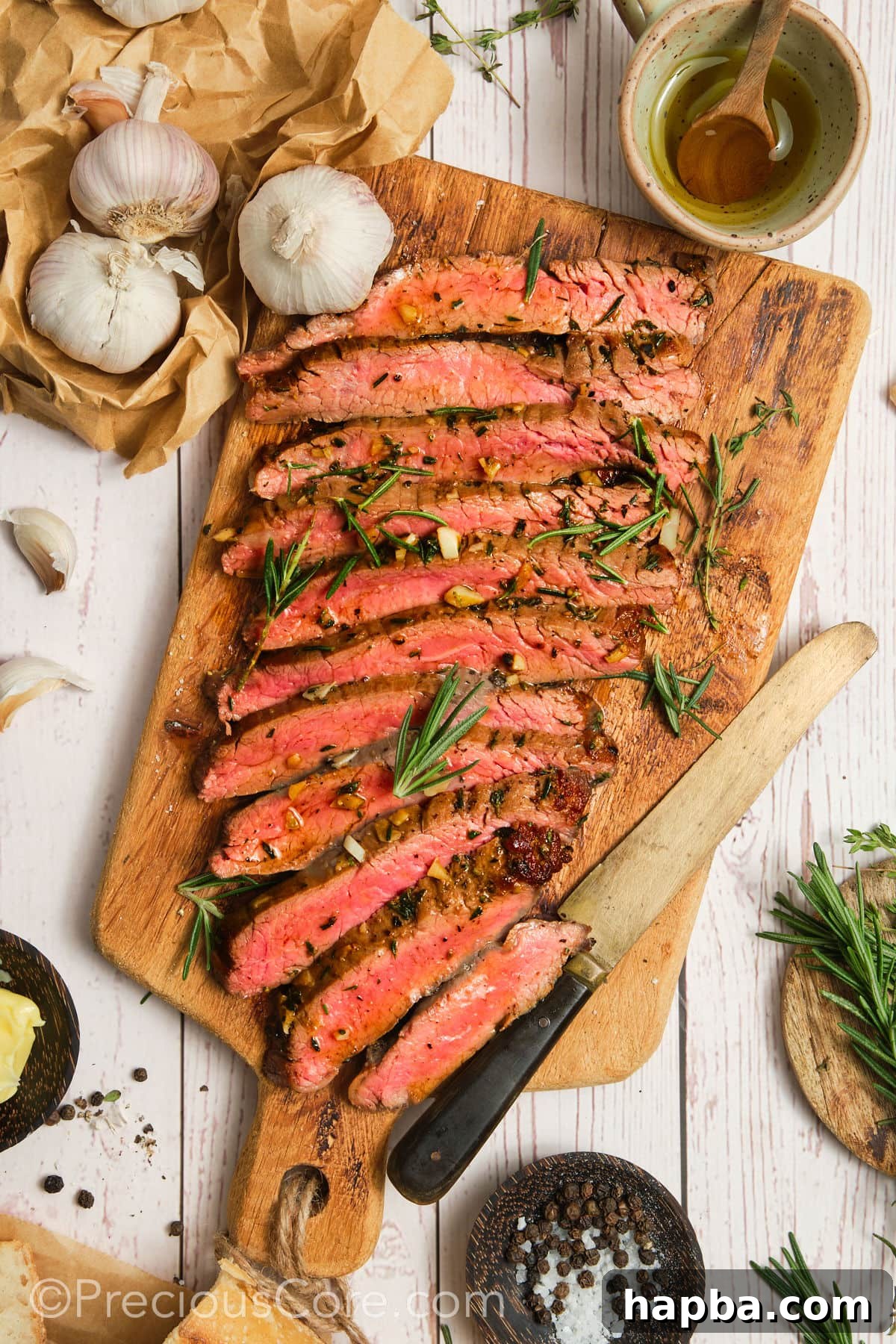
To truly unlock the tenderness of flank steak and make it melt-in-your-mouth enjoyable, it’s absolutely essential to slice it thinly against the grain. This technique shortens those long muscle fibers, breaking up connective tissues and ensuring each bite is easy to chew and incredibly tender. Neglecting this step can result in a chewy experience, so always remember to cut across the grain for the best results!
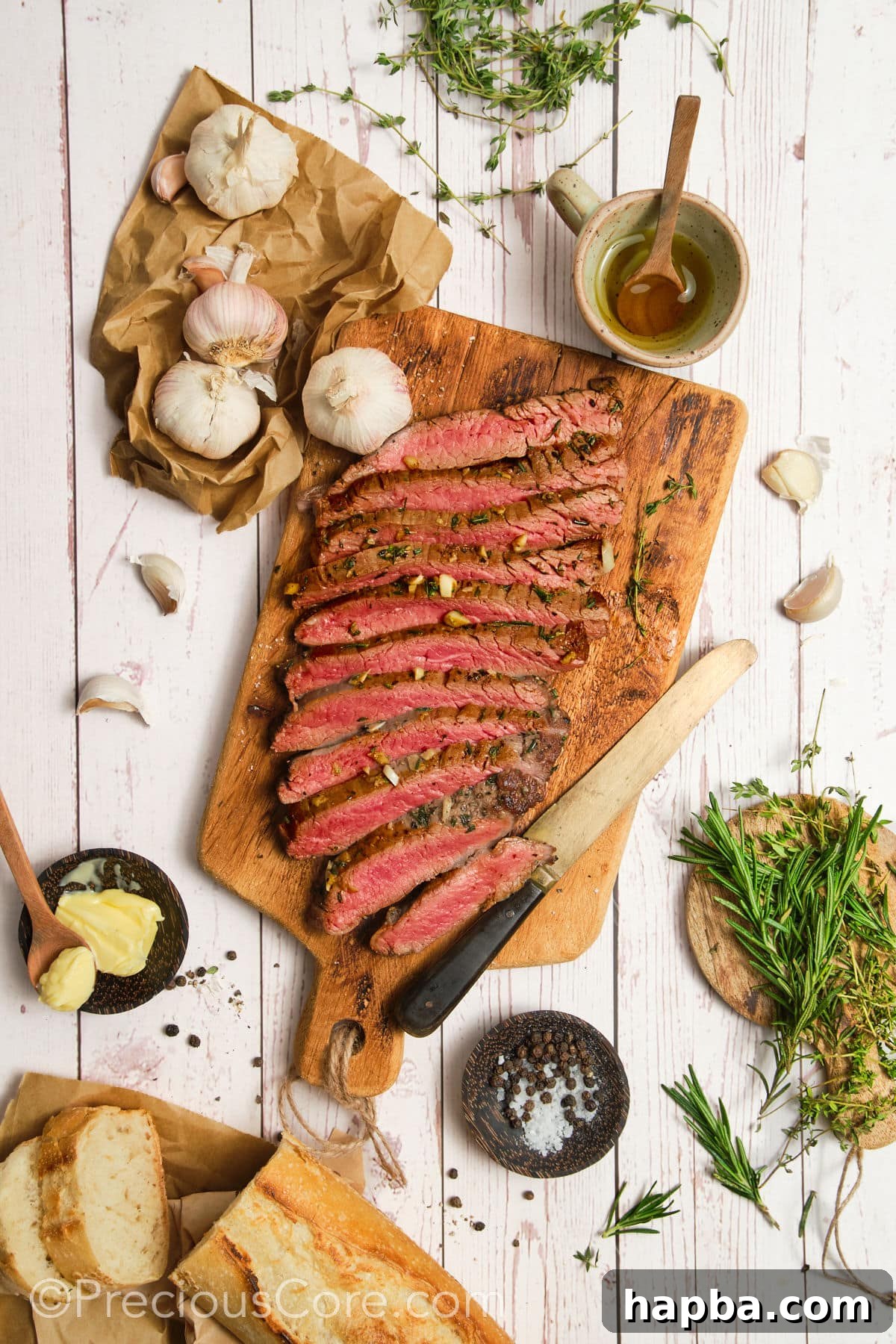
While this recipe specifically calls for flank steak, skirt steak makes an excellent substitute. Both cuts are favored for dishes like fajitas due to their quick cooking time and ability to become wonderfully tender when prepared correctly. They offer a similar hearty flavor profile, making them interchangeable in most recipes that require a quick, high-heat sear.
Speaking of fajitas and delicious wraps, have you had a chance to try my incredibly popular Beef Shawarma or the delightful Grilled Chicken Nuggets? Both would be absolutely divine wrapped in soft flatbreads, tortillas, or my homemade Shawarma Bread. These recipes perfectly complement the versatile nature of the dishes you can create with these cuts of meat.
The flavor profile of this Pan-Seared Flank Steak is truly unforgettable, especially when enhanced with a rich garlic herb butter sauce. Elevate your meal further by pairing it with classic comfort sides such as savory Fried Carrots, vibrant Garlic Butter Green Beans, or crispy Pan-Fried Brussels Sprouts With Bacon. Each side is carefully chosen to complement the robust flavor of the steak.
Why This Pan-Seared Flank Steak Recipe Is a Must-Try
Whether you’re a novice in the kitchen or a seasoned home chef, this pan-seared flank steak recipe is designed to impress with minimal effort. You’ll quickly discover why it’s destined to become a staple in your culinary repertoire:
- Incredibly Versatile: This recipe isn’t just for dinner tonight! Not only does it pair seamlessly with a vast array of side dishes, but any precious leftovers can be transformed into entirely new, exciting meals. Think savory steak fajitas, quick stir-fries, or creamy steak pastas – all fantastic options for effortless gourmet meals the next day. Its adaptability truly makes it a star ingredient.
- Bursting with Natural Flavor: Flank steak possesses an inherent, deep beefy flavor that requires minimal embellishment to shine. This recipe capitalizes on that natural richness, using simple yet powerful seasonings. You won’t need an overwhelming list of ingredients to make this steak taste its absolute best, making it a reliable and delicious option for even your busiest days.
- Highly Customizable for Every Palate: Dietary preferences or picky eaters in the family? No problem! This recipe is incredibly flexible. If certain herbs like thyme aren’t your favorite, feel free to swap them for fresh oregano, basil, or even a hint of parsley to maintain that delicious, succulent flavor. For those who prefer a milder taste, simply serve the rich herb butter on the side, allowing everyone to customize their plate. This adaptability ensures everyone at the table can enjoy a meal tailored to their liking.
Essential Ingredients for Your Flank Steak
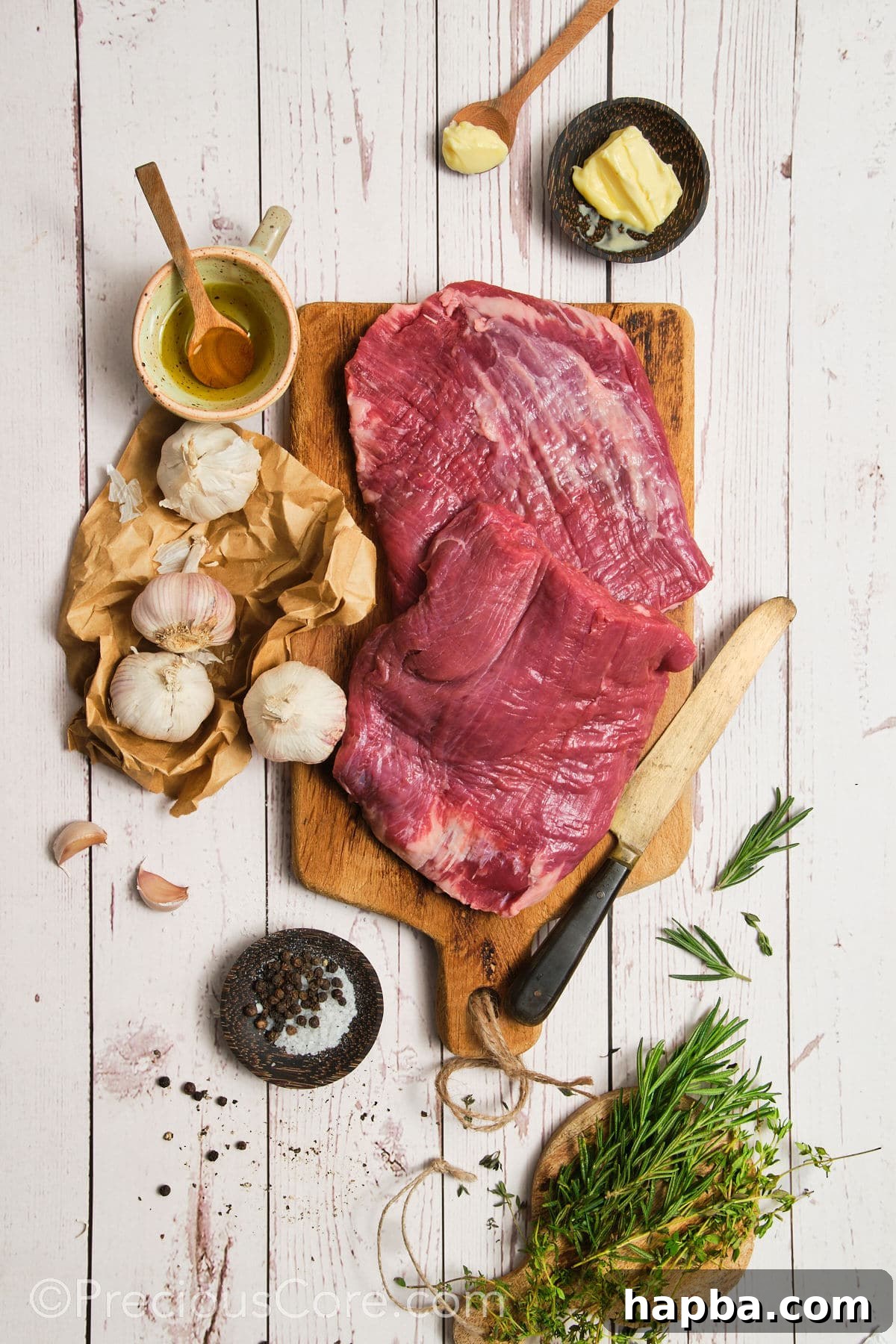
The beauty of this recipe lies in its simplicity, requiring just a handful of quality ingredients to create a truly spectacular dish. Here’s a closer look at the key players that bring this pan-seared flank steak to life:
Flank Steak: The star of the show! When selecting your flank steak, look for a cut with a deep red color and minimal marbling. For the best cooking results, it’s crucial to bring the steak to room temperature before it hits the pan. Remove it from the refrigerator and let it rest on your kitchen counter for 30 minutes to an hour. This step ensures more even cooking and a superior sear.
Garlic: This aromatic powerhouse is non-negotiable for an explosion of flavor. Freshly minced garlic provides a pungent, fragrant base that complements the beef beautifully, intertwining with the other ingredients to create an irresistible sauce. While pre-minced garlic is convenient, I highly recommend fresh cloves for their unparalleled aroma and taste impact.
Butter: Unsalted butter forms the luxurious foundation of our garlic-herb sauce. As it melts and combines with the other flavors, it creates a rich, velvety coating that bastes the steak to perfection. Opt for unsalted butter to have full control over the saltiness of your dish; if using salted butter, remember to adjust the amount of added salt accordingly.
Fresh Herbs: Rosemary and thyme are the classic duo that elevate the rich, savory notes of the steak. Their aromatic, earthy fragrances infuse the butter, transforming it into a vibrant, flavorful elixir. Beyond their incredible taste contribution, these fresh sprigs also add a beautiful touch of color, enhancing the visual appeal of your perfectly seared steak.
How to Achieve the Perfect Pan-Sear on Flank Steak
Follow these straightforward steps to create a wonderfully seared flank steak that rivals your favorite steakhouse.
Step 1: Prepare Your Steak for Optimal Sear
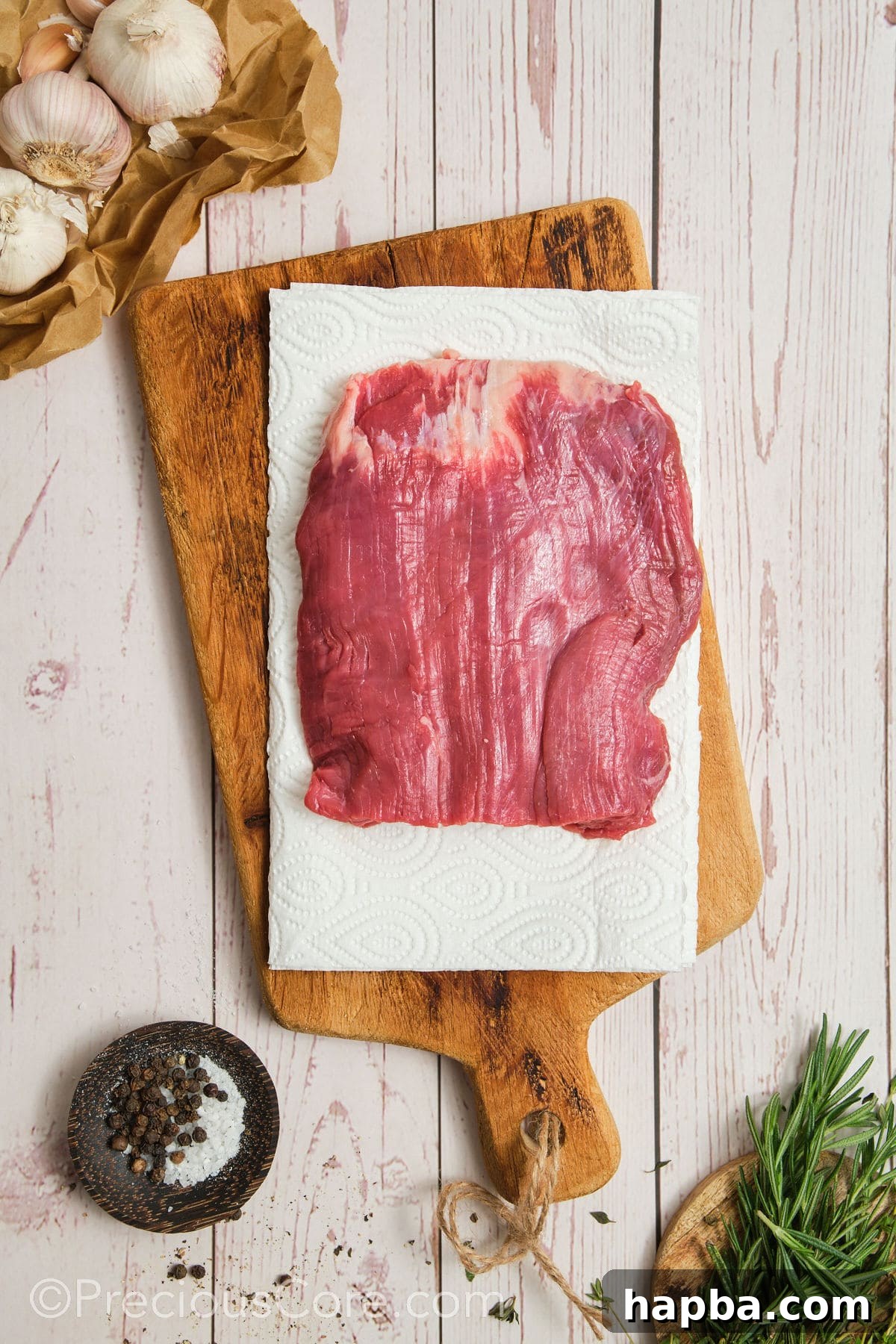
Thoroughly pat dry both sides of your flank steak with paper towels. This seemingly simple step is critical for achieving a beautiful, crispy crust. Excess moisture on the surface of the meat will steam rather than sear, hindering the development of that desirable golden-brown exterior known as the Maillard reaction.
Step 2: Achieve Optimal Skillet Temperature
Place a heavy-bottomed cast iron skillet (or another durable, heat-retaining pan) on medium-high heat. Allow it to heat undisturbed for 4-5 minutes, until it’s smoking hot. The smoke indicates the pan is sufficiently hot to create an instant, deep sear, which is essential for locking in the steak’s juices and developing a rich flavor.
Step 3: Expertly Season Your Flank Steak
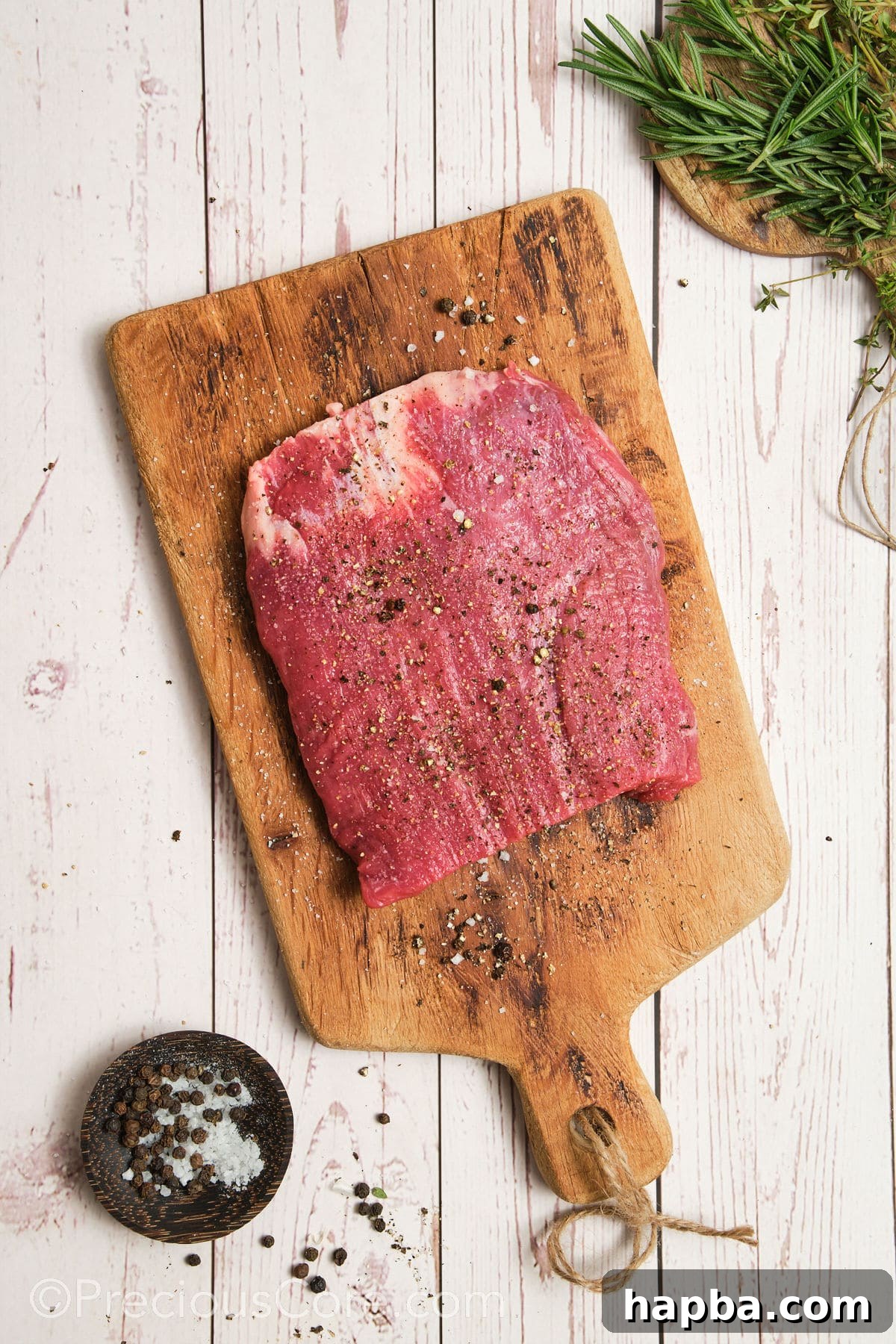
While your skillet is heating, generously season both sides of the dried flank steak with salt and freshly ground black pepper. Don’t be shy with the seasoning; it forms the foundational flavor and helps in developing that irresistible crust.
Step 4: The Art of Searing and Basting
Once your skillet is smoking hot, carefully pour 1 tablespoon of olive oil into the pan and swirl it around to coat the entire bottom surface. Immediately place the seasoned flank steak into the skillet. Allow it to sear undisturbed for 2-3 minutes on the first side, or until a beautiful, deep brown crust forms. Then, flip the steak to the other side and continue cooking for another 2 minutes, or until your desired level of doneness is reached. Refer to the internal temperature guide below for precise cooking.
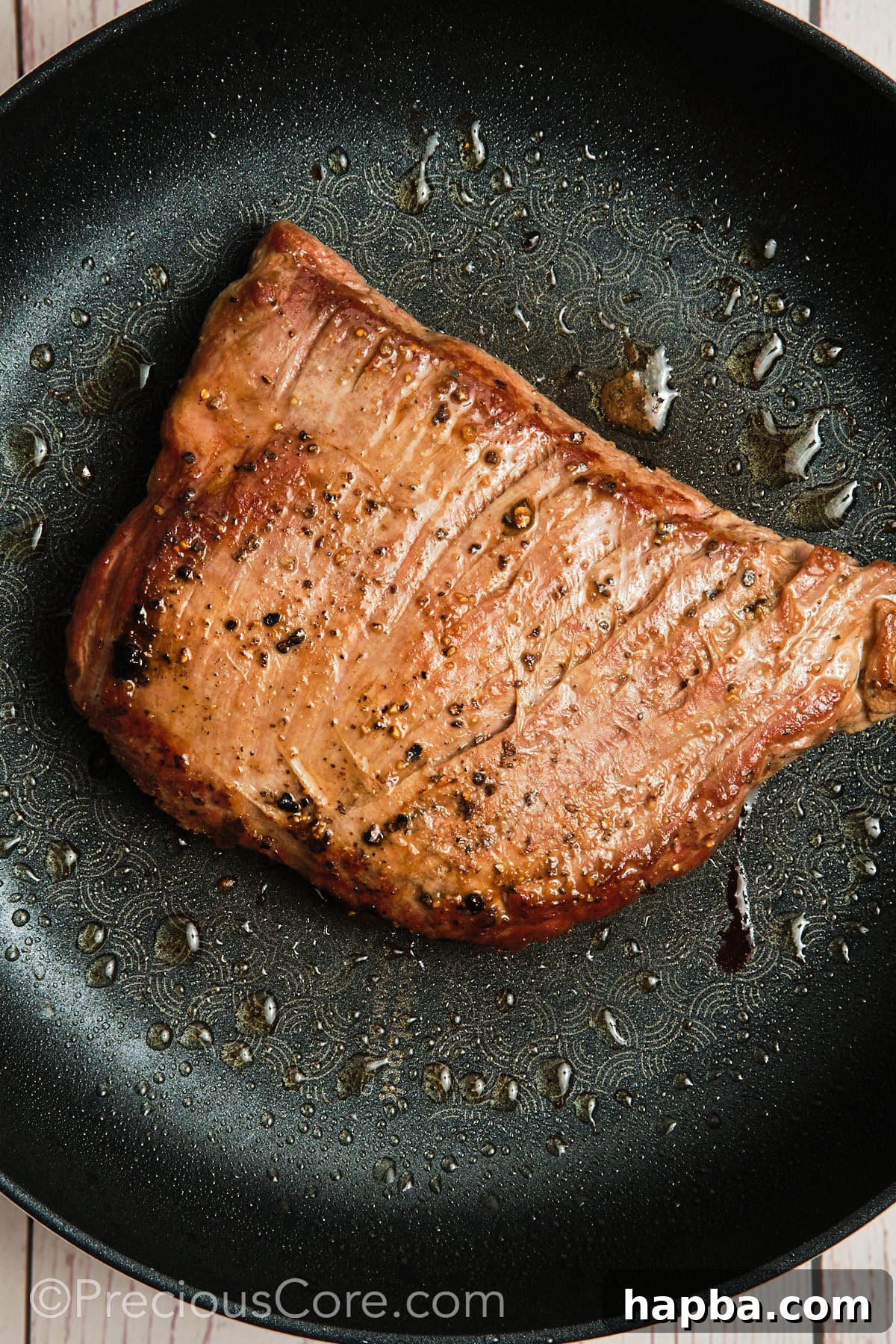
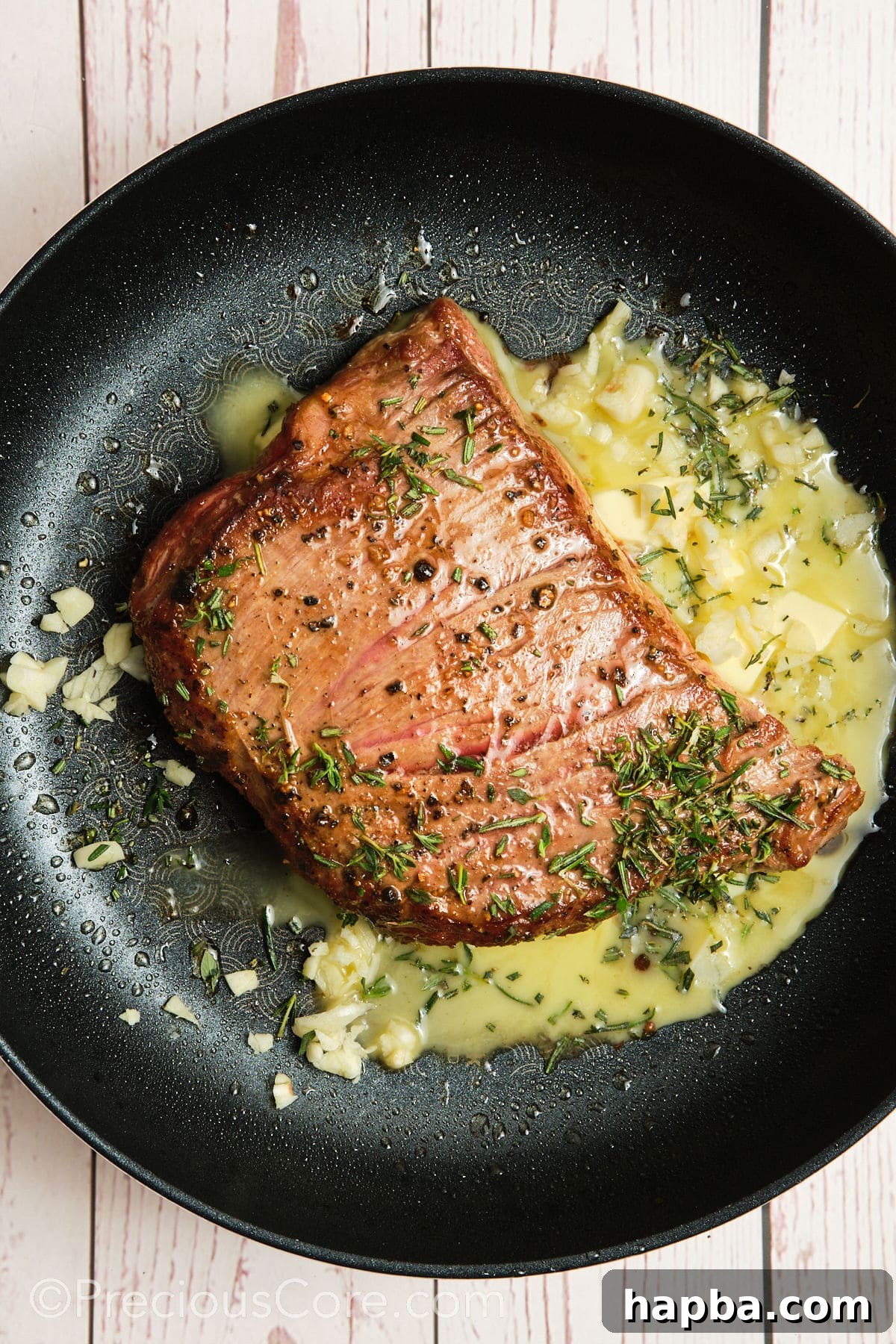
After flipping the steaks, cut the unsalted butter into small cubes and dot them around the steak in the pan. The melting butter will begin to create a luscious base for our herb infusion.
A crucial tip for successful searing: resist the urge to move the steak too early. If your pan isn’t hot enough, the steak may stick. However, with a properly heated pan, once a beautiful, dark brown crust has formed on the first side, the meat should naturally release from the pan with ease. Patience is key for that perfect crust!
Step 5: Infuse with Garlic and Herbs
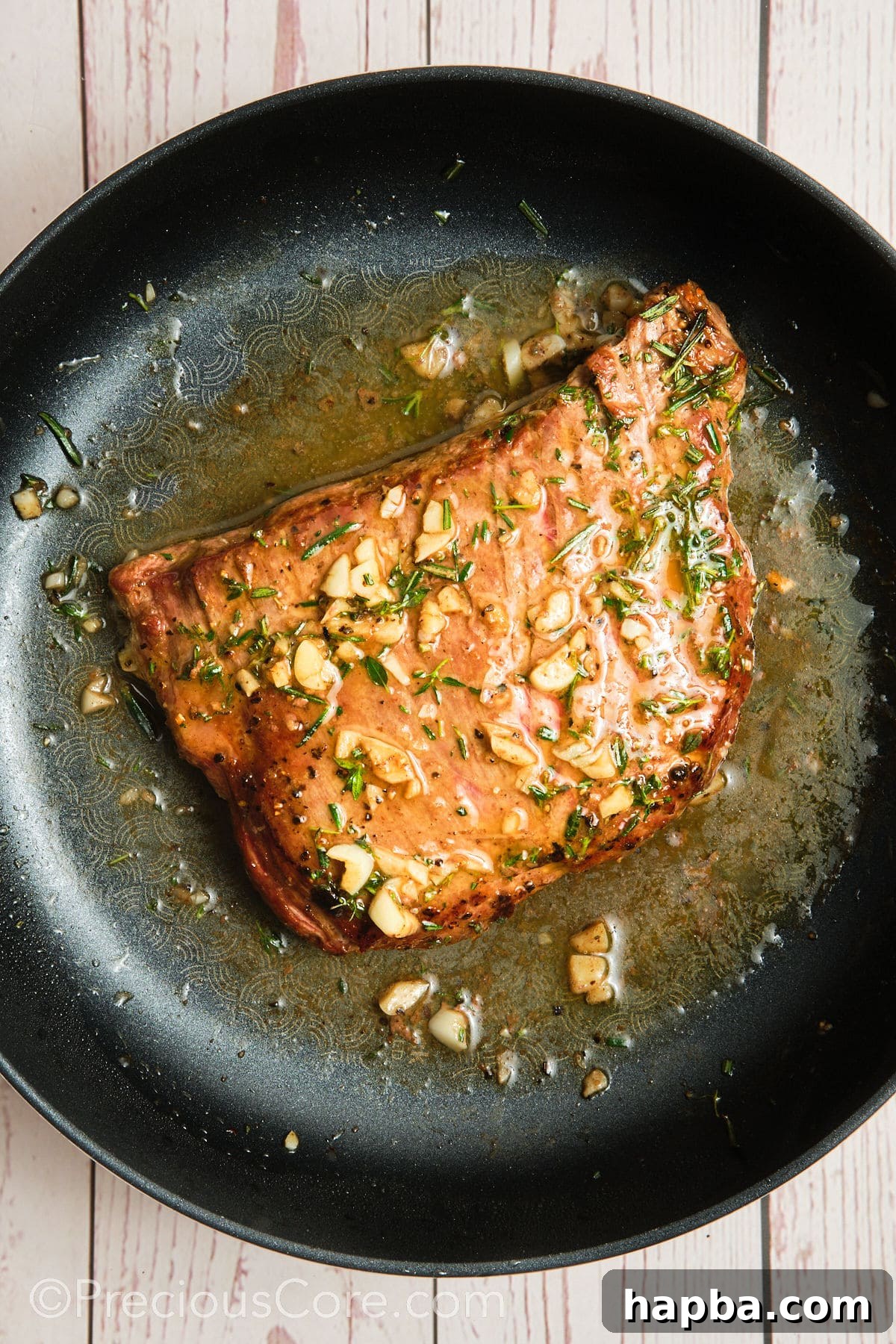
Once the butter has fully melted, add the 4 minced garlic cloves along with the 2 sprigs of fresh rosemary and 2 sprigs of fresh thyme into the skillet. Allow them to gently sizzle in the butter for about 30-60 seconds, infusing the butter with their incredible aromas and flavors. Then, using a spoon, continuously baste the sizzling garlic-herb butter over the cooking steaks. This continuous basting further enriches the steak’s flavor and keeps it moist.
Step 6: The Crucial Resting Period
After reaching your desired doneness, remove the steaks from the skillet and place them on a cutting board. Immediately cover them loosely with aluminum foil and let them rest for a full 5 minutes. This resting period is non-negotiable; it allows the muscle fibers, which have tightened during cooking, to relax and reabsorb their flavorful juices, ensuring a supremely tender and succulent steak.
Step 7: Slice and Serve Against the Grain
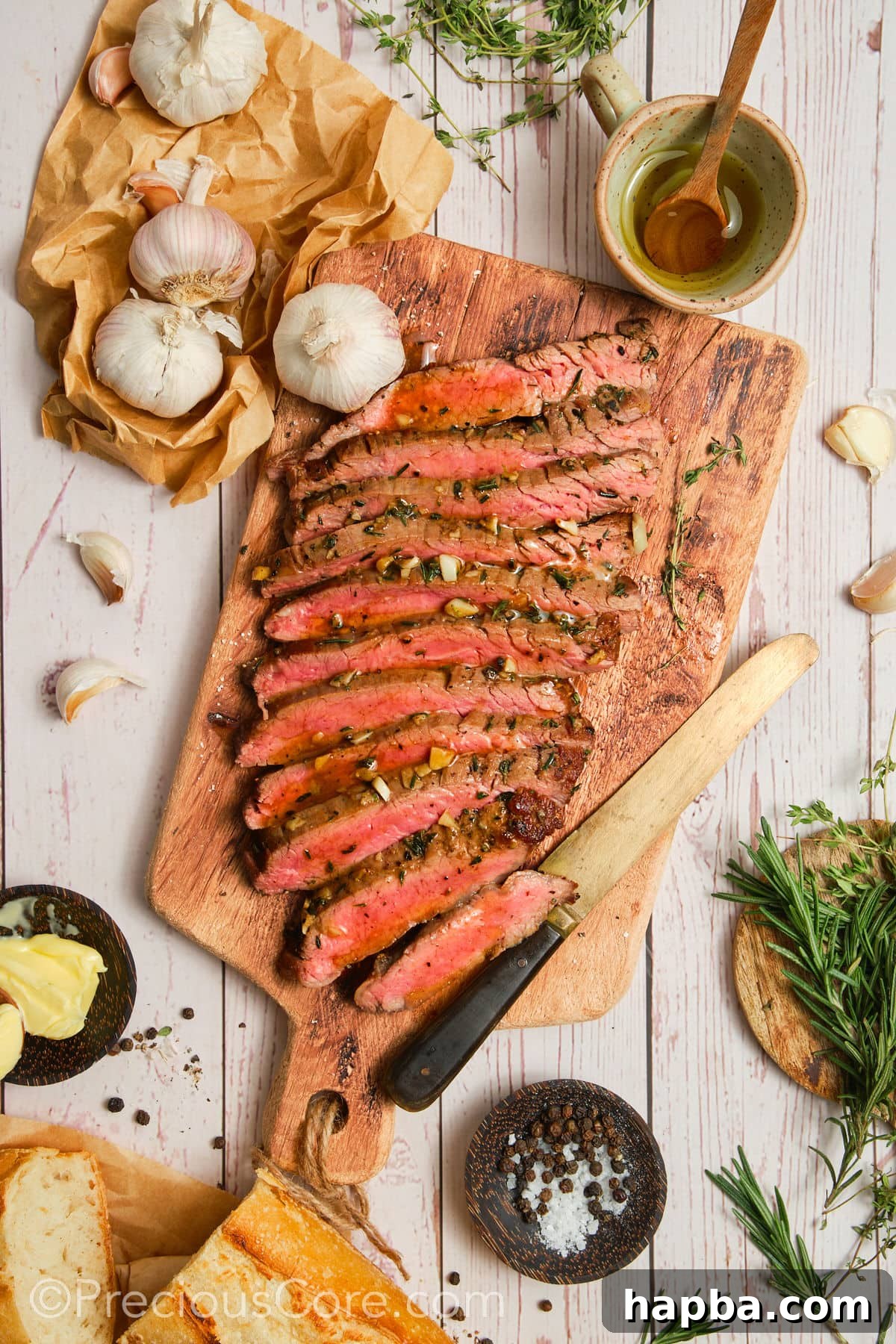
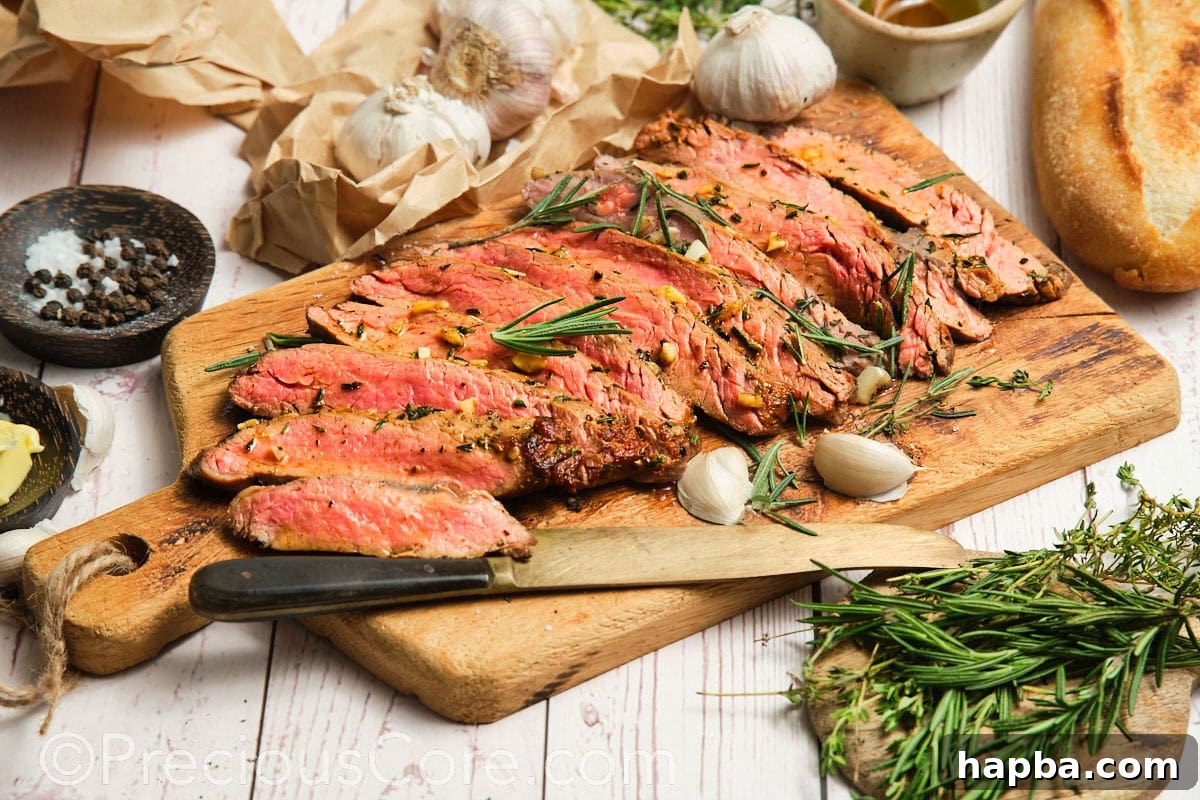
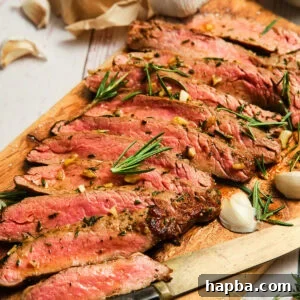
Once rested, transfer the steak to a clean cutting board. Using a sharp knife, thinly slice the steaks against the grain. This technique is paramount for flank steak, as it shortens the long muscle fibers, making each slice incredibly tender and easy to chew. For an extra touch of freshness and color, garnish with a sprinkle of fresh minced parsley, if desired, before serving immediately.
Creative Variations and Substitutions for Flank Steak
This pan-seared flank steak recipe serves as an excellent foundation, but don’t hesitate to get creative and customize it to your taste or dietary needs. Here are some inspiring variations and substitutions to try:
- Swap the Beef for Chicken: For a lighter alternative, consider using 1 ½ pounds of boneless, skinless chicken thighs. Ensure they are pounded to an even thickness for uniform cooking. Cook until the internal temperature reaches 165°F (74°C) and the juices run clear, typically taking slightly longer than flank steak.
- Alternate Steak Cuts: If flank steak isn’t available, skirt steak is a fantastic, readily interchangeable option. Both cuts offer similar texture and flavor profiles when seared quickly over high heat, making them ideal for this recipe.
- Experiment with Fresh Herbs: While rosemary and thyme are classic, feel free to explore other fresh herbs. Oregano, cilantro, tarragon, or basil can introduce exciting new flavor dimensions to your garlic butter sauce. Don’t be afraid to mix and match!
- Dairy-Free Option: If you or your guests have dairy restrictions, easily make this recipe dairy-free by substituting the unsalted butter with an equal amount of olive oil or a high-quality vegan butter. You’ll still achieve a rich flavor without the dairy.
- Bold Seasoning Alternatives: Elevate your steak’s flavor by using a robust marinade or seasoning blend. My irresistible Green Seasoning Marinade offers a powerful punch of fresh herbs and spices, taking your steak to the next level. Alternatively, a simple blend of smoked paprika, cumin, and chili powder can create a delightful Southwestern flair.
- Using Dried Herbs: If fresh herbs are not readily available, dried herbs can be used at about half the amount. Keep in mind that dried herbs often have a more concentrated flavor, and while the visual appeal might be less vibrant, the taste will still be lovely.
- Pan-Seared Flank Steak Salad: Revitalize your everyday salad! Turn leftover flank steak into a gourmet meal by slicing it and adding it to a vibrant salad. Combine crisp romaine lettuce, cherry tomatoes, thinly sliced red onion, sweet corn, and creamy avocado. Finish with a sprinkle of feta cheese, salt, pepper, and a generous drizzle of balsamic vinaigrette for a truly satisfying and hearty salad.
Pro Tips for an Unforgettable Pan-Seared Flank Steak
Achieving a perfectly pan-seared flank steak is simpler than you might think, especially with these expert tips:
- Room Temperature Steak: Always allow your flank steak to come to room temperature for 30-60 minutes before cooking. This crucial step promotes more even heat distribution throughout the meat and contributes to a richer, darker, and more uniform sear on the surface.
- The Power of Drying: Patting the raw steak thoroughly dry with paper towels is essential. Moisture on the surface inhibits the Maillard reaction – the chemical process responsible for the delicious browning and complex flavors developed when meat is seared. A dry surface ensures proper caramelization and a superior crust.
- Choose the Right Frying Pan: A heavy-bottomed pan with excellent heat conduction is key. Cast-iron skillets are highly recommended for their ability to retain and distribute heat evenly and powerfully, resulting in that coveted perfect sear. However, any robust skillet you have on hand will work, provided it gets sufficiently hot.
- Rest Your Meat: Resting the steak after it comes off the heat is perhaps the most important step for a juicy final product. Covering it loosely with foil for at least 5 minutes allows the muscle fibers, which contract during cooking, to relax. This relaxation prevents the flavorful juices from escaping onto your cutting board when sliced, ensuring every bite is succulent.
- Trust Your Meat Thermometer: Flank steak can feel soft to the touch even when well-cooked, making it challenging to gauge doneness by touch alone. An instant-read meat thermometer is your best friend for achieving your desired doneness with precision. Refer to the internal temperature guide below for perfect results every time.
- Brighten the Sauce: For an extra pop of flavor and to cut through the richness of the butter sauce, add a small squeeze of fresh lemon juice or lime juice just before serving. This brightens the overall profile of the dish.
- Storing Leftovers: Any leftover steak (if you’re lucky enough to have any!) can be stored in an airtight container with a tightly fitting lid in the refrigerator for up to 3-4 days. For maximum juiciness, pour any remaining garlic-herb butter sauce over the steak before storing. While plastic wrap is an option, an airtight container keeps the steak fresher for longer.
For the absolute tenderest pan-seared steak, remember this golden rule: always cut against the grain. This applies whether you’re slicing for adults or dicing into smaller, bite-sized morsels for children – cutting against the grain ensures every piece is as tender as possible.
Craving more delightful dishes? Be sure to explore my recipes for savory Potato Cheese Balls and my mouthwatering Mushroom Pizza Recipe for more culinary inspiration.
Flank Steak Doneness: Internal Temperature Guide
Achieve your preferred level of flank steak doneness with confidence by using an instant-read meat thermometer and following this precise internal temperature cooking guide:
- Rare: 120-125°F (49-52°C) – Characterized by a cool, red center and a very juicy texture.
- Medium Rare: 130-135°F (54-57°C) – Presents a warm, pink center that is both juicy and wonderfully tender. This is often considered the ideal doneness for flank steak.
- Medium: 140-145°F (60-63°C) – Shows a warm, slightly pink center, maintaining a good level of juiciness.
- Medium Well: 150-155°F (66-68°C) – Reveals a hint of pink in the very center, with a firmer texture and less juiciness.
- Well Done: 160°F (71°C) and above – Offers little to no pink throughout, resulting in a firmer texture and significantly less juice.
Frequently Asked Questions About Pan-Seared Flank Steak
For optimal pan-searing results, a cast-iron skillet is highly recommended. Cast iron excels at retaining and distributing heat evenly, which is crucial for achieving a consistent, crispy golden crust on your steak and preventing uneven cooking. Its ability to get smoking hot makes it ideal for developing that perfect sear. However, don’t worry if you don’t own one; any heavy-bottomed skillet that can get very hot will also work effectively. The key is to ensure the skillet is thoroughly preheated until it’s smoking before adding the steak.
The primary distinction lies in the amount of oil used and the cooking temperature. When you pan-sear, you use a minimal amount of oil and extremely high heat to rapidly create a flavorful, caramelized crust on the exterior of the meat. This quick, intense heat helps to lock in the juices, resulting in a tender interior. Pan-frying, conversely, typically involves using a more generous amount of oil or fat and a lower temperature. The goal of pan-frying is to cook the item more thoroughly and gently, often for ingredients that require longer cooking times without burning the exterior.
Pan-seared flank steak is incredibly versatile and pairs well with a variety of sauces to enhance its robust flavor:
Chimichurri sauce: This vibrant, herbaceous Argentinian sauce, made with fresh parsley, oregano, garlic, red wine vinegar, and olive oil, adds a zesty kick and a beautiful pop of color to your plate.
Pesto: A classic Italian sauce featuring basil, pine nuts, garlic, Parmesan, and olive oil, pesto offers a bold, savory, and slightly tangy flavor that beautifully complements the richness of the steak. It also adds a fresh, bright green hue.
Browned bits (Pan) sauce: You can easily create a simple yet incredibly flavorful sauce right in your pan after cooking the steak. After removing the steak, deglaze the hot skillet with a splash of chicken or beef broth, scraping up all the delicious browned bits (fond) from the bottom. Reduce slightly until it thickens, then pour this savory sauce over your sliced flank steak for an extra layer of juiciness and intense flavor.
Perfect Pairings for Your Pan-Seared Flank Steak
Rosemary Garlic Mashed Potatoes
Garlic Herb Rice
Sweet Dinner Rolls Recipe
Sautéed Vegetables
Fried Carrots
Easy Roasted Potatoes
Explore More Steak Recipes
Beef Shawarma Recipe
Steak Fried Rice
Steak and Scrambled Eggs
Steak and Pasta
Pan-Seared Ribeye Steaks
Ribeye Steak Sandwich
If you try this delightful recipe, please take a moment to leave a star rating below. Your feedback helps others discover and enjoy this recipe, and I truly appreciate hearing from you! Thank you!
Pan-Seared Flank Steak
Rate
Print Recipe
Ingredients
Adjust servings: 1x (4 servings) | 2x | 3x
- 1.5 pounds flank steak at room temperature
- ¾ teaspoon salt
- ½ teaspoon ground black pepper
- 1 tablespoon olive oil light olive oil
- 4 garlic cloves, peeled and minced
- 2 tablespoons unsalted butter
- 2 sprigs fresh rosemary leaves removed from stem and minced
- 2 sprigs fresh thyme leaves removed from stem and minced
- 1 tablespoon fresh minced parsley optional, for garnish
Instructions
-
Pat the flank steak thoroughly dry with paper towels on both sides. This step is essential for achieving a perfect, crispy sear.1.5 pounds flank steak
-
Place a cast iron skillet, or any heavy-bottomed pan, on medium-high heat and let it preheat for 4-5 minutes until it is smoking hot.
-
While the skillet heats, evenly season both sides of the dried steak with salt and freshly ground black pepper.¾ teaspoon salt, ½ teaspoon ground black pepper
-
Pour 1 tablespoon of olive oil into the smoking hot skillet and swirl to coat the bottom of the pan evenly. This helps prevent sticking and promotes an even sear.1 tablespoon olive oil
-
Carefully place the flank steak into the hot skillet, pressing it down gently to ensure full contact with the pan. This helps create a uniform crust.
-
Sear the steak for 2-3 minutes on the first side, or until a deep golden-brown crust forms. Flip the steak and cook for another 2 minutes on the second side, or until your desired doneness is reached. Consult the internal temperature guide in the recipe notes for precision.
-
Once flipped, cut the unsalted butter into small cubes and dot them around the steak. Allow the butter to melt, then add the minced garlic, fresh rosemary, and fresh thyme. Let them sizzle briefly, then continuously spoon the flavorful garlic-herb butter sauce over the flank steak to baste it.4 garlic cloves, peeled and minced, 2 tablespoons unsalted butter, 2 sprigs fresh rosemary, 2 sprigs fresh thyme
-
Remove the steak from the heat and transfer it to a cutting board. Cover loosely with aluminum foil and let it rest for 5 minutes to reabsorb its juices, ensuring maximum tenderness. Finally, thinly slice the steak against the grain and serve warm, garnished with fresh minced parsley if desired.1 tablespoon fresh minced parsley
Notes
2. Always allow the steak to rest, covered, for approximately 5 minutes after cooking before slicing. This critical step ensures the juices redistribute throughout the meat, resulting in the juiciest possible steak.
3. If you only have salted butter, you can use it, but be sure to reduce the amount of added salt when seasoning the steak to avoid over-salting.
4. For accurate doneness, especially with thinner cuts like flank steak, an instant-read meat thermometer is indispensable. Follow this internal temperature guide:
- Rare: 120-125°F (49-52°C) – Red center, very juicy.
- Medium Rare: 130-135°F (54-57°C) – Pink center, juicy and tender.
- Medium: 140-145°F (60-63°C) – Pink to slightly pink center, still juicy.
- Medium Well: 150-155°F (66-68°C) – Hint of pink in the center, less juicy.
- Well Done: 160°F (71°C) and above – Little to no pink, firmer texture, less juicy.