
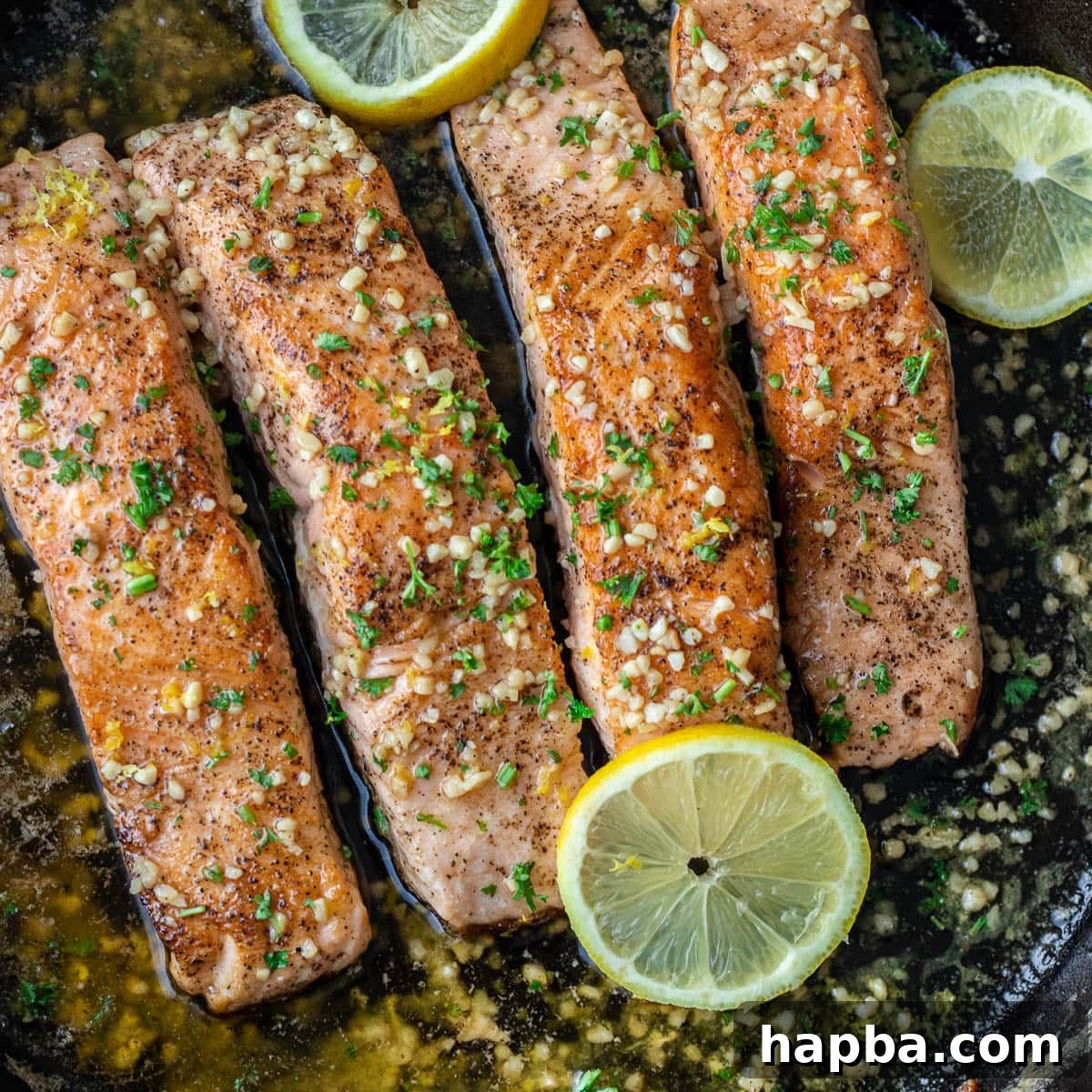
Perfect Lemon Butter Salmon: Your New Go-To 30-Minute Recipe
Get ready to elevate your weeknight dinners with this incredible Lemon Butter Salmon recipe! In 30 minutes or less, you can transform simple ingredients into a dish that’s not only incredibly flaky and moist but also boasts a rich, savory flavor that rivals any restaurant creation. With just six main ingredients (excluding salt and pepper, which you likely already have), you’ll be serving up a healthy, satisfying meal that the whole family will adore.
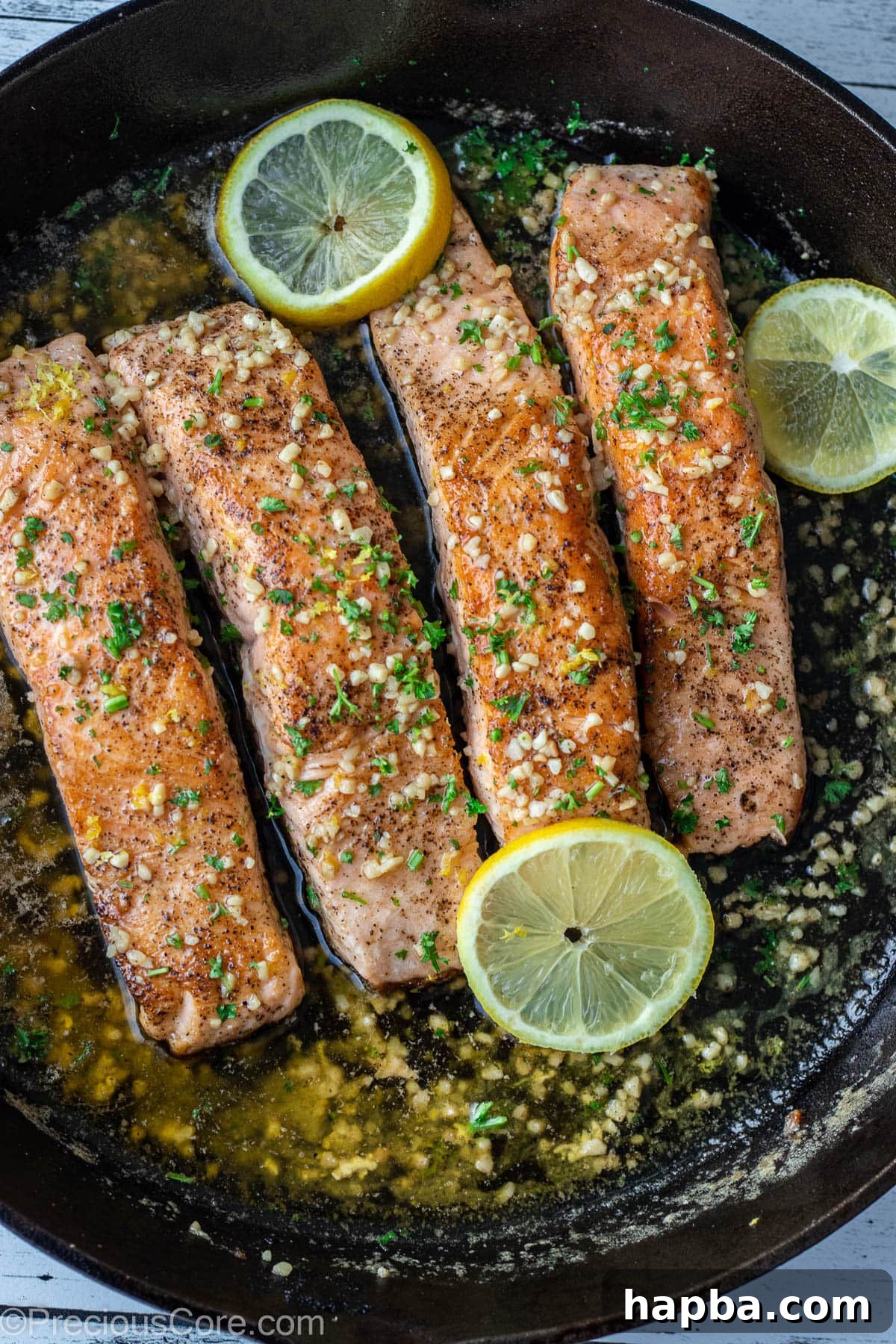
If you’re craving salmon that’s bursting with bright lemon, rich butter, and aromatic garlic, cooked to absolute perfection, then your search ends here. This isn’t just a recipe; it’s a blessing for anyone looking to add a truly exceptional seafood dish to their repertoire. Prepare to be amazed by the depth of flavor and ease of preparation!
Building on the success of my popular Pan Grilled Salmon, this Lemon Butter Salmon takes things to an entirely new level. The secret lies in its insanely delicious lemony buttery sauce, which coats every succulent flake of fish, ensuring a memorable dining experience. You’ll find yourself coming back to this recipe again and again!
For more convenient and flavorful salmon dishes, don’t miss my Salmon and Broccoli Sheet Pan recipe – a fantastic one-pan dinner solution. If you’re pressed for time, my 17-minute Pan-Fried Teriyaki Salmon is a game-changer. And for a truly effortless yet tasty option, check out my ridiculously easy Baked Cajun Salmon.
Table of Contents
- Why You’ll Love This Lemon Butter Salmon
- Ingredients for Lemon Butter Salmon
- Thawing Salmon Properly
- Step-by-Step: How To Make Lemon Butter Salmon
- Crafting the Perfect Lemon Butter Sauce for Salmon
- Salmon Cooking Perfection Guide
- Smart Salmon Buying Guide
- Exploring Types of Salmon
- Substitutions for Salmon in This Recipe
- Delicious Variations to Try
- Essential Equipment for Pan-Searing Salmon
- Pro Tip: For Flaky Salmon
- Frequently Asked Questions About Salmon
- Related Salmon Recipes
- Serving Suggestions for Lemon Butter Salmon
- Lemon Butter Salmon Recipe Card
Why You’ll Love This Lemon Butter Salmon
Beyond its incredibly quick cooking time, this Lemon Butter Salmon recipe stands out for several reasons:
- Unbeatable Flavor: The combination of fresh lemon, rich butter, and pungent garlic creates a harmonious flavor profile that is both vibrant and deeply satisfying.
- Healthy & Nutritious: Salmon is a powerhouse of Omega-3 fatty acids, promoting heart health and brain function. It’s also an excellent source of lean protein.
- Simple Ingredients: You won’t need an extensive grocery list for this dish. Most ingredients are common pantry staples, making it accessible for any home cook.
- Restaurant Quality at Home: Achieve a perfectly flaky and tender salmon fillet with a beautiful golden sear, reminiscent of a gourmet meal, right in your own kitchen.
- Versatile: This recipe pairs wonderfully with a myriad of side dishes, from simple steamed vegetables to creamy mashed potatoes or light salads.
- Quick & Easy: Ideal for busy weeknights, this recipe comes together with minimal effort and maximum reward.
Ingredients for Lemon Butter Salmon
Achieving restaurant-quality Lemon Butter Salmon starts with a few high-quality, fresh ingredients. Here’s what you’ll need, beyond your standard salt and pepper, to create this succulent dish:
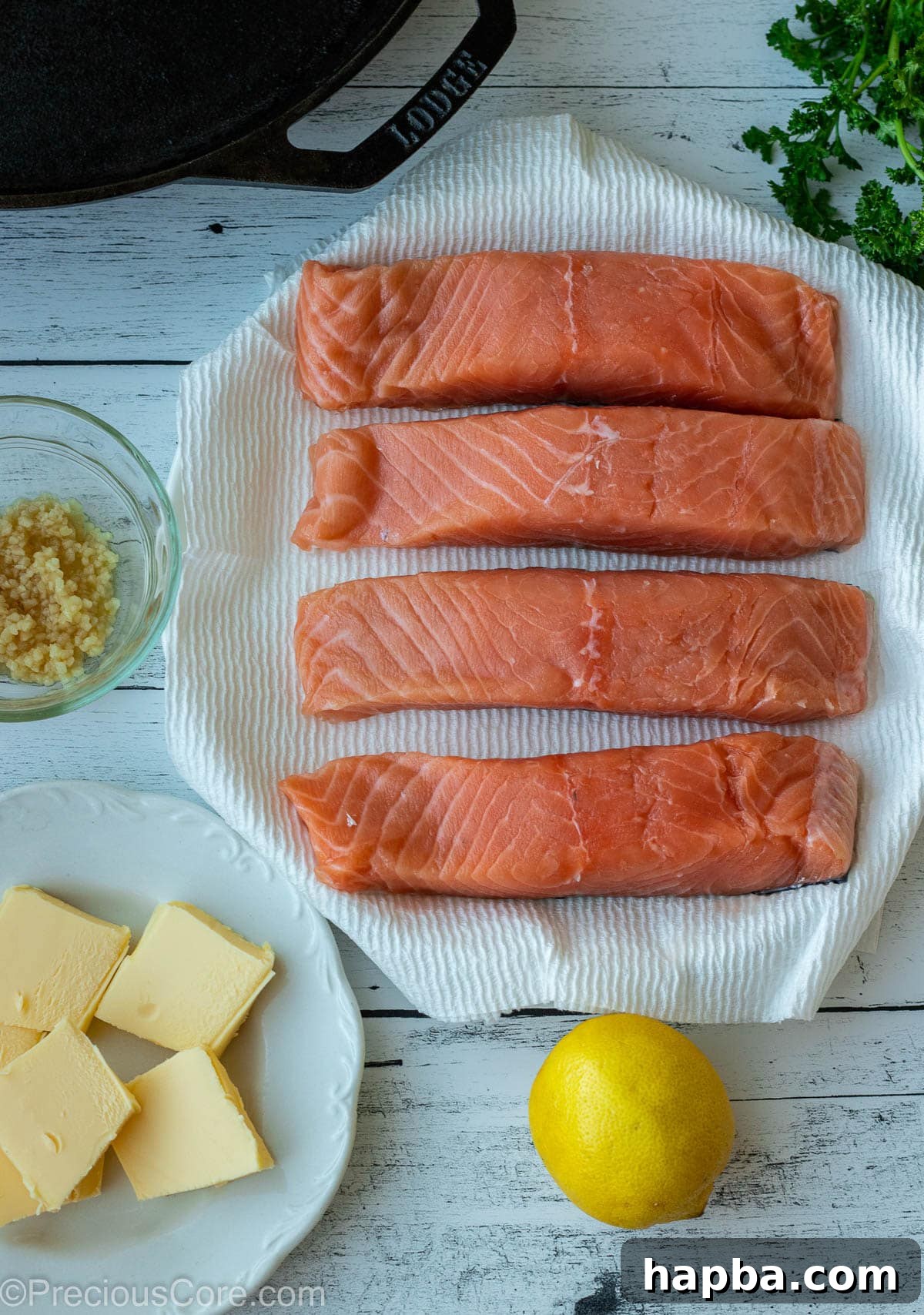
- Salmon Fillets: The star of the show! Whether you opt for fresh or frozen, aim for high-quality fillets. Frozen salmon can often be an excellent choice as it’s typically flash-frozen shortly after being caught, preserving its freshness. For best results, thaw frozen salmon overnight in the refrigerator. We’ll cover more thawing options below.
- Butter: This is key to creating that rich, velvety sauce that envelops the salmon. You’ll need a generous amount to impart a luxurious flavor and texture. Unsalted butter is usually preferred to control the saltiness, but salted butter can be used by adjusting other seasonings.
- Fresh Lemon: Always use fresh lemon juice for the brightest, most vibrant flavor. Bottled lemon juice simply doesn’t compare. For an extra burst of lemony aroma without added sourness, don’t forget to garnish your finished dish with a sprinkle of fresh lemon zest.
- Minced Garlic: Garlic adds an irresistible depth and aromatic complexity to the lemon butter sauce. It’s truly a non-negotiable ingredient that elevates the entire dish. Freshly minced garlic yields the best results.
- Olive Oil: Used for searing the salmon to achieve a beautiful crust and prevent sticking, especially in a cast iron skillet.
- Salt & Black Pepper: Simple seasonings that enhance the natural flavors of the salmon and round out the sauce.
- Fresh Parsley (for garnish): A sprinkle of fresh minced parsley adds a pop of color and a fresh, herbaceous note that beautifully complements the lemon and butter.
Detailed quantities for each ingredient can be found in the comprehensive recipe card at the bottom of this post.
Thawing Salmon Properly
Proper thawing is crucial for achieving perfectly cooked salmon. While thawing overnight in the refrigerator is ideal, sometimes you need a quicker solution. Here’s how to safely and effectively thaw your salmon fillets:
Overnight Thawing (Recommended):
Simply transfer your vacuum-sealed frozen salmon from the freezer to the refrigerator 12-24 hours before you plan to cook it. Place it on a plate or in a shallow dish to catch any condensation. This slow thawing method ensures even thawing and maintains the fish’s texture and flavor.
Quick Thawing in Cold Water:
If you forgot to thaw your salmon in advance, the cold water method is your best bet.
- Remove the salmon from its vacuum-sealed packaging. It’s important to remove it from the airtight packaging before thawing in water to prevent potential bacterial growth.
- Place the salmon in a resealable plastic bag (if not already in a freezer-safe, water-tight bag) or a bowl. Ensure the bag is completely sealed to prevent water from reaching the fish, which can make it waterlogged.
- Submerge the bagged salmon in a large bowl or sink filled with cold tap water. The water should completely cover the fish.
- Change the cold water every 15-30 minutes to ensure it stays cold and continues the thawing process efficiently.
- A 6-ounce salmon fillet typically thaws in about 30-60 minutes using this method, depending on its thickness.
Never thaw salmon on the countertop at room temperature, as this can lead to uneven thawing and rapid bacterial growth in the warmer outer layers.
Step-by-Step: How To Make Lemon Butter Salmon
Creating this irresistible Lemon Butter Salmon is surprisingly simple, requiring just four easy steps. Follow along to prepare a fish dinner your entire family will absolutely rave about!
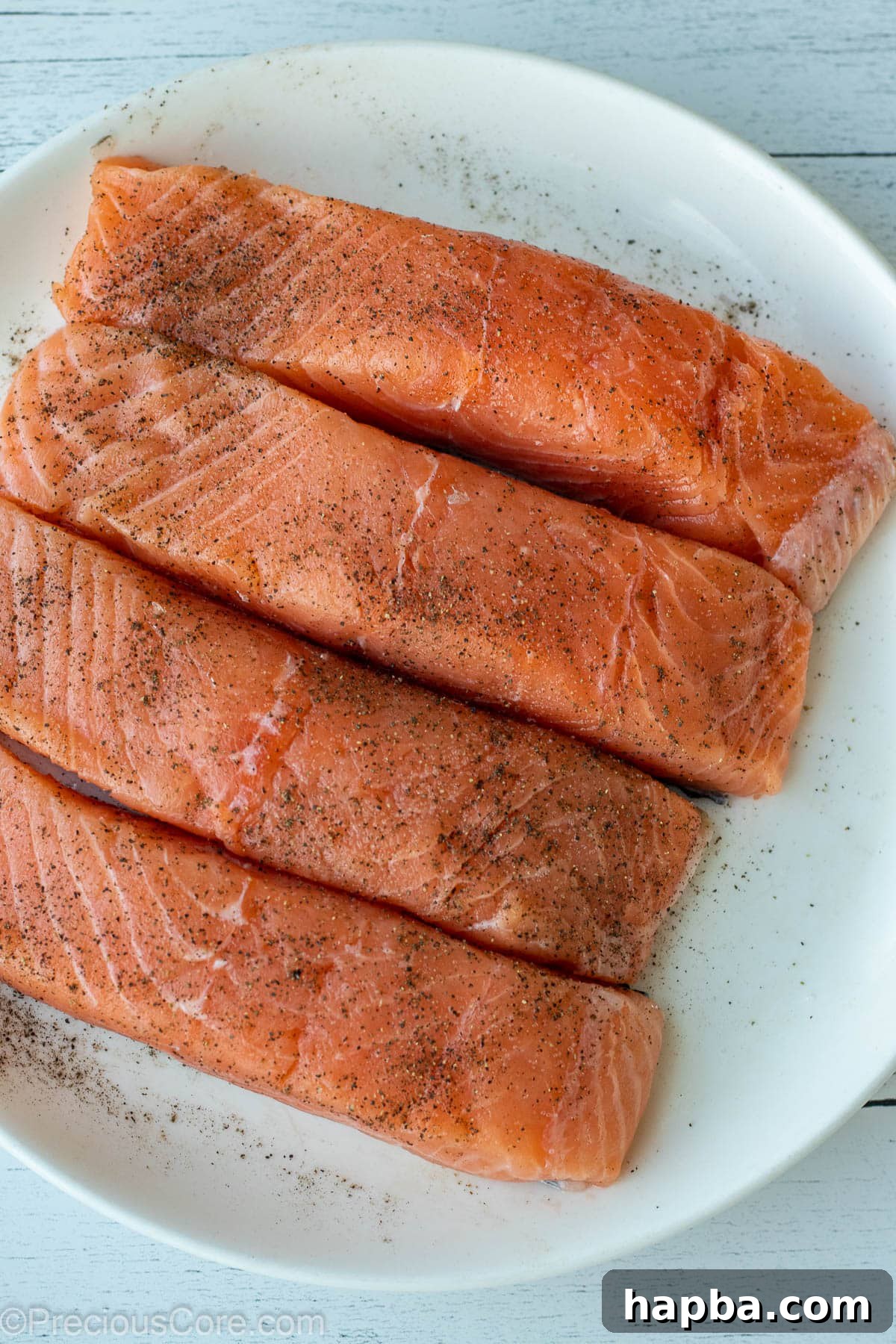
1. Prepare the Salmon: First, ensure your salmon fillets are at room temperature (about 20 minutes out of the fridge) for even cooking. Then, using paper towels, pat them thoroughly dry on all sides. This crucial step promotes a beautiful, crispy sear. Season both sides generously with salt and freshly ground black pepper.
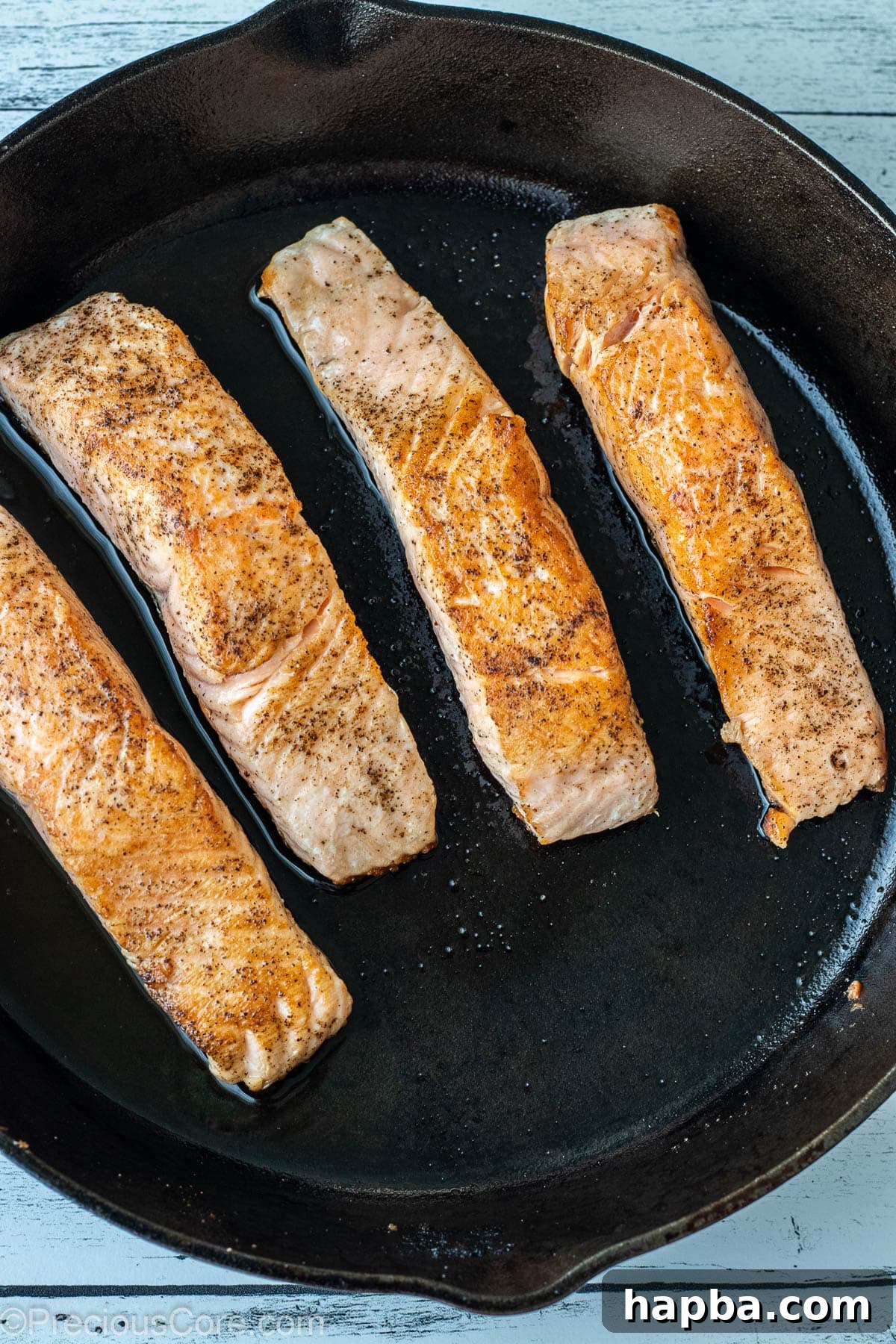
2. Pan-Sear to Perfection: Heat a large skillet (cast iron or stainless steel works best) over medium-high heat until it’s smoking hot. Add olive oil and swirl to coat the pan. Carefully place the seasoned salmon fillets, skin-side down (if applicable), into the hot skillet. Sear for about 3-4 minutes on the first side until a golden, crispy crust forms. Then, gently flip and cook for another 2 minutes on the second side. Adjust cooking time based on fillet thickness.
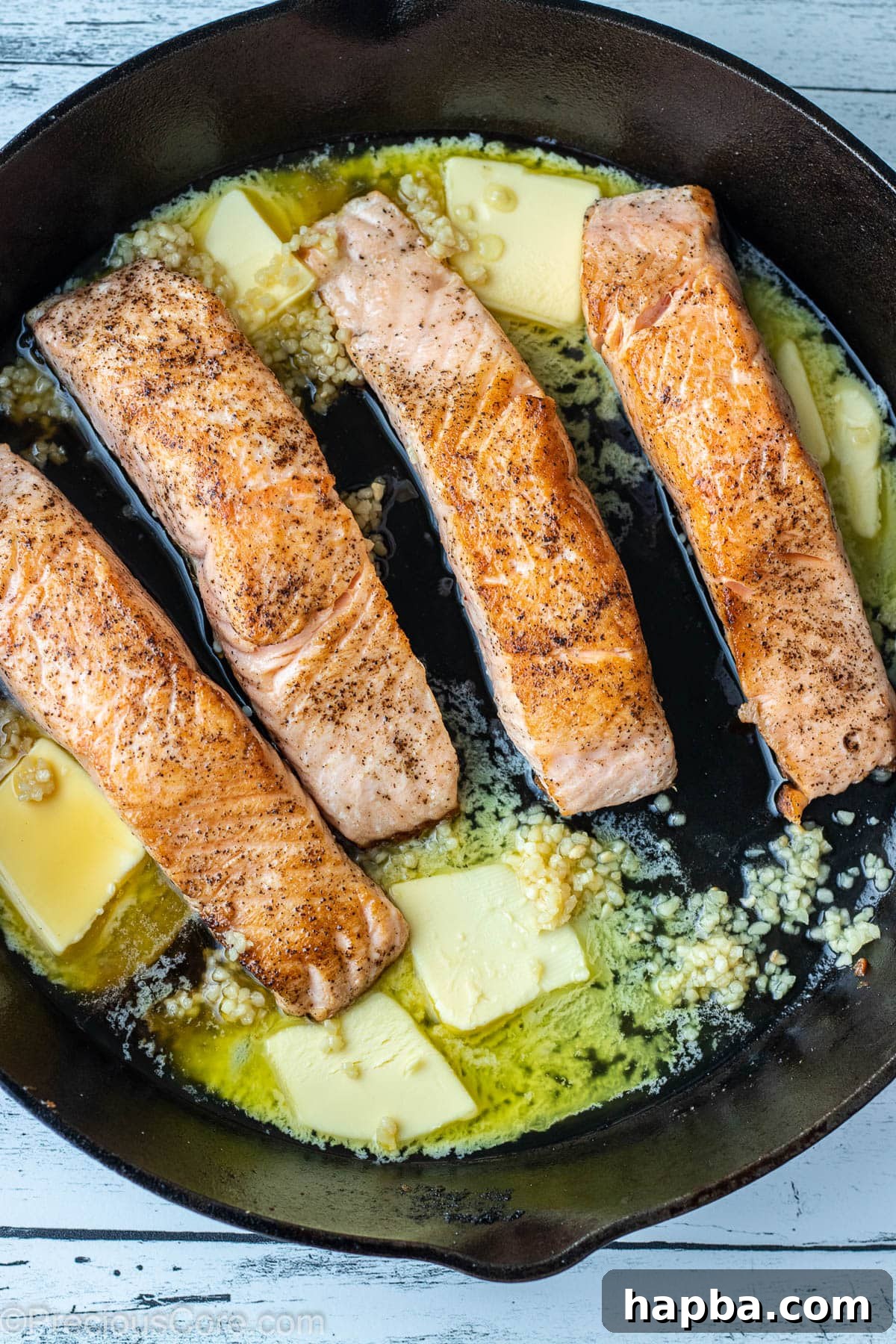
3. Craft the Garlic Butter Sauce & Baste: Reduce the heat to medium-low. Add the butter and minced garlic directly into the pan alongside the salmon. As the butter melts and the garlic becomes fragrant, generously spoon the luscious garlic butter sauce over the salmon fillets. Continue to baste for about 2 minutes, allowing the flavors to meld beautifully and keep the fish moist.
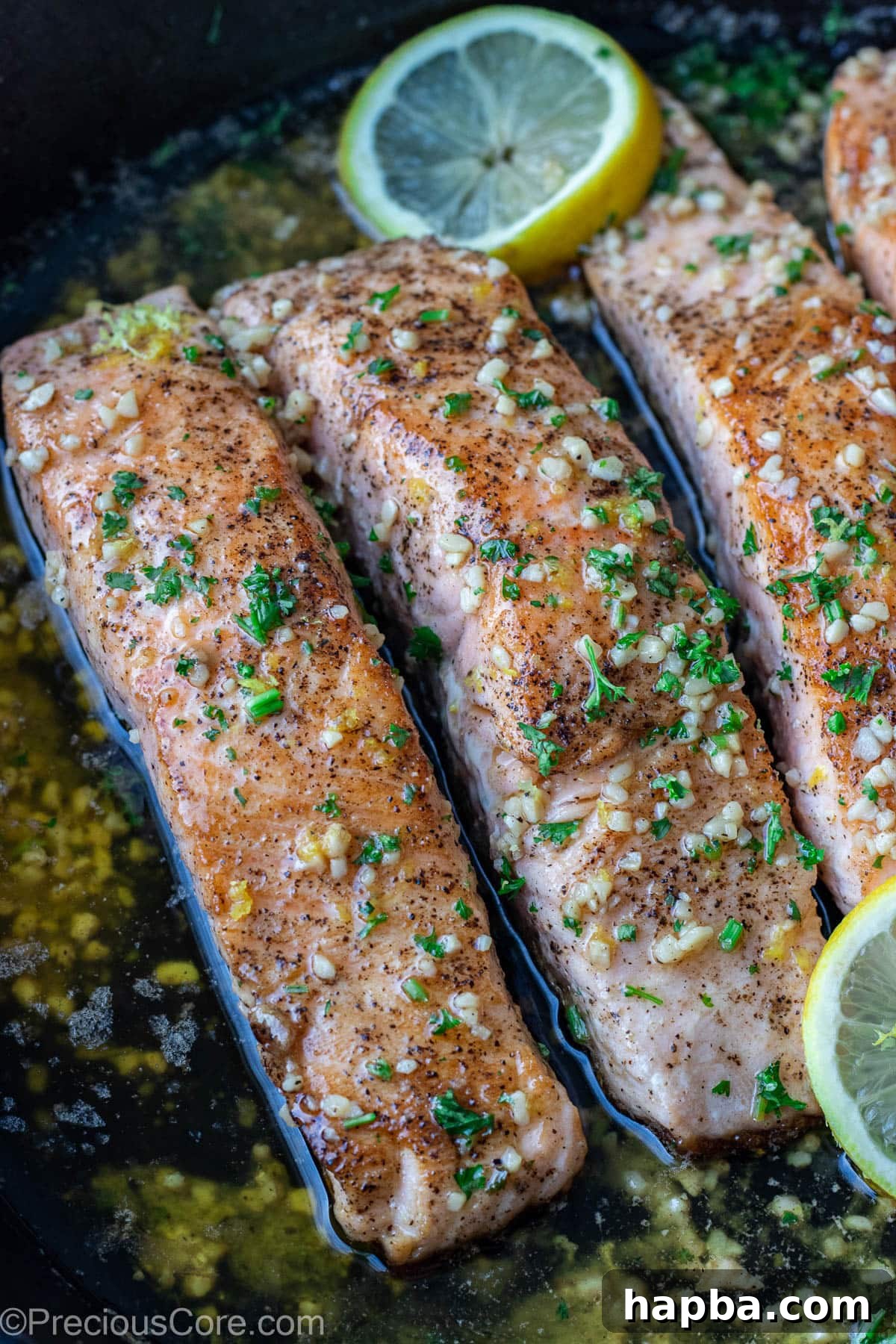
4. Finish and Serve: Finally, sprinkle fresh lemon juice directly over the salmon in the pan. Immediately remove the pan from the heat. Garnish generously with fresh minced parsley, a touch of lemon zest for bright aroma, and a few lemon slices for presentation. Serve your warm, glistening Lemon Butter Salmon immediately and enjoy!
Chef’s Note: Salmon cooks very quickly, so vigilance is key to avoid overcooking. A general guideline of 3-4 minutes per side is often the sweet spot for a perfectly flaky, moist fillet. Only extend cooking time if your salmon fillets are significantly thicker than average.
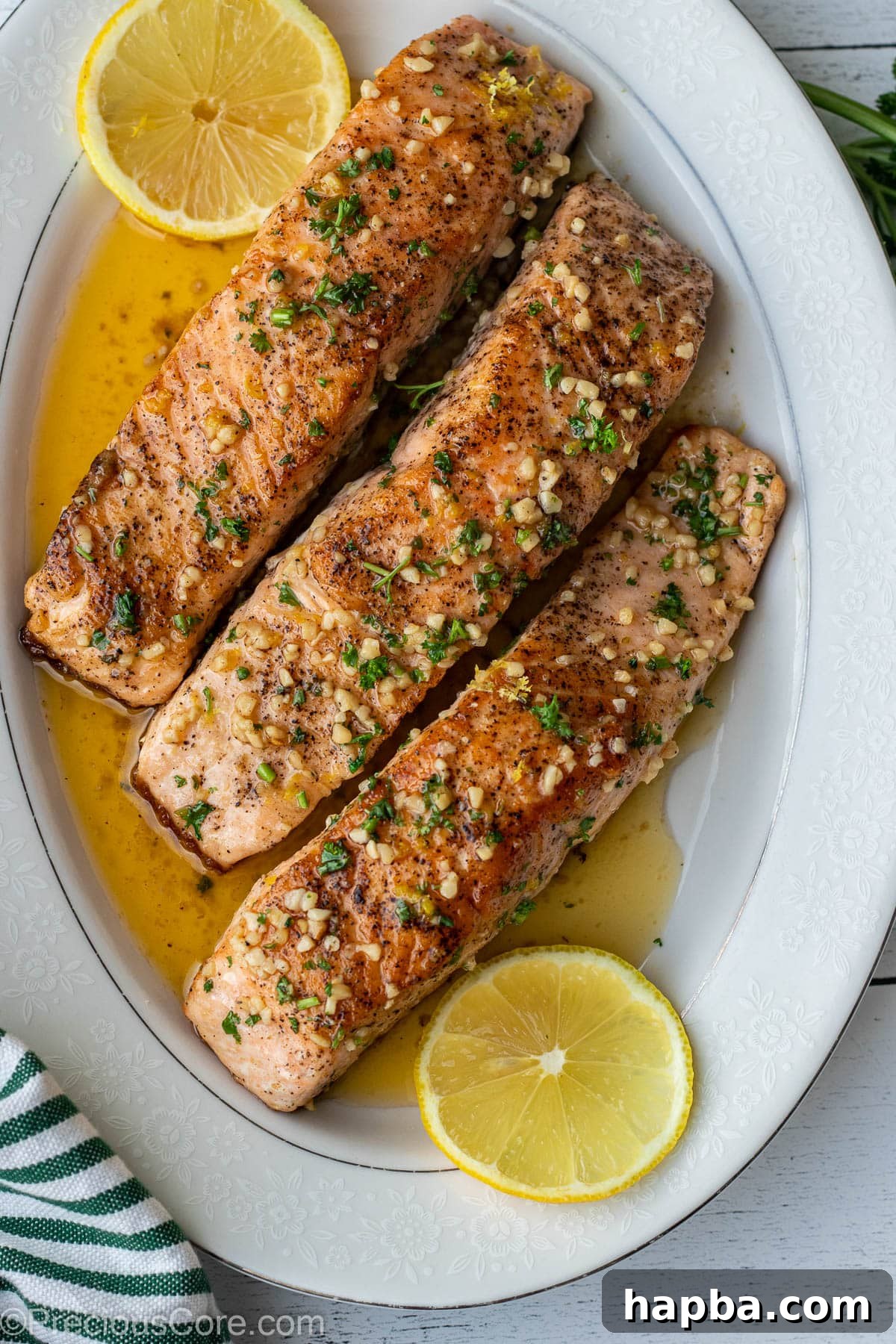
Crafting the Perfect Lemon Butter Sauce for Salmon
The lemon butter sauce is the heart and soul of this recipe, infusing the salmon with its signature rich and zesty flavor. While it’s made right in the pan with the salmon, you can also prepare a standalone sauce if desired:
- Start with Butter: Melt a good quality unsalted butter in a small saucepan over medium-low heat. Using unsalted butter allows you to control the overall saltiness of the sauce.
- Add Garlic: Once the butter is melted, add minced garlic and sauté for about 30 seconds until fragrant. Be careful not to burn the garlic, as it can turn bitter.
- Introduce Lemon: Remove the pan from the heat and squeeze in fresh lemon juice to taste. The amount can vary based on your preference for tanginess.
- Season: Season the sauce with a pinch of salt and black pepper. Taste and adjust as needed.
For an even more enhanced flavor, consider whisking in fresh herbs like finely chopped parsley or dill at the end. A touch of lemon zest can also be added for an extra layer of bright, aromatic lemon flavor without increasing acidity.
Salmon Cooking Perfection Guide
Cooking salmon perfectly means achieving a flaky, moist interior without drying it out. Here’s what you need to know:
The FDA recommends cooking fish to a minimum internal temperature of 145°F (63°C) for food safety. However, for salmon, cooking to this exact temperature can often result in a slightly tougher, less desirable texture.
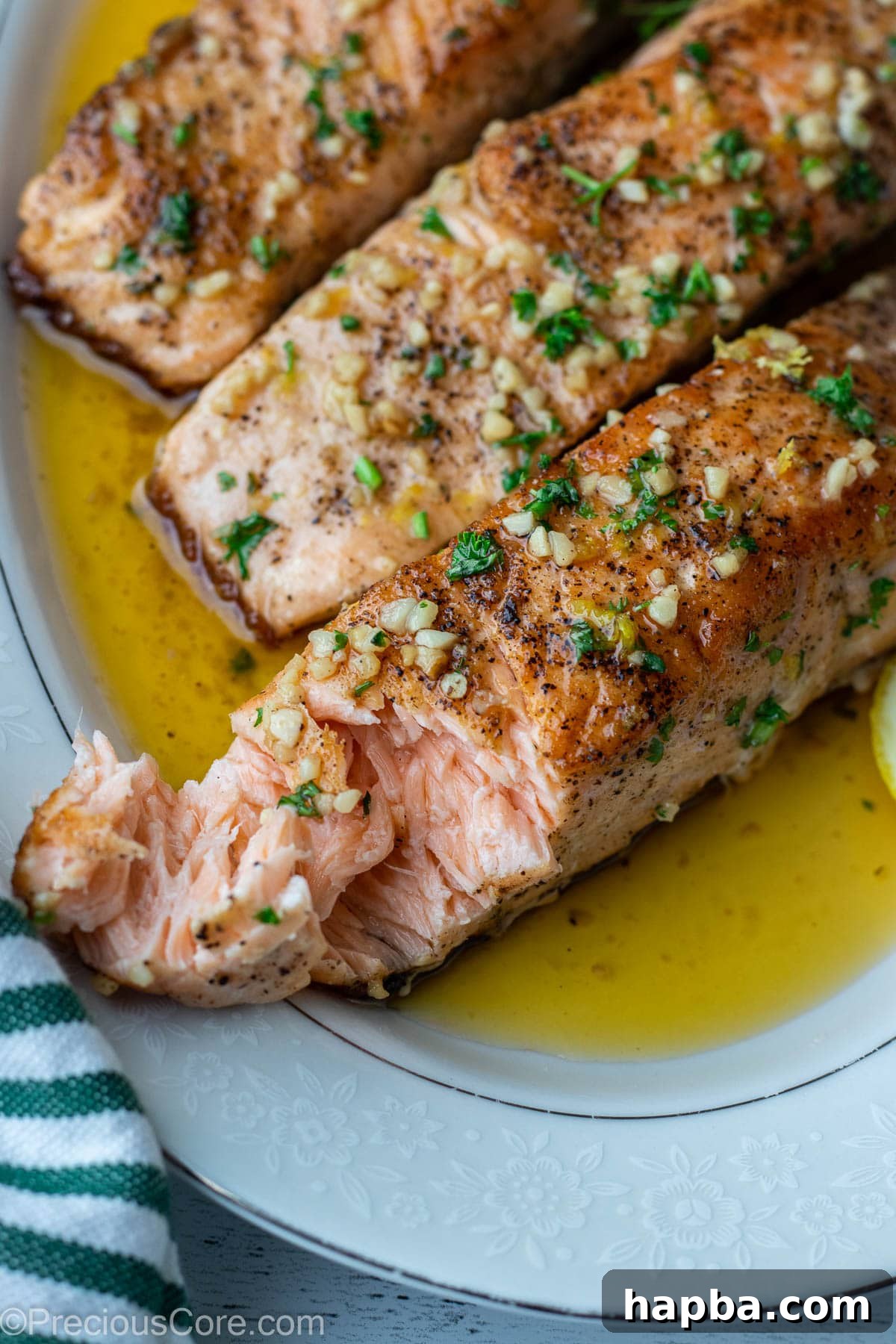
For juicy, incredibly flaky salmon that still meets safety standards due to carry-over cooking, many chefs aim for an internal temperature of about 125°F-130°F (52°C-54°C) at the thickest part of the fillet when it’s removed from the heat. The fish will continue to cook for a few minutes after being removed from the pan (this is called carry-over cooking), bringing it up to a safe temperature while retaining its tender texture.
How to tell if salmon is done without a thermometer:
If you don’t have a meat thermometer, you can still easily check for doneness. Gently insert a fork into the thickest part of the salmon and twist slightly. If the fish flakes easily and the flesh appears opaque throughout (with perhaps a hint of translucency in the very center, which will disappear with carry-over cooking), it’s ready. Avoid cooking until it’s completely white and firm, as this usually indicates overcooked salmon.
Remember, a slightly undercooked salmon is often more palatable than an overcooked one, as it retains its moisture and delicate texture. Practice makes perfect!
Smart Salmon Buying Guide
Choosing the right salmon makes a huge difference in the final taste and texture of your dish. Here’s what to look for when buying salmon:
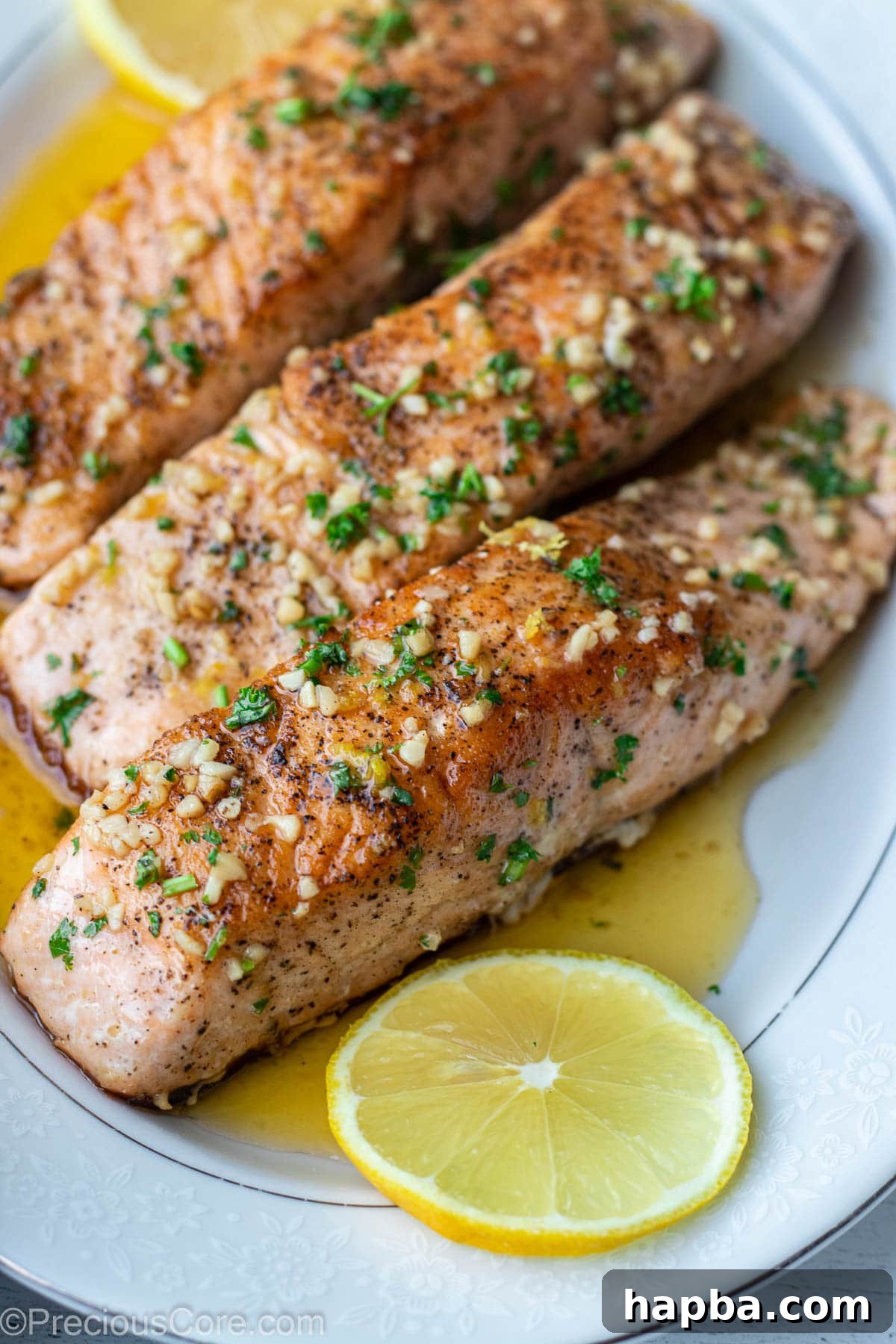
- Wild-Caught vs. Farm-Raised: Whenever possible, opt for wild-caught salmon. It typically has a leaner profile, a richer flavor, and is often considered more environmentally friendly. If choosing farm-raised salmon, look for certifications that indicate responsible farming practices. Labels like “responsibly farmed” or “certified sustainable” are good indicators.
- Appearance: Good quality fresh salmon should have a vibrant, bright hue – ranging from deep red-orange to pink, depending on the species. The flesh should look firm, moist, and slightly glistening, not dull, dry, or discolored. Avoid salmon with any browning around the edges or a mushy texture.
- Smell: Fresh salmon should smell clean and briny, like the ocean, but not overpoweringly “fishy.” A strong, unpleasant fishy odor is a sign that the salmon is past its prime.
- Skin: If buying fillets with skin on, the skin should be intact and shiny, not dull or shriveled.
- Eyes (for whole fish): If you’re buying a whole salmon, look for clear, bright, and bulging eyes. Cloudy or sunken eyes indicate that the fish is not fresh.
Exploring Types of Salmon
Salmon is broadly categorized into two main groups: Pacific Salmon, which is predominantly wild-caught, and Atlantic Salmon, which is mostly farm-raised. Wild Atlantic salmon populations are now very low due to historical overfishing and habitat loss, making farm-raised varieties more common. Each type of salmon offers a unique flavor and texture profile:
There are six primary species of salmon, five of which are native to the Pacific Ocean, and one from the Atlantic:
- Sockeye (Red) Salmon: Known for its striking deep red-orange flesh and robust, distinct flavor. Sockeye is leaner and firmer than other varieties.
- Pink (Humpback) Salmon: The most abundant species of Pacific salmon, characterized by its light-colored, mild-flavored flesh. Often used for canning or smoking due to its smaller size and delicate texture.
- King (Chinook) Salmon: Often considered the largest and richest of the salmon species, boasting a high fat content, succulent texture, and buttery flavor. Its flesh can range from white to deep red.
- Chum (Dog) Salmon: Lighter in color and milder in flavor, with a firmer texture. Commonly used for smoking, canning, or roe.
- Silver (Coho) Salmon: Features a moderate fat content, firm texture, and bright red-orange flesh with a delicate flavor. It’s a versatile choice for grilling, baking, or pan-searing.
- Atlantic Salmon (Salmo salar): While historically from the Atlantic Ocean, most Atlantic salmon available today are farm-raised. They have a milder flavor, higher fat content, and a consistently pink-orange flesh, making them very popular and widely available.
For a fantastic example of a wild-caught variety, be sure to check out this delicious Grilled Sockeye Salmon recipe!
Substitutions for Salmon in This Recipe
No salmon on hand? No problem! This versatile lemon butter preparation works beautifully with a variety of other fish, allowing you to enjoy similar flavors and cooking methods. You can easily adapt this recipe to suit your preferences or what’s available at your local market:
- Trout: Similar to salmon in texture and flavor, trout is an excellent substitute, offering a slightly milder taste.
- Flounder Fish: A delicate white fish that will absorb the lemon butter sauce wonderfully, though it may cook even faster than salmon.
- Red Snapper: Known for its firm, moist flesh and mild, sweet flavor, red snapper holds up well to pan-searing.
- Tilapia: A very mild, lean white fish that is widely available and takes on flavors very well. It will be light and flaky with the lemon butter sauce.
- Halibut: A firm, meaty white fish with a delicate flavor, halibut is a premium choice that will shine with this preparation.
- Hake: A flaky, lean white fish with a mild flavor, similar to cod.
- Cod: Another popular white fish, cod is flaky and mild, making it an ideal canvas for the vibrant lemon butter sauce.
Delicious Variations to Try
While this classic Lemon Butter Salmon recipe is perfect as is, it’s also highly adaptable. Feel free to experiment with these variations to customize the flavors to your liking:
- Lime Butter Salmon: For a slightly different citrus twist, substitute fresh lime juice and zest instead of lemon. Lime offers a distinct, often sharper, aroma that can be wonderfully refreshing.
- Different Seasonings on Fish: Before searing, switch up your seasoning blend.
- Old Bay Seasoning: A classic for seafood, offering a savory, slightly spicy, and herbaceous flavor.
- Lemon Pepper Seasoning: Intensifies the lemon and pepper notes, perfect for this dish.
- Italian Seasoning: A blend of common Italian herbs (basil, oregano, thyme, rosemary) that adds an aromatic, Mediterranean touch.
- Cajun Seasoning: For those who enjoy a kick, Cajun seasoning brings bold, spicy, and smoky flavors.
Important Note: If using a pre-mixed seasoning blend that already contains salt, be sure to significantly reduce or omit any additional salt to prevent the fish from becoming too salty.
- Spicy Kick: If you love a bit of heat, easily make your salmon spicy! Incorporate a pinch of crushed red pepper flakes or a dash of cayenne pepper directly into the butter-garlic mixture, or sprinkle it over the salmon before searing.
For more inspiration with lemon and butter sauces, also see my Lemon Butter Tilapia, Garlic Butter Tilapia, and classic Pan Seared Tilapia recipes.
Essential Equipment for Pan-Searing Salmon
The right equipment can make all the difference in achieving that perfect sear and juicy interior. For this recipe, a good quality skillet is paramount:
I personally love and highly recommend using a large cast iron skillet. Its superior heat retention and even heat distribution are unmatched, creating a beautiful crust on the salmon. My go-to is a 12-inch cast iron skillet, which comfortably accommodates up to four salmon fillets at once. This same versatile pan is a workhorse in my kitchen, perfect for dishes like my Pan Seared Lamb Chops and Pan Seared Boneless Pork Chops.
A large skillet (10-12 inches wide) is crucial to prevent overcrowding the pan, which can steam the fish instead of searing it. Overcrowding lowers the pan’s temperature and prevents that desirable golden-brown crust.
While a cast iron skillet is my top recommendation for its durability and performance, you can also achieve excellent results with a high-quality stainless steel skillet or a reliable non-stick skillet. Whatever you choose, ensure it’s large enough to comfortably cook all your fillets without them touching.
Pro Tip: For Flaky Salmon
Always, always pat your salmon fillets thoroughly dry with paper towels before seasoning and pan-searing. Removing excess moisture is the secret to achieving a beautiful, crispy, golden-brown crust and preventing the fish from sticking to the pan. This simple step locks in moisture and enhances the overall texture.
Frequently Asked Questions About Salmon
Salmon is incredibly versatile! A simple seasoning of salt and pepper highlights its natural richness beautifully. It also pairs exceptionally well with bright citrus flavors like lemon and lime, aromatic garlic, and fresh herbs such as dill, parsley, thyme, and basil. Sweet and savory glazes like teriyaki or maple also complement salmon perfectly.
A classic lemon butter sauce typically consists of melted butter, fresh lemon juice, salt, and black pepper. For enhanced flavor, minced garlic and fresh herbs like parsley or rosemary are often added. Some variations might include white wine or capers for extra depth.
Both butter and oil can be used successfully for cooking salmon, and often, a combination is best. Oil (like olive oil or avocado oil) has a higher smoke point, making it excellent for searing salmon initially to get a good crust without burning. Butter adds a rich, nutty flavor, but it has a lower smoke point and can burn quickly. A great technique is to sear the salmon in oil first, then add butter and garlic to the pan towards the end of cooking to create a flavorful basting sauce.
Absolutely! While pan-searing gives a wonderful crispy skin, you can certainly bake this Lemon Butter Salmon. Preheat your oven to 400°F (200°C). Place seasoned salmon fillets on a baking sheet. You can either brush them with melted lemon butter or pour the sauce over them. Bake for 12-18 minutes, depending on thickness, until it flakes easily with a fork and reaches the desired internal temperature. Basting once or twice during baking will keep it moist.
Related Salmon Recipes
Looking for other delicious and easy salmon recipes? Explore these favorites:
Sheet Pan Salmon and Broccoli
Pan Grilled Salmon
Baked Cajun Salmon
Lemon Butter Tilapia
Pan Seared Lamb Chops
Pan Seared Ribeye Steaks
Serving Suggestions for Lemon Butter Salmon
This Lemon Butter Salmon is a versatile main course that pairs beautifully with a variety of side dishes. Here are some of my favorite accompaniments to create a complete and satisfying meal:
- Mango Avocado Salsa
- Easy Coconut Rice
- Buttermilk Mashed Potatoes
- Sautéed Vegetables
If you make this irresistible Lemon Butter Salmon, please consider leaving a comment and a star rating below! Your feedback helps others discover and enjoy this recipe. You can also share your culinary creations on Instagram and tag me @preciouscore. I absolutely love hearing from you and seeing your delicious results!
Lemon Butter Salmon
★★★★★
Pin Recipe
Rate This Recipe
Print Recipe
Equipment
-
12-inch skillet (cast iron, stainless steel, or non-stick)
Ingredients
- 4 salmon fillets, 6 oz each
- ¼ teaspoon salt
- ¼ teaspoon ground black pepper
- 3 Tablespoons olive oil
- 6 Tablespoons salted butter*
- 1 Tablespoon minced garlic
- 1-2 Tablespoons lemon juice freshly squeezed
- ⅛ teaspoon black pepper
- 1 Tablespoon minced parsley
- Lemon zest for garnish
Instructions
-
Bring salmon to room temperature for about 20 minutes. Pat it thoroughly dry with paper towels.
-
Season both sides of the salmon generously with ¼ teaspoon of salt and ¼ of ground black pepper.
-
Place a cast iron, stainless steel, or non-stick skillet on medium-high heat. Heat the pan until it’s smoking hot. Add the olive oil to the pan and swirl to coat.
-
Carefully add the seasoned salmon to the hot pan, skin-side down if using fillets with skin. Cook on the first side for 3-4 minutes until a golden crust forms, then flip to the other side and cook for 2 minutes.
-
Reduce heat to medium-low. Add the butter and minced garlic directly into the pan. As the butter melts, spoon the melted butter and garlic over the salmon (basting) for about 2 minutes to infuse flavor.
-
Sprinkle fresh lemon juice over the salmon and immediately remove the pan from the heat. Garnish with minced parsley and lemon zest.
-
Serve warm and enjoy your perfectly cooked Lemon Butter Salmon!
Notes
2. For easier preparation, zest the lemon first before cutting and juicing.
3. Allowing the salmon to come to room temperature before cooking ensures more even heat penetration and a better-cooked fillet.
Nutrition
Carbohydrates: 1g |
Protein: 34g |
Fat: 38g |
Saturated Fat: 14g |
Polyunsaturated Fat: 6g |
Monounsaturated Fat: 16g |
Trans Fat: 1g |
Cholesterol: 139mg |
Sodium: 356mg |
Potassium: 858mg |
Fiber: 0.1g |
Sugar: 0.1g |
Vitamin A: 678IU |
Vitamin C: 3mg |
Calcium: 32mg |
Iron: 2mg
Additional Info
Tried this recipe?Mention @preciouscore or tag #PreciousCore!