
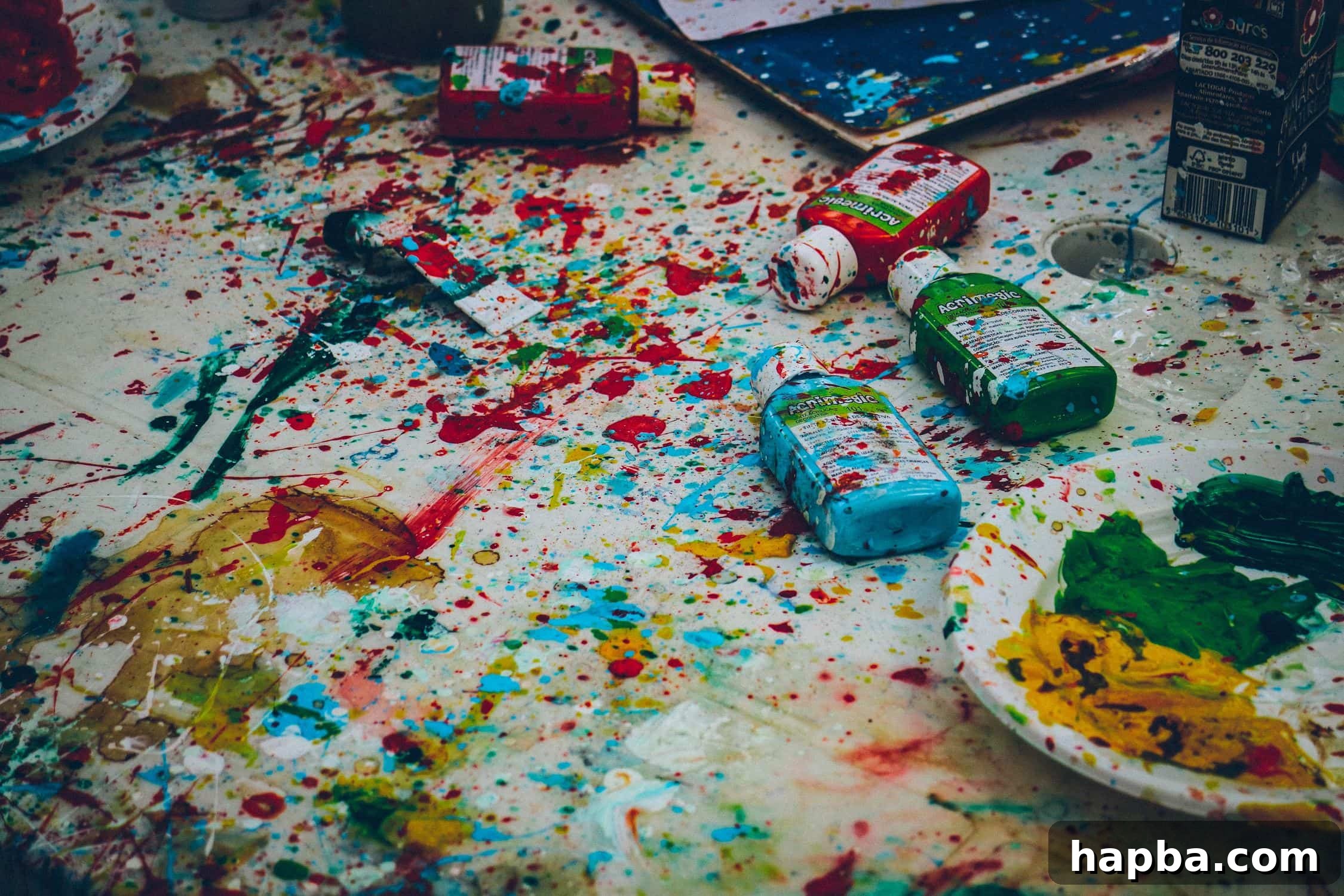
The Art of Letting Go: Finding Joy and Growth in a Messy Home
The universal experience of parenthood often comes wrapped in a whirlwind of beautiful chaos, a constant dance with disarray. For many of us, the pervasive presence of mess in our homes can feel like an undeniable reality, a daily challenge to our sanity and our aspirations for a perfectly ordered environment. It’s in every corner, underfoot, and splattered across surfaces – a testament to life being lived vibrantly within our walls. This isn’t just about a misplaced toy or a crumb on the counter; it’s about a deeper, more profound state of constant activity and, perhaps, an ongoing negotiation with our own expectations.
The Daily Doses of Domestic Chaos: A Parent’s Reality
Let’s paint a picture, one that might resonate deeply with parents everywhere. As I write this, my kitchen, usually a sanctuary of culinary endeavors, is adorned with an unwelcome, glistening layer of oil. This wasn’t the result of an ambitious deep-fry or a slip of the hand during dinner prep. No, this was a spontaneous, well-intentioned, yet ultimately disastrous experiment by my curious three-year-old, who decided to “cook” by pouring a generous amount of water into a pot of oil resting on the stove. My initial attempt to mitigate the situation – heating the oil to evaporate the water – only intensified the spectacle, transforming my kitchen into a battlefield of popping, sputtering oil, reaching nooks and crannies I never knew existed. The sheer volume of the mess was overwhelming, demanding a heroic effort that seemed almost futile. In moments like these, one can almost hear a desperate plea for a million paper towels, an army of cleaning supplies, and perhaps a brief escape to a sterile, quiet, and spotless dimension.
Kitchen Calamities: The Saga of the Oil Splatter
The kitchen, often considered the heart of the home, frequently bears the brunt of these joyful, yet messy, explorations. Beyond the oil incident, it’s the sticky residue on the counter from an unassisted snack, the flour dusting the floor after a baking attempt, or the artistic splatters of sauce that somehow migrate from the high chair to the walls. These aren’t just isolated incidents; they are ongoing narratives, each adding a new layer to the rich tapestry of a busy family life. Cleaning the kitchen table, for instance, can feel like a Sisyphean task, a continuous cycle of wiping away invisible particles only for new ones to appear within minutes, a constant reminder of the ceaseless activity of little hands.
Living Room Landmines: A Playful Obstacle Course
Stepping out of the kitchen, the living room offers its own unique brand of chaos. The plush rug, once a soft landing, becomes a treacherous landscape dotted with tiny plastic bricks, sharp-edged toy cars, and an assortment of miniature figurines. Navigating this terrain requires vigilance and a surprising amount of agility, often resulting in a sharp, unexpected pain from an unseen toy underfoot. These aren’t just random objects; they are the remnants of epic battles, imaginative play sessions, and elaborate construction projects, each piece a valuable component of a child’s blossoming creativity and storytelling. While frustrating in the moment, these scattered toys are also evidence of vibrant engagement and imaginative worlds being built and explored.
Artistic Endeavors: The Paper Trail of Creativity
And then there are the papers. Oh, the papers! They proliferate across every flat surface – tables, floors, countertops, even tucked into unexpected places. These aren’t mere scraps; they are canvases filled with vibrant scribbles, bold lines, and often unidentifiable shapes, all bearing the proud signature of a “budding artist.” My daughter, like many children, possesses an boundless passion for drawing and coloring, capable of spending entire days immersed in her creative pursuits. While these artistic expressions are beautiful manifestations of her inner world, they also generate an endless stream of paper, markers, crayons, and sometimes glitter, spreading their colorful confetti far and wide. It’s a joyful mess, yet a mess nonetheless, challenging the parental desire for tidiness against the undeniable pull of fostering creativity.
Beyond the Obvious: Socks, Particles, and Unidentifiable Objects
The mess extends beyond these obvious categories. It’s the lone sock, missing its mate, appearing mysteriously in the most unexpected places. It’s the inexplicable crumbs and tiny particles that defy the most thorough vacuuming. It’s the collection of “treasures” – a shiny rock, a broken crayon, a stray button – carefully hoarded and then left to mingle with the everyday clutter. These items, seemingly insignificant, collectively contribute to a persistent state of disarray that can feel overwhelming. They are the silent witnesses to childhood, the tiny markers of daily adventures, and the constant companions of parents navigating the beautiful, often bewildering, world of raising children.
The Emotional Rollercoaster: From Frustration to Reflection
For a significant period, my life felt defined, almost undesirably, by this ubiquitous mess. The constant struggle against it often manifested as anger and frustration. Why couldn’t everything just be in its designated place? Why was there an unending pile of dishes? Why, why, why did the order I craved seem so unattainable? This yearning for perfection, for an immaculate home, often led to feelings of resentment towards the very source of the mess – my cherished children. It was an internal battle between the desire for a pristine environment and the reality of a lively, active family.
The Quest for Order in a Chaotic World
Many parents grapple with this internal conflict. The expectation of a clean, organized home, perhaps influenced by media portrayals or societal pressures, can clash harshly with the reality of raising young children. This constant low-level stress from the visual clutter and the mental load of managing it can be exhausting. We yearn for control, for a sense of calm and order, but childhood, by its very nature, is often anything but controlled and orderly. This dissonance can lead to feelings of inadequacy, guilt, or perpetual irritation, making it difficult to fully enjoy the fleeting moments of childhood.
A Gentle Nudge: Understanding Mess as a Catalyst for Growth
Then, amidst the frustration, a profound shift began. It was a gentle, almost imperceptible nudge, a quiet voice suggesting that perhaps this mess wasn’t an adversary but an integral component of something far more important: growth. This realization wasn’t an overnight revelation but a gradual understanding that truly allowing my children to explore, to experiment, and to engage with their world meant embracing the inevitable chaos that often accompanies these endeavors. If every surface had to be spotless, every item perfectly in place, if I prioritized cleanliness above all else, I would inadvertently deny them the very opportunities they needed to learn, to develop, and to thrive.
The Messy Classroom: Where Learning Truly Happens
This paradigm shift illuminated the invaluable role of mess in child development. It became clear that many of the essential skills children acquire are forged in the crucible of disorder. Mess, in this new light, transformed from a nuisance into a vital teaching tool, a signpost of progress and active learning. The moments that generate the most mess are often the moments of deepest engagement and most significant breakthroughs.
Culinary Adventures and Kitchen Experiments
Consider the kitchen again. If I never allowed my children to “assist” me in cooking, how would they ever learn the fundamental skills of food preparation, measurement, and kitchen safety? But their assistance, while invaluable for their learning, inevitably results in ingredients spilling, flour dusting the countertops, and a general state of disarray far greater than if I were cooking alone. They learn about textures, tastes, cause and effect, and the satisfaction of creating something with their own hands. The mess here isn’t a failure; it’s the direct byproduct of hands-on learning, of developing fine motor skills and an understanding of culinary processes.
Dish Duty: Splashing Towards Responsibility
The same principle applies to chores like washing dishes. If I want my children to grow into responsible, capable adults, they must learn to contribute to household tasks. But when little hands tackle soapy water and delicate dishes, the result is almost always a mini-flood. Soap suds might extend beyond the sink, water splatters on the floor, and the once-tidy counter becomes a wet zone. It’s more mess, undoubtedly. Yet, through these splashing experiences, they are not only learning a practical skill but also developing a sense of responsibility, understanding the importance of contribution, and gaining confidence in their abilities. Each splish and splash is a step towards independence and competence.
The Art of Exploration: Every Spill, Every Mark
Beyond chores, the broader scope of exploration generates its own beautiful messes. From sensory bins filled with rice or water that inevitably find their way onto the floor, to paint projects that extend beyond the paper, or mud pies crafted in the garden, these activities are crucial for holistic development. They stimulate creativity, refine motor skills, encourage problem-solving, and offer vital sensory experiences. Every spilled cup, every crayon mark outside the lines, every sticky finger is a mark of active engagement, a sign that a child is immersed in discovering the world around them.
Potty Training and Life’s Little Accidents
Life’s biggest developmental leaps are often the messiest. Potty training, a significant milestone, is almost synonymous with accidents. Before a child masters the complex coordination and self-regulation required to use the potty consistently, there will be spills, wet clothes, and moments of utter frustration for both parent and child. Similarly, learning to eat independently involves dropped food, smeared faces, and a high chair surrounded by a veritable feast. These inevitable “accidents” and “mistakes” are not setbacks but essential parts of the learning curve, providing valuable feedback and building resilience. The mess is the temporary state before mastery.
Embracing the Beautiful Chaos: A Parent’s Journey
Thus, my journey has led me to a profound realization: to truly foster growth, I must learn to embrace the mess. It is an unavoidable and necessary part of life, especially when nurturing young, curious minds. Times of intense growth are inherently times of messiness. There will be cooking disasters, artistic explosions, and countless spills. But in every one of these instances, I find a deep solace, a quiet comfort in the knowledge that little people are actively growing and learning amidst the chaos. My children are being transformed every single day, one delightful, messy exploration at a time.
Shifting Perspectives: Seeing Growth in Every Stain
While the desire for neatness and organization is a natural and healthy aspiration for my children’s future, I understand that for now, the path to learning is often circuitous and imperfect. Accidents will happen before they learn prevention. Mistakes will be made before they grasp the “right” way. This perspective shift is not about abandoning all efforts to maintain a tidy home, but about re-prioritizing. It’s about understanding that the temporary disorder is a small price to pay for fostering independence, creativity, and essential life skills.
Practical Wisdom: Cleaning Up While Nurturing Independence
Of course, the mess still, at times, triggers moments of frustration and bitterness. It’s a natural human reaction to disorder and additional work. However, I am consciously learning to redirect that anger, to internalize the message that this mess is necessary. Allowing anger to fester only detracts from the joy of parenting and the beauty of childhood. As their mama, my role isn’t to prevent all mess, but to guide them through their explorations, offer a “message from the mess” – perhaps a lesson in cleaning up, or cause and effect – and then, patiently and lovingly, clean up after them, knowing that each cleanup is a step towards their growing self-sufficiency.
The Unavoidable Truth: Kids and Mess Are a Package Deal
Expecting a life entirely free of mess with children in the home is akin to expecting the sun not to set; it’s simply not a realistic expectation. The two are inextricably linked. Therefore, for us parents, the imperative is not to eliminate the mess, but to learn to embrace it, to work around it, and to find genuine solace in its presence. We must understand that the mess, far from being an enemy, is a vital ingredient in the recipe for our children’s development and our own journey as parents. It’s a reminder of life being lived to its fullest, of minds being shaped, and of little hands exploring a vast, wonderful world.
Finding Solace and Connection in the Mayhem
Ultimately, embracing the mess is about embracing the present moment with our children. It’s about letting go of idealized images of perfection and leaning into the beautiful, tangible reality of family life. It’s about recognizing that every stray toy, every painted mark, every sticky fingerprint is a trace of joy, a sign of engagement, and a testament to the dynamic, loving home we are building. The mess is a reminder that our children are active participants in their world, not just passive recipients. It cultivates patience, fosters empathy, and strengthens the bonds of unconditional love. When we view mess through this lens, it transforms from a burden into a celebrated aspect of our shared journey, allowing us to find peace and even profound joy amidst the everyday chaos.
Your Turn: Sharing the Messy Reality and Solutions
Now that I’ve shared my perspective on the messy journey of parenthood, I’m eager to hear from you. What are the specific messy situations that frequently test your patience and drive you to the brink? Do you have your own stories of domestic chaos that resonate with these experiences? More practically, for those seasoned parents who have conquered similar challenges, I am still very much in search of wisdom. In the wake of my little one’s ambitious “cooking” experiment, I am facing a considerable challenge: cleaning a significant amount of oil splatter from my kitchen cabinets, the floor, the stove, and those tiny, elusive crevices. Any proven tips, tricks, or product recommendations for tackling such an extensive and stubborn oil mess would be incredibly welcome and deeply appreciated. Let’s share our collective wisdom and support each other through the beautiful, chaotic reality of raising children.
A Timeless Truth: The Enduring Message of Mess
This reflection, initially penned a couple of years ago, holds an enduring relevance today. The challenges and profound lessons of living in a messy home with growing children remain constant, proving that some truths about parenting are truly timeless. The journey from frustration to embracing the mess is an ongoing one, but it is a journey well worth taking, for it leads to deeper understanding, greater patience, and a richer appreciation for the vibrant, imperfect life we share with our little ones.