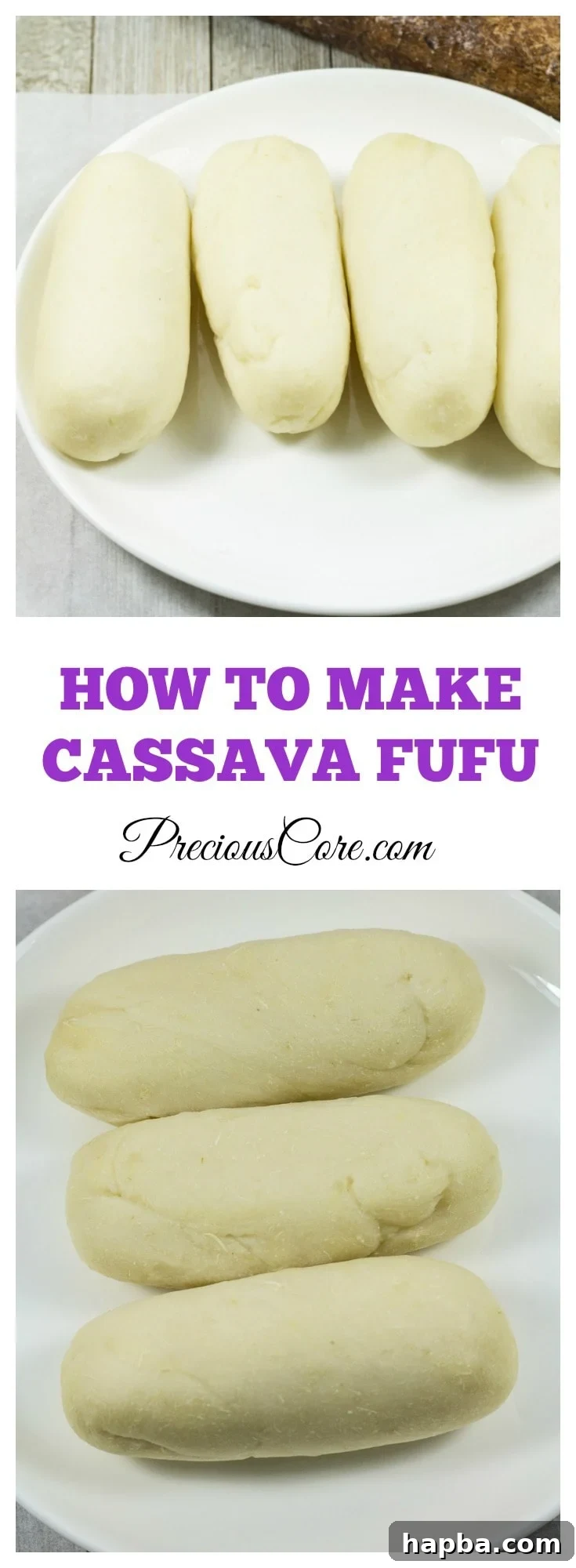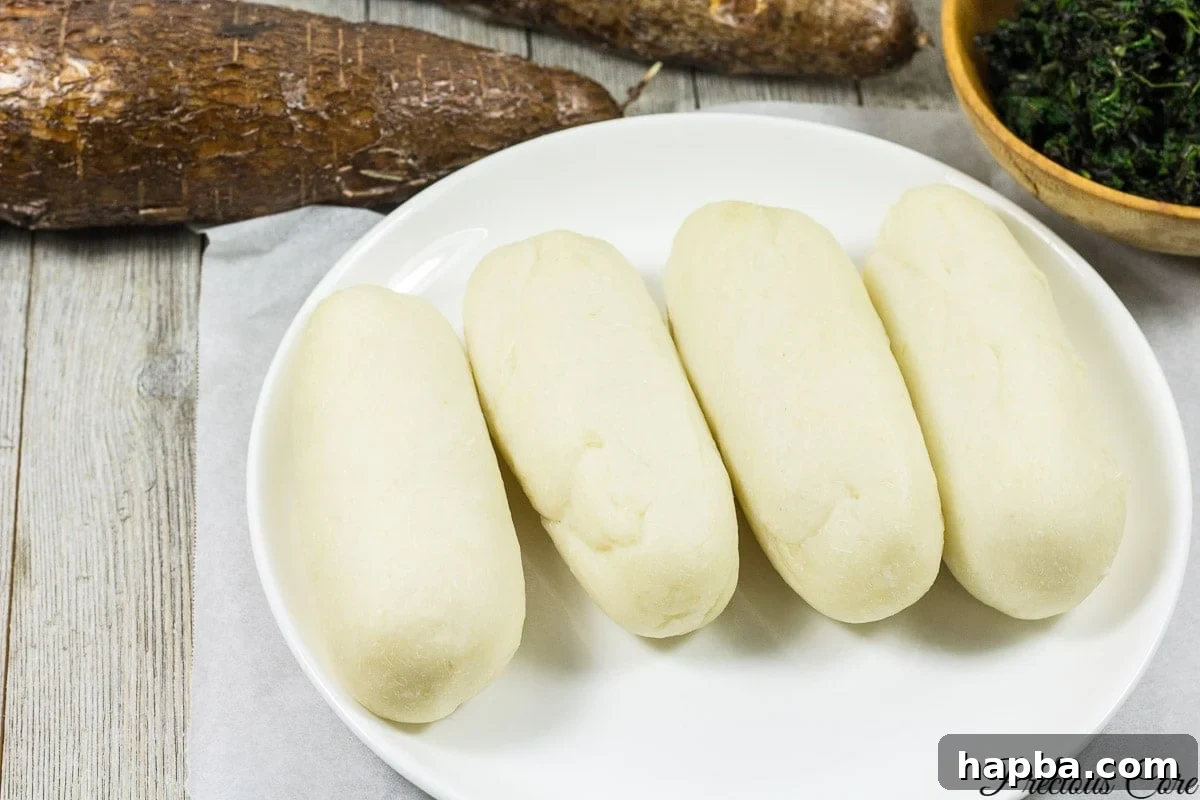
Welcome to the ultimate guide on crafting authentic Water Fufu, also widely known as Cassava Fufu, right in your own kitchen! This traditional West and Central African staple, made from scratch with just one primary ingredient, is a culinary journey worth embarking on. We’ll delve into the time-honored process of fermenting fresh cassava (yuca root) to create this beloved, versatile side dish.
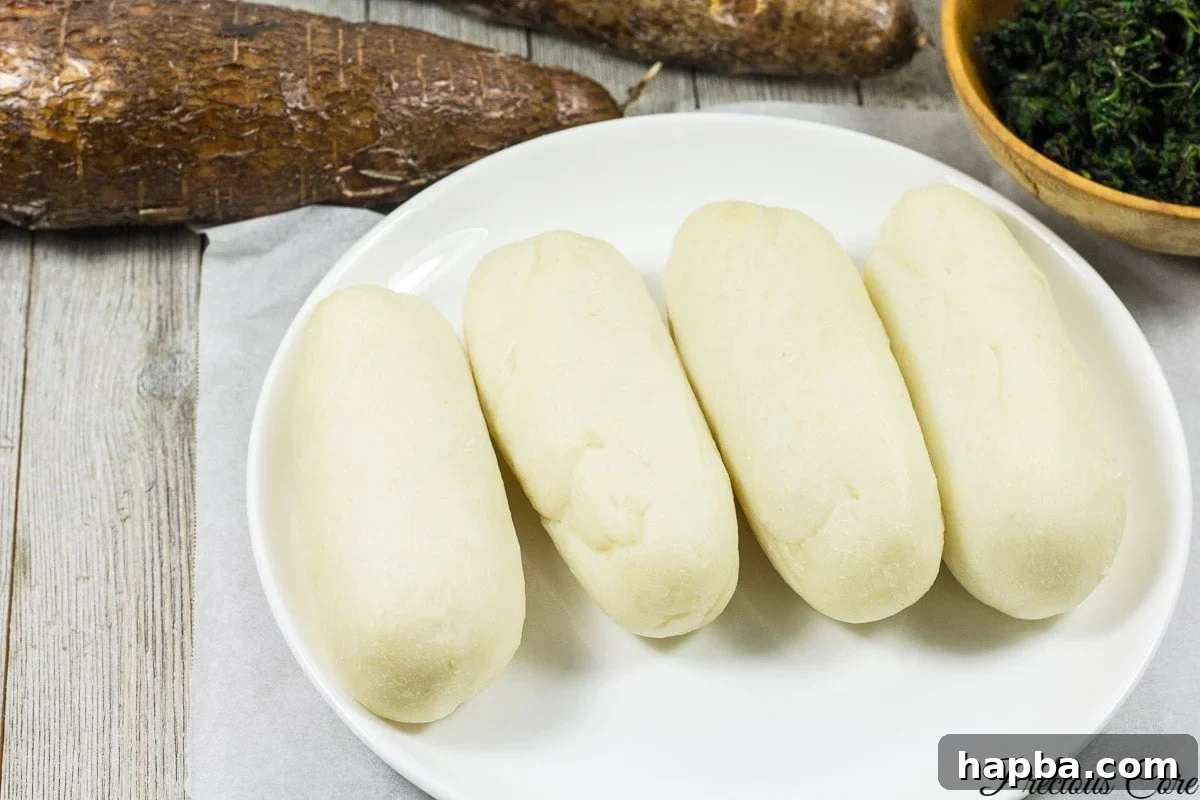
Fufu is more than just a dish; it’s a cornerstone of West African gastronomy, synonymous with comfort and tradition in many households. While various forms exist, such as corn fufu, yam fufu, and plantain fufu, cassava fufu holds a special place due to its unique texture and subtly tangy flavor. This starchy accompaniment is typically “swallowed” with a rich, flavorful soup or a hearty vegetable stew, making it a truly satisfying meal.
Across the diverse culinary landscape of Africa, cassava fufu goes by several names and boasts slight preparation variations. In Nigeria, it is famously known as Akpu or Santana, often prepared with a distinct process involving soaking and then pounding or blending the cassava. Meanwhile, in Cameroon, it’s widely recognized and celebrated as Water Fufu, a name that hints at the essential role water plays in its preparation and the traditional fermentation method. Despite regional differences, the essence of cassava fufu remains consistent: a soft, pliable, and filling side dish that beautifully complements the vibrant flavors of African soups.
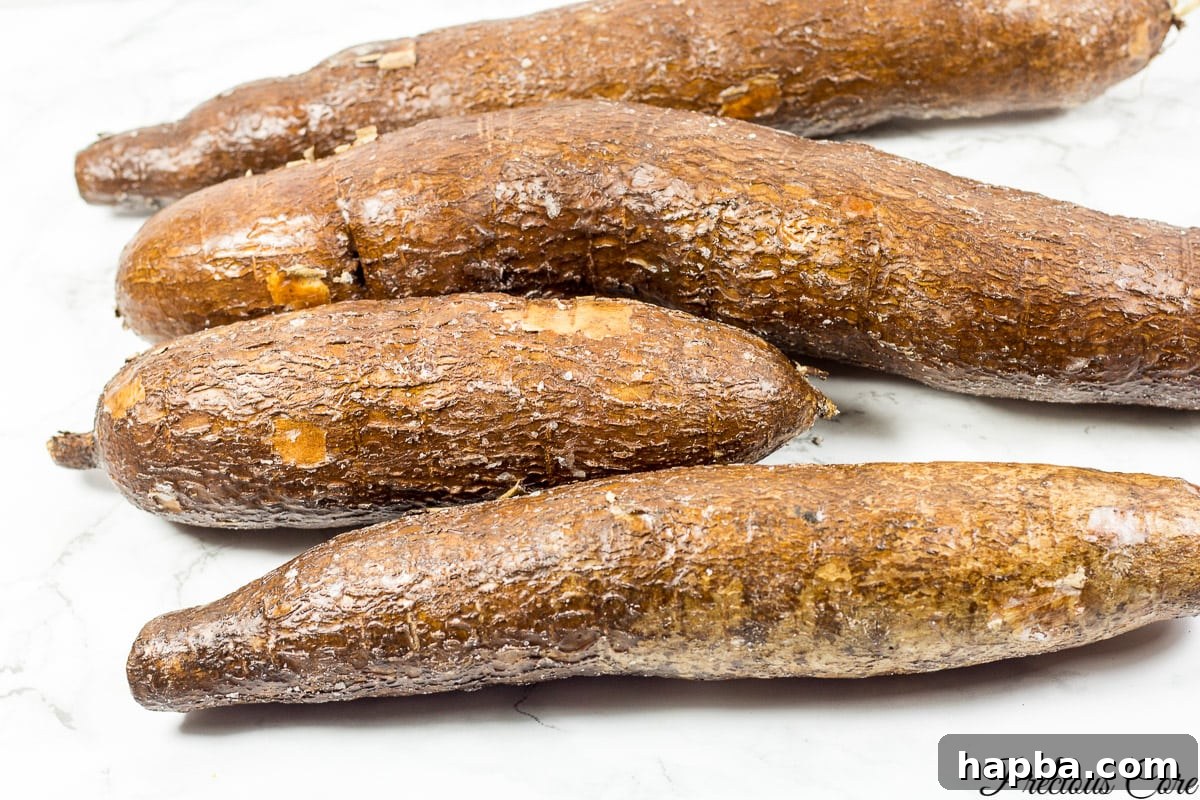
The Art of Making Water Fufu: From Root to Resplendent Dish
The journey to creating perfect Water Fufu begins with the humble cassava root, also known as yuca. This resilient tuber is transformed through a fascinating fermentation process, which is the secret behind fufu’s distinctive tang and soft consistency. Raw cassava contains cyanogenic glycosides, which are naturally broken down during fermentation and cooking, making it safe and delicious to consume. The fermentation not only detoxifies the root but also develops complex flavors and significantly softens the tuber, making it ideal for processing into a smooth puree.
The fermented cassava, characterized by its subtly pungent aroma – a sure sign of a successful fermentation – is then meticulously processed. It’s first ground into a fine puree, a step that requires breaking down the softened root into a smooth, consistent pulp. Following this, the puree is carefully drained to remove any excess liquid, concentrating its starchy essence. Finally, this concentrated cassava paste is cooked with care and skill, stirring until it achieves its characteristic elastic, rubbery texture and mild, yet unique, flavor.
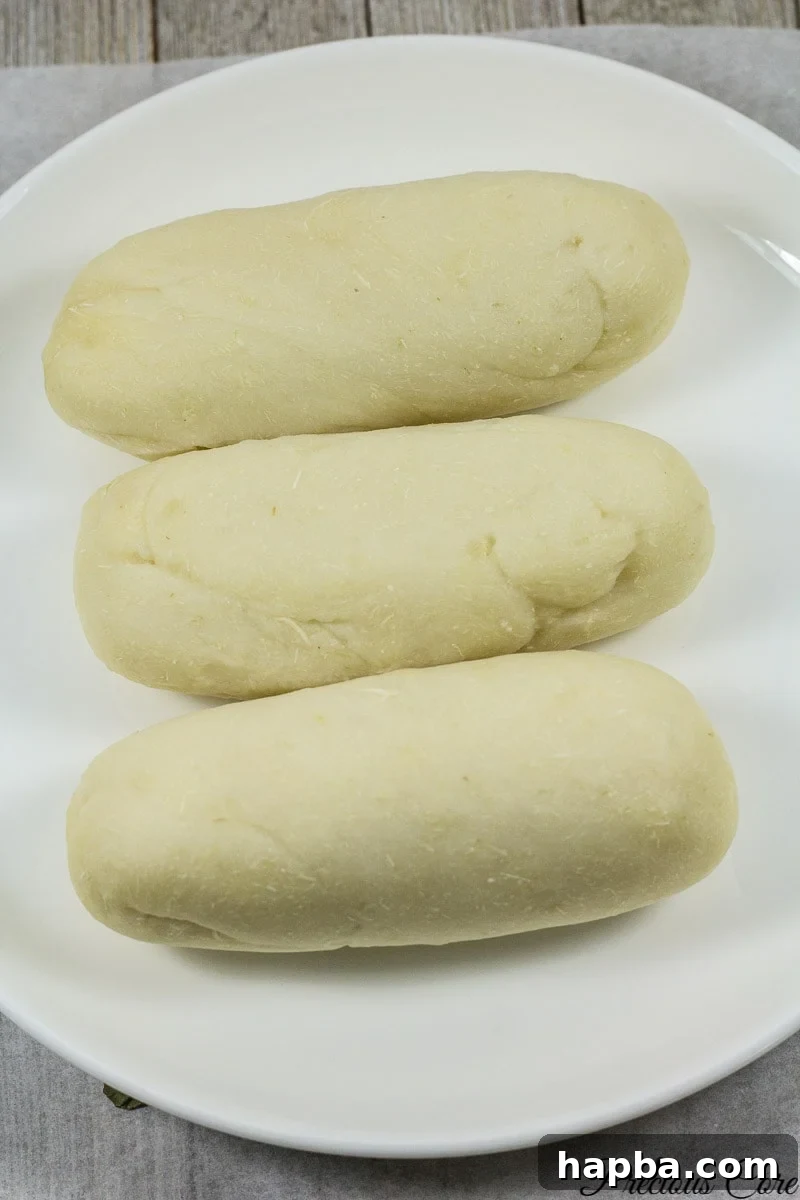
Draining the cassava puree effectively is paramount for achieving the ideal fufu consistency. Using a fine-mesh kitchen towel or a traditional cheesecloth makes this process significantly easier, allowing you to extract the necessary moisture without losing any of the precious cassava solids. Once cooked to perfection, this versatile fufu is ready to be served, traditionally shaped into smooth, round balls or logs, and paired with a soup or stew of your choice.
Perfect Pairings: The Companion Soups of Water Fufu
Water Fufu’s neutral, slightly tangy profile makes it an exceptional accompaniment to a wide array of robust and richly flavored African soups and stews. In Cameroon, this starchy delight is frequently enjoyed with popular dishes like Ogbono soup, a thick, drawy soup made from wild mango seeds; refreshing Okra soup; or the creamy and comforting Groundnut soup. However, one of the most celebrated and arguably quintessential Cameroonian combinations is Water Fufu served alongside a vibrant vegetable stew called Eru. The rich, earthy flavors of Eru, typically made with okazi leaves, waterleaf, and various meats, create an absolutely delicious and unforgettable culinary synergy with the mild fufu.
Similarly, in Nigeria, cassava fufu, or Akpu, is a staple served with an impressive variety of hearty soups. Favorites include the beloved Egusi soup, made with ground melon seeds; the distinct Bitter Leaf soup, known for its unique flavor profile; and Ogbono soup. Each pairing offers a different gastronomic experience, but the common thread is the fufu’s ability to soak up the flavors of the accompanying soup, making every bite a delightful blend of textures and tastes. I personally adore it with Nigerian Egusi soup, a truly classic and satisfying combination.
The Unique Taste and Texture of Cassava Fufu
Describing the taste of Water Fufu to someone unfamiliar with it can be quite a delightful challenge. It possesses a unique, subtle flavor that hints at its earthy origins but is distinctly transformed by the fermentation process. The fermentation imparts a pleasant tanginess, a mild sour note that beautifully contrasts with the often rich and savory flavors of the soups it’s served with. This tang is not overwhelming but rather adds a refreshing depth to the fufu’s overall profile.
Beyond its taste, the texture of cassava fufu is perhaps its most defining characteristic. It has a distinctive rubbery, yet incredibly soft and pliable consistency. This makes it perfect for “swallowing” – a traditional eating method where small portions are pinched off and dipped into soup, then swallowed without chewing. This unique texture allows the fufu to absorb the soup’s flavors completely, creating a harmonious and deeply satisfying culinary experience. When paired with a warm, flavorful vegetable soup or stew, the combination is simply divine.
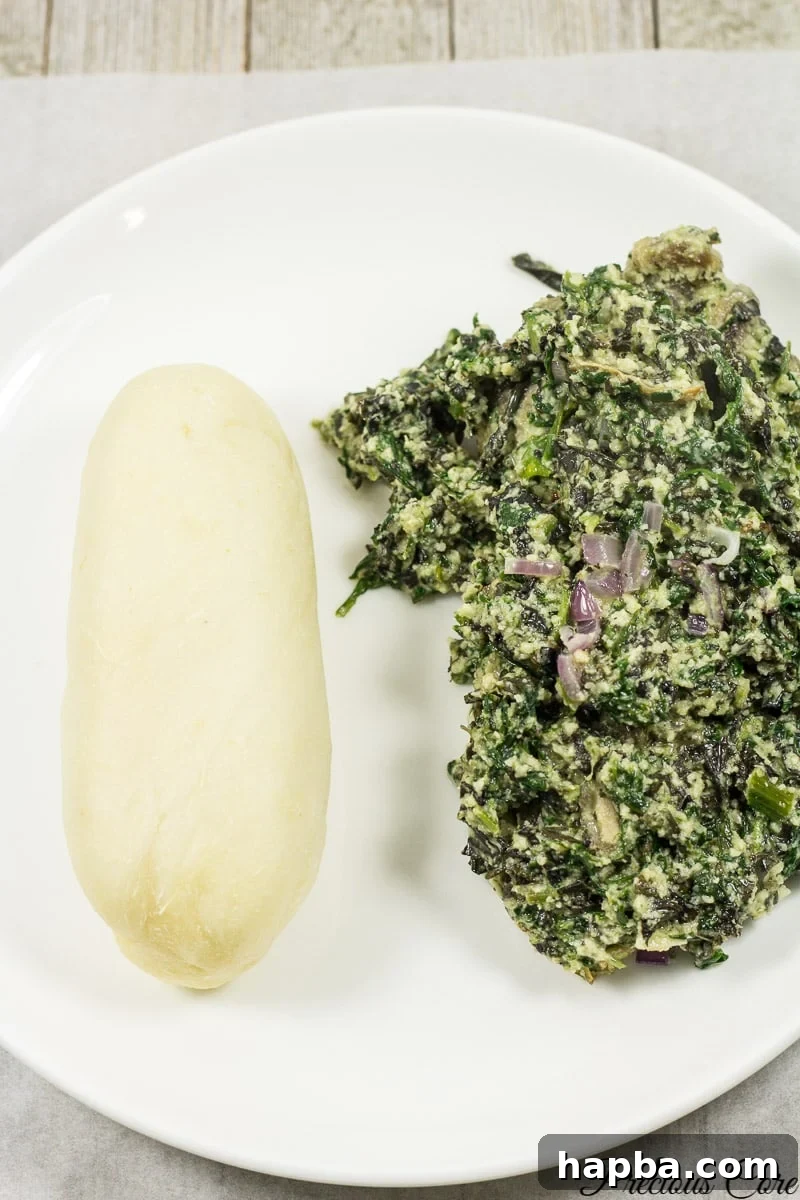
On this occasion, I’ve served our homemade Water Fufu with Ndole, a rich and flavorful Cameroonian bitter leaf stew that I happened to have on hand. Let me tell you, this combination is an absolute revelation, a testament to the versatility of fufu! While I initially aimed to capture a picture of Water Fufu paired with Eru – an iconic duo that is simply too good to resist – my willpower failed me, and I couldn’t help but devour all the Eru right after I finished making the fufu. Rest assured, whether with Ndole, Eru, or any other hearty African soup, Water Fufu promises an authentic and incredibly satisfying meal.
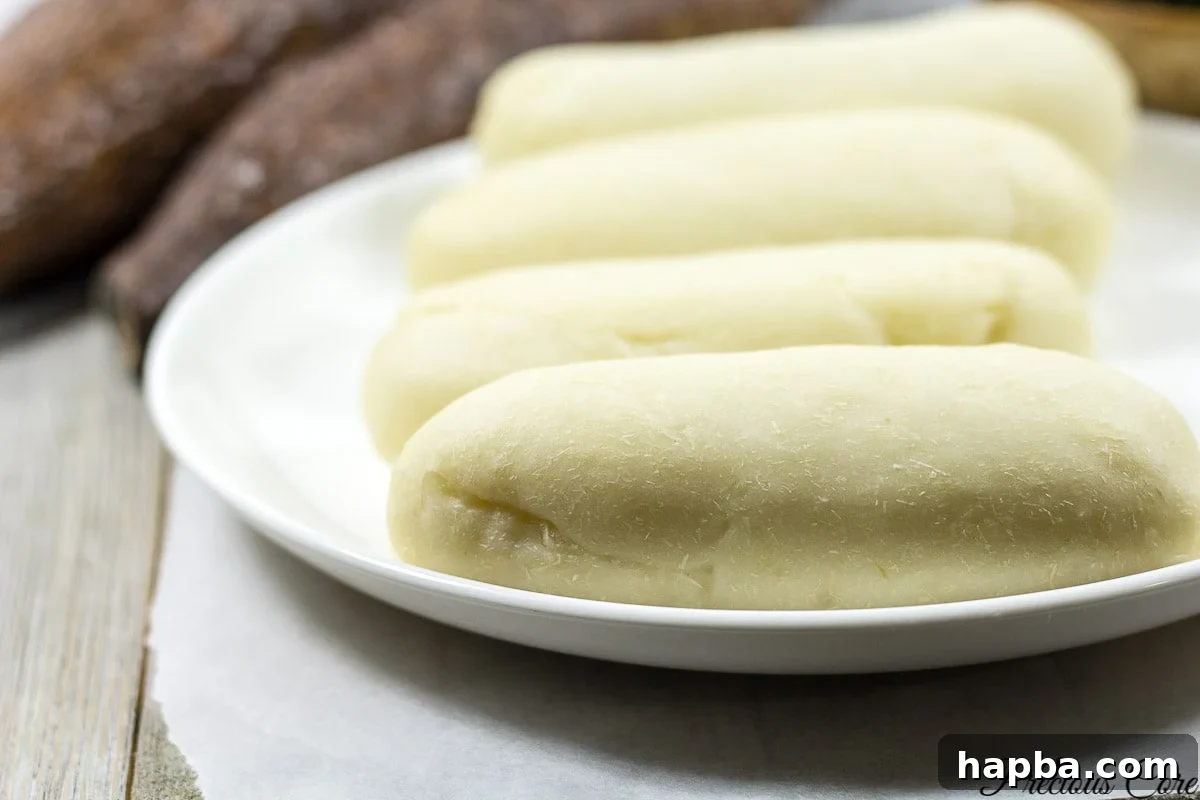
To further assist you on your culinary adventure, I’ve prepared a comprehensive video guide detailing every step of making this delightful fufu from scratch. In the video, I personally walk you through the entire process, sharing invaluable tips and tricks to ensure your homemade Water Fufu is a resounding success. Regardless of your location, as long as you can source fresh cassava, you have all you need to create your very own authentic Cassava Fufu.
Watch How to Make Water Fufu from Scratch:
How to Make Water Fufu from Scratch – Cassava Fufu
Fufu is a staple in a good number of African countries. This version is made by fermenting cassava (yuca roots) then blending and cooking. It can be enjoyed with any soup of choice.
Ingredients
- 6 large tubers of cassava (yuca root)
- 2 teaspoons baking soda optional
Instructions
-
Peel the cassava. Cut each tuber into 5 or 6 pieces, then split each piece where you can see the fiber running through the middle. Use a knife to carefully lift the skin from the divided cassava, then use your knife or hands to remove the entire skin.
-
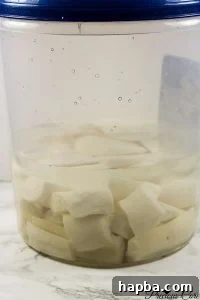
Wash the peeled cassava thoroughly and place it in a large, clean container. Pour in enough water to completely cover the cassava. Add two teaspoons of baking soda (this is especially helpful for cassava bought outside Africa, as it aids in initiating fermentation). Cover the container and let it ferment in a warm corner for 3 to 5 days. To check if the cassava is sufficiently fermented, press it with your fingers; it should feel soft. While not all pieces may be uniformly soft, if most are, you’re ready for the next step.

-
Once fermented, strain the cassava to remove the excess water. Transfer the softened cassava to a blender or food processor and process it into a smooth puree. You may need to do this in two or more batches, depending on the size of your appliance.
-
Now, meticulously remove any remaining fibers from the puree. You can do this by running your hand through the puree and picking out any fibrous strands, or by adding a little water to the puree and then passing it through a fine-mesh strainer. Using your hand is recommended if you plan to cook the fufu immediately, as it helps retain more starch.
-
Pour the purified cassava puree into a clean kitchen towel or cheesecloth. Squeeze firmly to remove as much excess water as possible. If you added extra water during the straining process, you might need to squeeze for a longer duration. Alternatively, tightly tie the kitchen cloth containing the puree and place it in your kitchen sink with a heavy object on top (like a heavy pot or stone) to press out the water overnight. Once the excess water is removed and the paste is firm, your fufu is ready to be cooked!
To cook the cassava fufu:
-
Place the raw fufu paste in a non-stick pot. Use your hands to work through it, dissolving any existing lumps to form a smooth, uniform paste. Add about a quarter cup of water and mix thoroughly until it forms a consistent, lump-free paste.
-
Place the pot over medium-high heat. Cover it and allow it to rest for about two minutes. Then, begin stirring vigorously with a sturdy wooden spoon, continuously mixing and pressing to dissolve any lumps that form as the fufu begins to cook and solidify.
-
Gradually add water as needed, typically about 1 cup in total, while continuing to stir. This helps to soften the fufu and achieve the desired pliable, elastic consistency – ensuring it’s not too stiff or strong. Keep mixing continuously on the heat until the fufu transforms from a bright white color to an off-white, translucent hue. It is ready when it reaches this characteristic off-white color and has a smooth, rubbery texture. For visual guidance on texture, please refer to the video.
-
Turn off the heat. If desired, you can now mold the fufu into individual portions, typically shaped like small logs or round balls, ready for serving.
-
Serve your freshly made Water Fufu with any soup of your choice! It pairs exceptionally well with rich stews like Eru or the delectable Ogbono soup.
Notes
1. The baking soda in this recipe is crucial for initiating and accelerating the fermentation process. This is particularly important if your cassava is sourced from regions outside Africa, where traditional fermentation methods might not have been applied or where the cassava variety might benefit from a boost.
Nutrition
Calories: 783kcal | Carbohydrates: 186g | Protein: 7g | Fat: 1g | Saturated Fat: 0.4g | Polyunsaturated Fat: 0.2g | Monounsaturated Fat: 0.4g | Sodium: 506mg | Potassium: 1327mg | Fiber: 9g | Sugar: 8g | Vitamin A: 64IU | Vitamin C: 101mg | Calcium: 78mg | Iron: 1mg
Additional Info