
Echoes of Yesteryear: A Nostalgic Journey Through Cherished Childhood Memories and Community Spirit
Life has a remarkable way of propelling us forward, often at a pace so swift that we rarely pause to glance back. Yet, there are moments, frequently triggered by the simplest sensory cues or a forgotten tune, when the floodgates of memory unexpectedly open. These instances unleash a torrent of vivid recollections, transporting us to a bygone era, saturated with the unique textures and emotions of our formative years. Just yesterday, such a moment enveloped me, sparked by the faint melody of a song—a song we, as children, not only sang but, with an endearing innocence, quite literally “murdered” back in the day.
The lyrics, as our young, imaginative minds enthusiastically processed and belted them out, went something along these lines, a charming testament to childhood misinterpretation:
Waaaaanderfool Chiso
Saviour
Wanderfool miracool Chiso
Let us walk wit i
For the sake of clarity, and perhaps a gentle smile, it’s worth revealing what the actual, intended words of the hymn were:
Wonderful Jesus
Saviour
Wonderful miracle Jesus
Let us walk with Him
Did the precise pronunciation or the exact phrasing matter to us then? Not in the slightest. Our concern wasn’t linguistic accuracy or vocal perfection. All that truly mattered was the unadulterated joy of the moment, the exhilarating act of singing our hearts out with unwavering conviction, and the communal delight of performing, however informally, for our captive audience. It was an unfiltered expression of pure, unadulterated childhood happiness, a spontaneous symphony of youthful enthusiasm that effortlessly transcended the mere confines of words. This shared experience forged bonds and created indelible memories, underscoring the magic of collective innocence.
The Unforgettable Days of YP: Youthful Vigor and Unique Leadership
This particular, heartwarming memory dates back many years, to a significant chapter of my early life when I was an active and eager member of “YP” – the Young Presbyterians. This vibrant and energetic group, predominantly comprised of elementary-aged students, flourished within the warm, welcoming embrace of the Presbyterian church in Cameroon. For many of us, YP was far more than just a religious youth group; it was a cornerstone of our nascent social lives, a cherished space where genuine friendships blossomed, where we learned invaluable lessons about community and faith, and where we discovered the simple yet profound pleasures of collective endeavor and shared purpose.
My younger brother, even then a figure of remarkable charisma and boundless energy, held the esteemed, if somewhat loosely interpreted, position of a conductor within our YP choir. In theory, his role was to gracefully guide our singing with precise hand movements, dictating tempo, dynamics, and entry cues. In practice, however, his performances were decidedly more idiosyncratic, spontaneously creative, and, frankly, far more entertaining than any conventional conducting. Instead of the expected, measured baton-waving, he would roll his hands in rhythmic, expansive circular motions, movements reminiscent of someone joyfully signing the upbeat gospel song “running over.” Each dramatic ‘hand roll’ was then punctuated by him flinging his palms wide open, as if attempting to physically embody the abstract concept of ‘shine’ or a grand, triumphant flourish. This captivating and highly personalized routine he repeated, over and over, with unwavering dedication, as we sang our hearts out, playfully mangling the lyrics, utterly charmed and captivated by his unique form of leadership. It was not merely fun; it was an integral and defining part of the YP experience, a vivid testament to the uninhibited spirit and boundless creativity that characterized our childhood days.
Now, many years have meticulously woven themselves into the rich tapestry of time, and I frequently find myself traversing the pathways of memory, reminiscing about those cherished YP days. But it’s not solely the YP group that beckons from the past; it’s a vast and intricate tapestry of moments, emotions, and experiences that collectively define a unique upbringing within a vibrant, culturally rich landscape. These are the threads that, when re-examined, reveal the deeper meaning and enduring impact of a truly communal way of life.
The Heart of African Hospitality: Celebrations Without Formal Invitation
Among the kaleidoscope of memories that shimmer from the past, the distinct dynamics of social gatherings, particularly birthday parties, stand out with remarkable clarity and warmth. In a culture where the traditional lines between ‘my immediate family’ and ‘the wider community’ are wonderfully and seamlessly blurred, a seemingly small invitation extended to a handful of children could, and very often did, beautifully escalate into a full-scale, joyous neighborhood festivity. It was not at all uncommon to invite a mere handful of kids only to discover your house, or more accurately, the entire compound, bustling and overflowing with a joyous multitude, filled well beyond its initially intended capacity.
This delightful phenomenon was, and largely continues to be, a beautiful and vibrant demonstration of how the ancient, yet incredibly effective, word-of-mouth mode of spreading information operates with an almost magical efficiency in Africa. News of an impending celebration traveled like wildfire, carried by the gentle breeze and whispered with eager anticipation from one child to another, reaching far beyond any initial, formal guest list. The inherent beauty of it lay in the unspoken understanding that pervaded the community: people didn’t necessarily wait for a formal, paper invitation; they simply came, drawn irresistibly by the powerful pull of community solidarity, shared joy, and the inherent human desire to celebrate together. I vividly recall the initial surprise, which quickly transformed into profound delight, at my first daughter’s second birthday party. The house was absolutely teeming with well-dressed, beaming children, all radiating excitement and ready to partake in the festivities. Many of them were complete strangers to me, their parents equally unknown. Yet, they had simply heard there was a party, and they came, transforming what was conceived as a small family gathering into a grand, spontaneous, and utterly memorable communal event. This open-door policy, this profound and inherent generosity of spirit, is a timeless hallmark of the culture, fostering a deep and abiding sense of belonging where everyone is genuinely welcome, and every joyous occasion is considered a cherished, shared experience.
A Sensory Journey: The Earthy Embrace of the Traditional Market
Another profound and deeply felt connection to the past, and indeed, to the very earth itself, comes to life through my cherished memories of shopping at the local, traditional market. This was never just a mundane chore or a transactional errand; it was, without exception, a rich, immersive, and truly sensory experience that engaged every fiber of one’s being. Imagine the exhilarating cacophony of vendors enthusiastically hawking their wares, their voices creating a vibrant symphony of commerce. Picture the kaleidoscopic hues of fresh, locally grown produce stacked high in artful pyramids, a visual feast of nature’s bounty. And then, there were the earthy aromas – the pungent scent of exotic spices mingling with the damp, rich smell of the soil, all creating a unique olfactory signature of authentic life. And, inevitably, there was the mud.
Especially after a torrential tropical downpour, encountering the rich, squelchy mud was an almost inevitable and integral part of the market experience. Dipping my feet into that cool, yielding mud wasn’t a conscious choice; it was simply an undeniable feature of the landscape, an unavoidable part of navigating the vibrant marketplace. And, curiously, it’s not the momentary discomfort of the mushiness that I now miss, but rather that constant, unfiltered, and utterly natural physical touch with nature. It served as a tangible, grounding reminder of our intimate connection to the land, a deeply rooted sensation that stands in stark contrast to the sterile, often artificial environments of modern supermarkets. That mud, those spontaneous puddles, the uneven, organic terrain – they were all intrinsic components of the authentic rhythm of life, connecting us directly to the source of our sustenance and the ancient, enduring cycles of nature. It was a humble yet profoundly significant interaction, a testament to a life lived closer to the elements, wholeheartedly embracing both their raw beauty and their charming imperfections. This connection fostered a sense of belonging to the natural world that is increasingly rare today.
The Sacred and the Playful: Easter Morning Traditions
The past also holds remarkably vivid memories of spiritual celebrations, particularly the solemn yet joyful atmosphere of Easter mornings. These were not merely religious observances; they were deeply imbued with a childlike wonder, a profound sense of communal togetherness, and a unique cultural flavour. Waking up on Easter morning carried a special, almost magical significance, often marked by the delightful and highly anticipated tradition of going out, usually in groups of eager children, to ‘look for the risen Jesus.’ This was not, of course, a literal search for a physical entity, but rather a beautiful, deeply symbolic journey that seamlessly blended profound faith with imaginative, innocent play. Children would gather, their hearts brimming with anticipation and a sense of shared purpose, singing songs that were as much an integral part of the ritual as the symbolic search itself.
One such song, which resonates deeply within me even now, spoke of the Resurrection narrative with a charming simplicity and a touch of local dialect: “the women went to the tomb but they couldn’t find Chiso.” This communal act of “looking,” followed by the joyous and often exuberant singing of the Resurrection story, instilled a profound sense of shared faith, cultural heritage, and spiritual unity among us. It deftly cemented the foundational narratives of our spiritual beliefs within the playful, accessible context of childhood, rendering sacred stories both understandable and deeply personal. These cherished moments fostered not only a nascent religious understanding but also forged a powerful, unbreakable bond among the children, creating enduring memories of collective worship, heartfelt celebration, and a timeless spiritual journey that continues to shape our perspectives.
The Fabric of Human Connection: Genuine Smiles and Neighborly Love
Beyond the grand events and specific, memorable rituals, what I truly miss are the countless everyday threads that so intricately wove together the rich, vibrant tapestry of human connection in that community. I profoundly miss the authenticity embedded within genuine smiles – smiles that effortlessly reached the eyes, conveying true warmth, openness, and an undeniable sense of welcome, rather than mere politeness or superficial courtesy. There was an unspoken, yet deeply understood, covenant of care that permeated the entire community, beautifully exemplified by the simple, yet incredibly profound, act of being served food, over and over again, by neighbors who genuinely delighted in sharing their bounty. A casual visit to a friend’s house often, and quite naturally, evolved into an unexpected meal, a spontaneous and generous offering of hospitality that was both humbling and immensely heartwarming, reflecting a philosophy of abundance and sharing.
And then there were the “good mornings.” These were not fleeting, barely audible mumbles exchanged in passing. On the contrary, they were robust, heartfelt salutations that flew cheerfully and energetically from one doorstep to another, weaving a constant, affirming soundscape of human warmth and connection throughout the neighborhood each and every morning. These daily affirmations, these genuine and unreserved exchanges, forged an incredibly strong and resilient social fabric, subtly reminding everyone that they were seen, valued, and intrinsically connected to something larger than themselves. It was a world where human interaction was not simply a social courtesy but a fundamental, deeply ingrained expression of collective identity and shared well-being, fostering a profound sense of belonging that, regrettably, feels increasingly rare and elusive in our fast-paced, individualized modern existence. This deep connection to others is truly one of the greatest treasures of the past.
Resilience and Grace: The Everyday Image of Motherhood
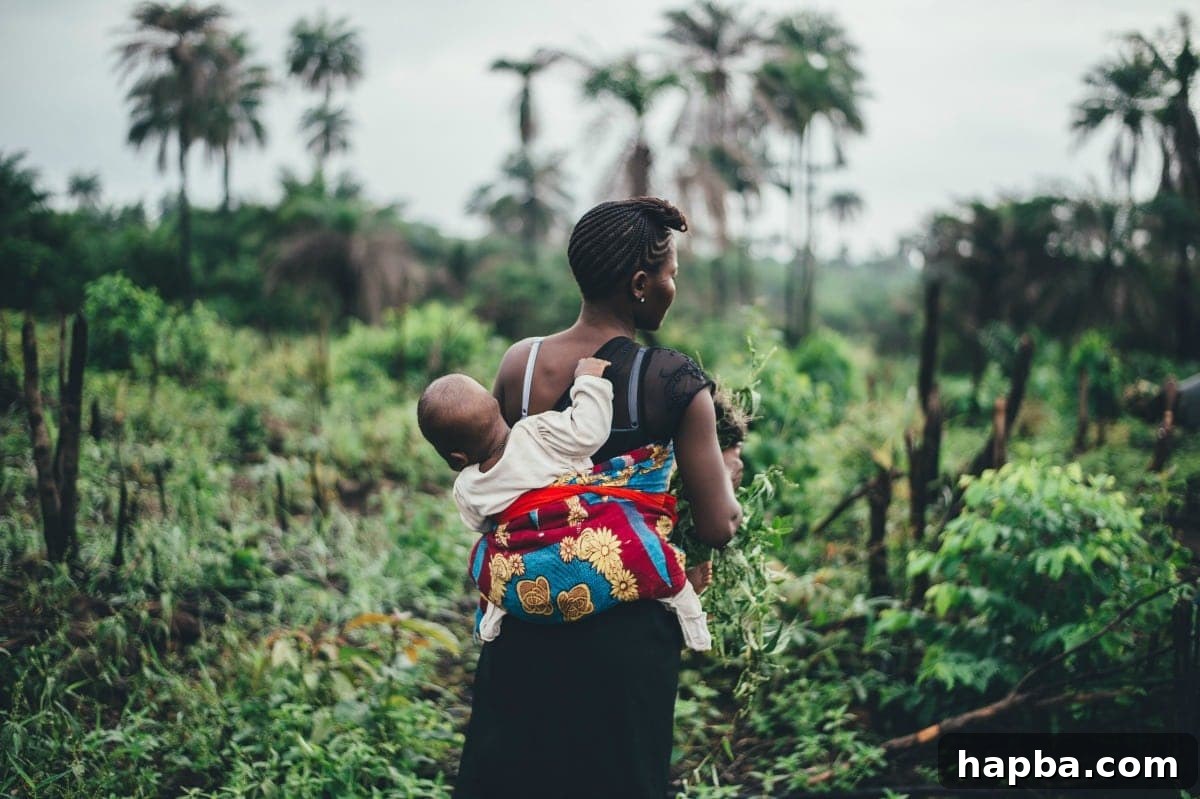
Among the countless images indelibly etched into my memory, one stands out with particular clarity and power, serving as a profound symbol of grace, unwavering resilience, and the seamless integration of life and labor: the ubiquitous sight of women with babies latched securely onto their backs. This was not an occasional or remarkable sight; it was a constant, reassuring, and deeply integrated presence in the daily rhythm of life. These mothers, with their precious infants nestled snugly and safely, went about their myriad daily businesses—whether heading to the bustling market, diligently tending to household chores, working in the fields, or engaging in vibrant social interactions—day-in and day-out, with an effortless strength, poise, and efficiency that was deeply inspiring and quietly remarkable.
This powerful image encapsulates far more than just a practical and culturally accepted method of childcare; it speaks volumes about the inherent community support system, the enduring strength and multitasking abilities of women, and a profound cultural philosophy where children are always close, always integrated into the very pulse of daily activities and communal life. It vividly symbolized continuity, cherished tradition, and the unyielding spirit of motherhood, harmoniously woven into the vibrant and intricate tapestry of communal existence. It represented a grounded, profoundly interconnected way of living where the vital roles of parent and active community member were intrinsically linked and mutually reinforcing—a sight that evokes deep admiration, profound respect, and a poignant sense of longing for such an authentic, integrated, and deeply human way of life. It’s a powerful reminder of how society can support its newest members and their caregivers.
The Indelible Charm of Home: A Place of Unwavering Belonging
Ultimately, what these vivid and deeply cherished recollections coalesce into is a profound, almost visceral longing for my home—not merely as a physical structure or a geographical location, but as an expansive repository of all these “goodies.” These “goodies” encompass the rich sensory experiences, the comforting communal warmth, the unwavering spiritual anchors, and the genuine, unbreakable human connections that collectively rendered that place so uniquely lovable and utterly unforgettable. It’s the distinct scent of the morning air after a rain, the joyous sound of laughter echoing across neighboring compounds, the exquisite taste of traditional dishes meticulously prepared with generations of love, and the indescribable, comforting feeling of being utterly, unequivocally, and unconditionally at home, where one is truly accepted and understood.
These are not just fleeting memories; they are the bedrock of my personal identity, the foundational pillars upon which my intrinsic understanding of community, pure joy, and deep belonging was meticulously constructed. They represent a simpler time, perhaps, but undeniably a richer one in terms of profound human connection and an authentic, unfiltered engagement with the surrounding world. The innocent charm of mispronounced songs, the heartwarming surprise of unexpected guests at a party, the muddy, well-trodden paths of the vibrant market, the collective spiritual journeys, the genuine, heartfelt smiles that lit up faces, and the unwavering strength and grace of the women—these are the timeless threads that form the incredibly rich, vibrant, and enduring fabric of my cherished past, shaping who I am today and fueling a lifelong appreciation for these elemental truths.
What Do You Miss? A Call for Shared Reflection
This intimate journey down memory lane, filled with moments of laughter, profound warmth, and a touch of gentle melancholy, inevitably leads us to a broader, more universal question—a question that beautifully transcends individual experiences. In a rapidly evolving world that is constantly shedding old ways for new, what are the truly irreplaceable moments, the heartfelt traditions, or the profound human connections that you miss most deeply about your own unique past? What are the “goodies” from your yesteryears that continue to subtly, yet powerfully, shape and influence who you are in the present day? I invite you to share your own reflections, for in the act of sharing our individual pasts, our personal narratives, we invariably discover the universal threads of human experience that beautifully bind us all together, affirming our shared humanity and the timeless power of memory.