
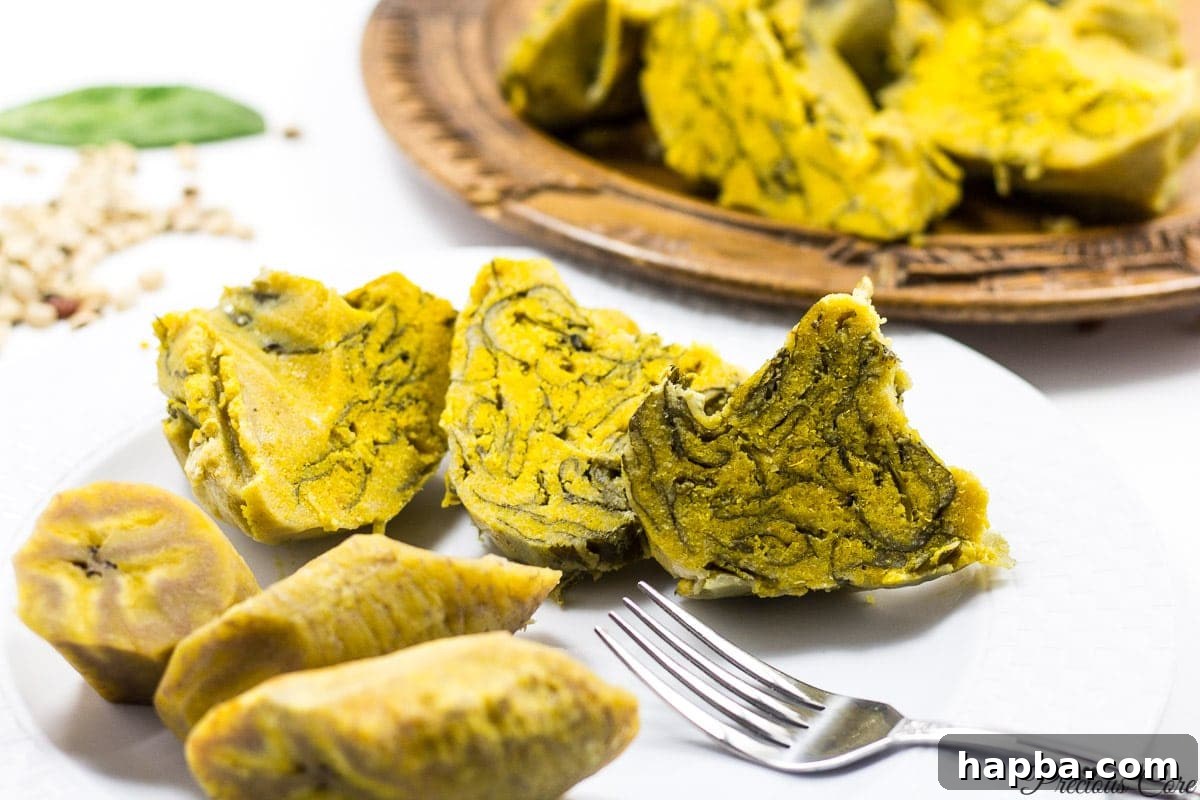
Discover the Irresistible Charm of Koki Beans: A Cameroonian Delicacy
Ah, Koki Beans! For anyone who has experienced the vibrant culinary landscape of Cameroon, this dish evokes a profound sense of nostalgia and delight. It’s not just food; it’s a memory, a taste of home, and an integral part of Cameroonian culture. This beloved street food, a savory pudding crafted from humble black-eyed peas, delivers a flavor profile that is truly extraordinary and leaves an unforgettable impression. In my household, a fresh batch of Koki Beans disappears almost as quickly as it is prepared, a testament to its irresistible allure. The moment the aroma fills the kitchen, it signals a delicious journey that doesn’t conclude until every last morsel has been savored.
The Global Connection of Black-Eyed Peas: Koki Beans and Beyond
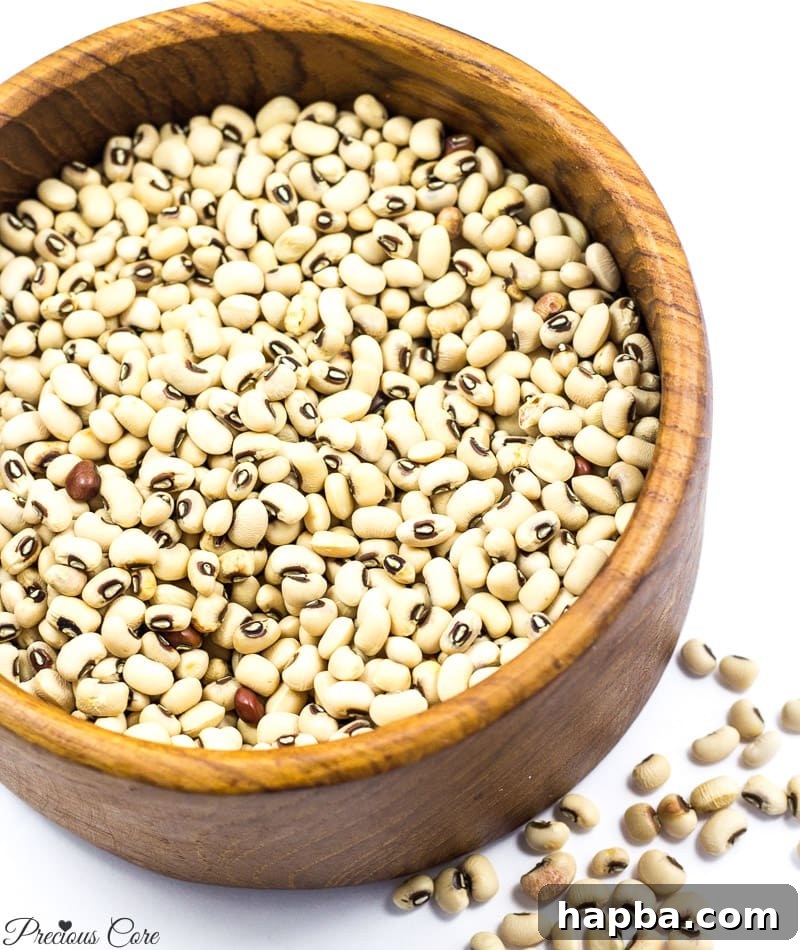
My culinary adventures led me to a joyful discovery: the widespread appreciation for black-eyed peas across various cultures, often prepared in strikingly similar and equally delicious ways. While known as Koki Beans in Cameroon, these versatile legumes are referred to as black-eyed peas in the United States, a staple ingredient in many Southern dishes. In Nigeria, a close cousin to Koki Beans reigns supreme: Moin Moin. This delightful realization highlights the universality of this humble bean and its ability to inspire comforting, flavorful dishes across continents. I am certain many other nations have their own unique names and recipes for this incredible legume, each adding to its rich global tapestry.
A Tale of Two Puddings: Koki Beans vs. Moin Moin
In Cameroon, black-eyed peas primarily find their purpose in two iconic preparations: Koki Beans or the crispy Accra Beans fritters. Unlike many Western cuisines that might incorporate them into hearty stews, Cameroonians prefer to transform these beans by grinding them, cleverly “hiding” their earthy goodness within the smooth textures of puddings and fritters. When meticulously prepared into the exquisite pudding known as Koki Beans, the result is so profoundly satisfying that it’s worth every effort. Nigerians, with their equally rich culinary heritage, create a similar steamed bean pudding called Moin Moin. Both Moin Moin and Koki Beans stand as shining examples of African culinary artistry, offering distinct yet equally palatable experiences. I affectionately refer to them as “African cakes” due to their steamed, cake-like consistency and their beloved status.
The Unforgettable Taste and Texture of Koki Beans
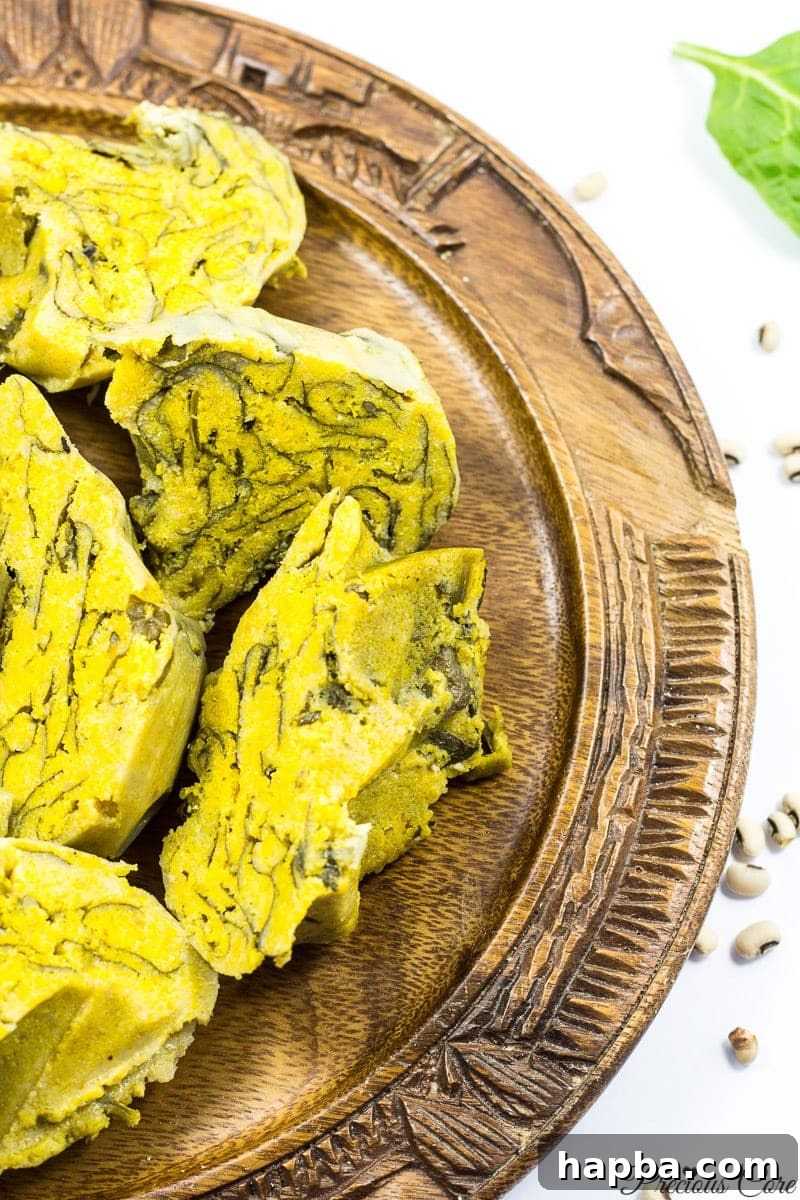
So, what exactly makes Koki Beans so captivating? Its flavor profile is a symphony of tastes and textures. Each bite offers a harmonious blend of savory goodness, complemented by a gentle warmth from the chili peppers. The pudding itself is delightfully moist and possesses a unique spongy texture, a hallmark of well-prepared Koki Beans. This characteristic sponginess is achieved through careful whisking and steaming, allowing the air to create a light, airy consistency that melts in your mouth. It’s a comforting, wholesome dish that satisfies both the palate and the soul.
The Journey to Perfect Koki Beans: A Labor of Love
Embarking on the creation of Koki Beans might seem time-consuming, but I assure you, the journey is as rewarding as the destination. Every single bite validates the effort. The most significant part of the preparation often involves the meticulous task of processing the beans, which primarily entails peeling off their outer skins. This step is crucial for achieving the smooth, light texture that defines authentic Koki Beans. While traditionally done by hand, a modern shortcut can significantly streamline this process. I’ve even prepared a video demonstration to guide you through my method for peeling the beans efficiently and effectively, ensuring your Koki turns out perfectly.
Mastering the Bean Peeling Technique
My preferred method for peeling black-eyed peas begins with a brief soak in water, typically for about 5-10 minutes. This helps to loosen the skins. Following the soak, I transfer the beans to a blender and pulse them for a few seconds. The goal here isn’t to grind them into a paste yet, but rather to gently agitate and remove the skins. Once pulsed, I transfer the peeled beans to a large bowl and cover them with water, ensuring the water level is well above the beans. The detached skins, being lighter, float to the surface, allowing me to easily drain them using a colander. I repeat this rinsing and draining process until the beans are completely free of their outer skins, leaving behind only the pristine, light-colored kernels ready for the next step. For a visual guide to this vital process, you can refer to my bean peeling video.
Grinding to the Ideal Consistency
After the meticulous peeling, the next critical step is grinding the beans into a paste. Using a high-quality blender, I crush the peeled beans until they form a slightly grainy, yet smooth paste. The texture is key here – you want it to be fine enough to yield a tender pudding, but with a subtle graininess that adds character. My blender is truly a fantastic tool for this; I honestly can’t recommend it enough for achieving the perfect Koki Beans consistency! Achieving this ideal texture is fundamental to the final taste and mouthfeel of the Koki.
(Heads up: This is an affiliate link.)
The Secret to Spongy Koki: Whisking to Perfection
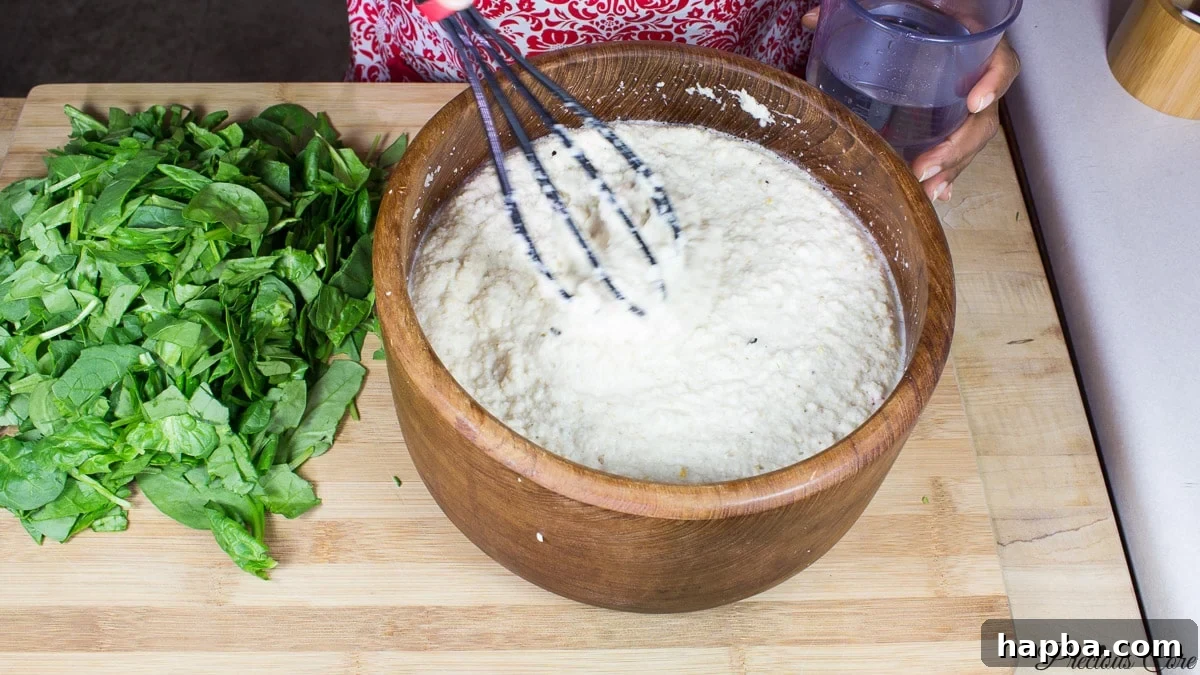
Once the bean paste is ready, the next step is perhaps the most crucial for achieving the signature spongy texture of Koki Beans. I grab a whisk and vigorously beat the bean paste. This energetic whisking incorporates air into the mixture, creating tiny pockets that will expand during steaming, resulting in a light and airy pudding, much like the legendary Koki sold by the “Mami Kokis” of Cameroon. “Mami Koki” is a fond, generic term used to refer to the wonderful women who sell these delicious bean puddings on the streets and in markets across Cameroon. Their dedication to this culinary art is inspiring, and mastering this whisking technique helps to recreate their authentic, beloved texture.
Infusing Flavor: Ingredients That Make Koki Shine
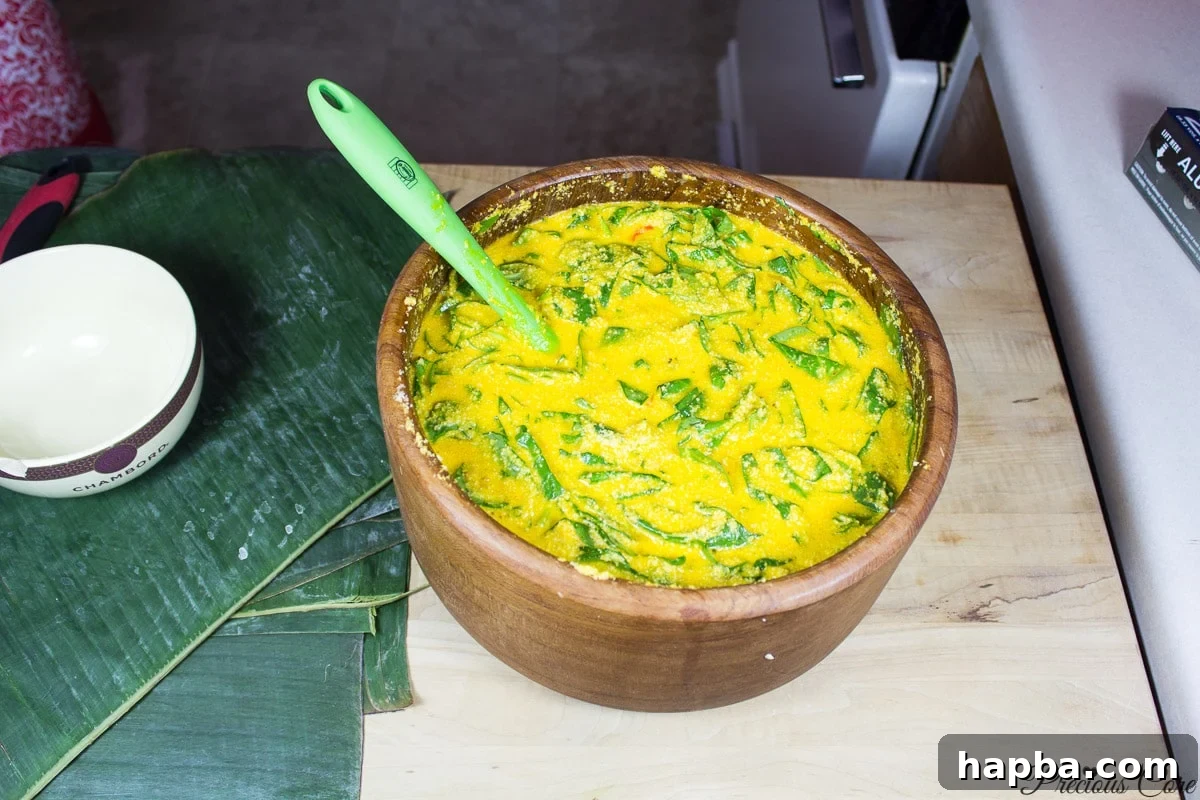
With the paste aerated, it’s time to introduce the other key ingredients that define Koki Beans. This typically includes a generous amount of palm oil, salt to enhance all the flavors, fresh spinach (often used as a convenient substitute for the traditional cocoyam leaves, which can be harder to find), and just the right amount of water to achieve the desired consistency. One of the beautiful aspects of this dish is its relative simplicity; it doesn’t demand a long list of exotic ingredients. While some variations might include seasoning cubes like Maggi, I find them entirely unnecessary. The natural flavors of the beans, palm oil, and pepper create a perfectly balanced and incredibly delicious Koki on their own, honoring the traditional preparation.
The Art of Wrapping: Traditional vs. Modern
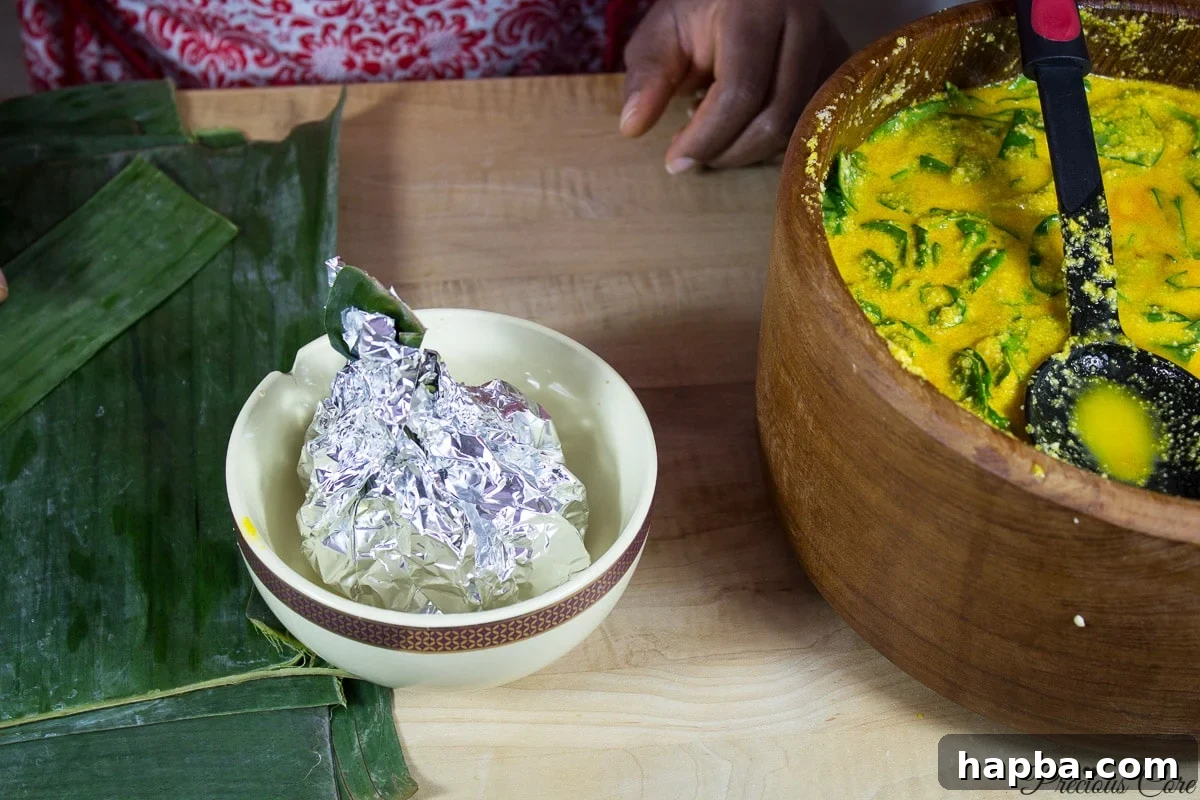
Now comes the unique and often visually appealing stage of wrapping the Koki mixture. Traditionally, the bean paste is carefully spooned into warmed plantain or banana leaves. These leaves not only impart a subtle, earthy aroma to the pudding but also create a beautiful, natural package. While banana leaves are my preferred choice, often supplemented with foil paper for extra security, I understand they might not be readily available everywhere. In such cases, aluminum foil, particularly the non-stick variety, works perfectly well as a substitute. The wrapping process is an art form, transforming the soft mixture into compact, steaming bundles ready for cooking. It’s a method that speaks to the ingenuity of traditional cooking, creating individual portions that are easy to serve and enjoy.
Look at that little cute bundle!
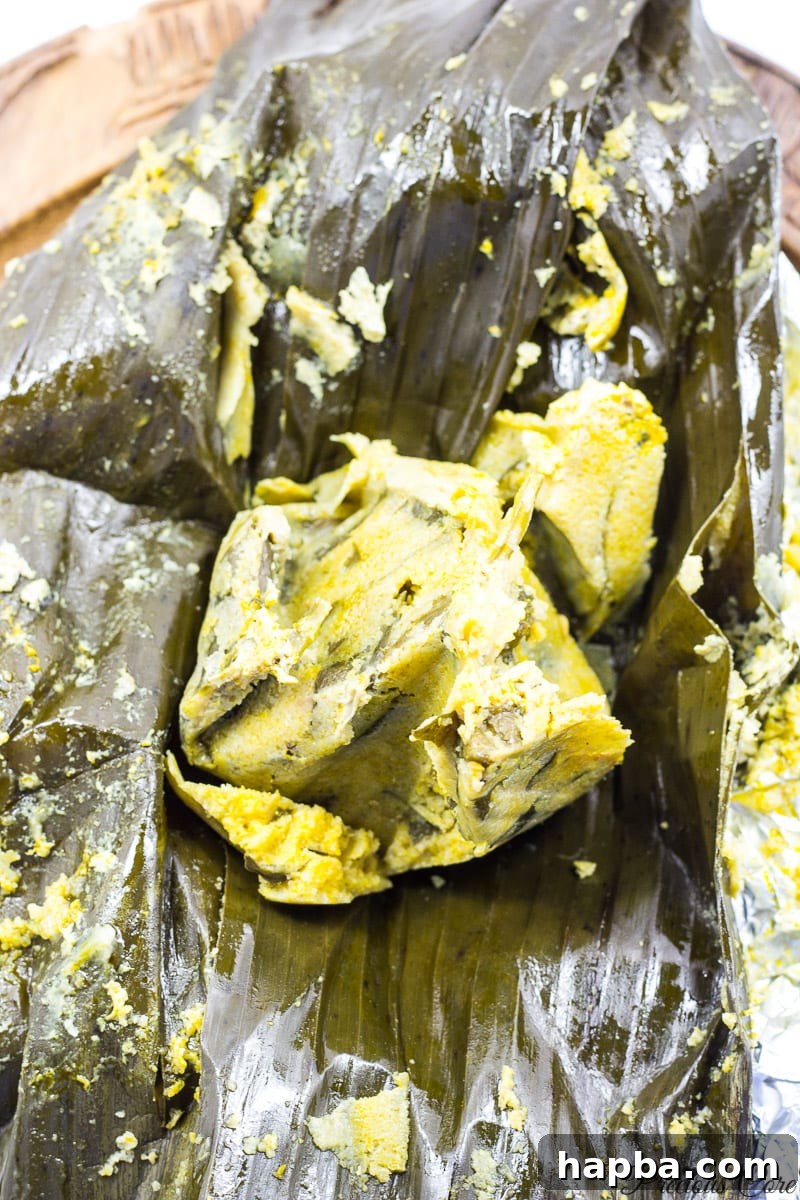
The Anticipation: Unwrapping and Savoring Warm Koki Beans
There’s a special kind of joy in unraveling a steaming bundle of Koki Beans, especially when it’s still warm. The moment the leaves or foil are peeled back, a rich, aromatic steam billows out, carrying the intoxicating scent of spiced black-eyed peas and palm oil. This fragrant embrace is truly priceless – “Oh la la!” It’s a sensory experience that builds anticipation for the deliciousness that awaits. The warm, spongy texture combined with the savory, subtly spicy flavors makes for an incredibly satisfying meal, whether enjoyed as a snack or part of a larger feast.
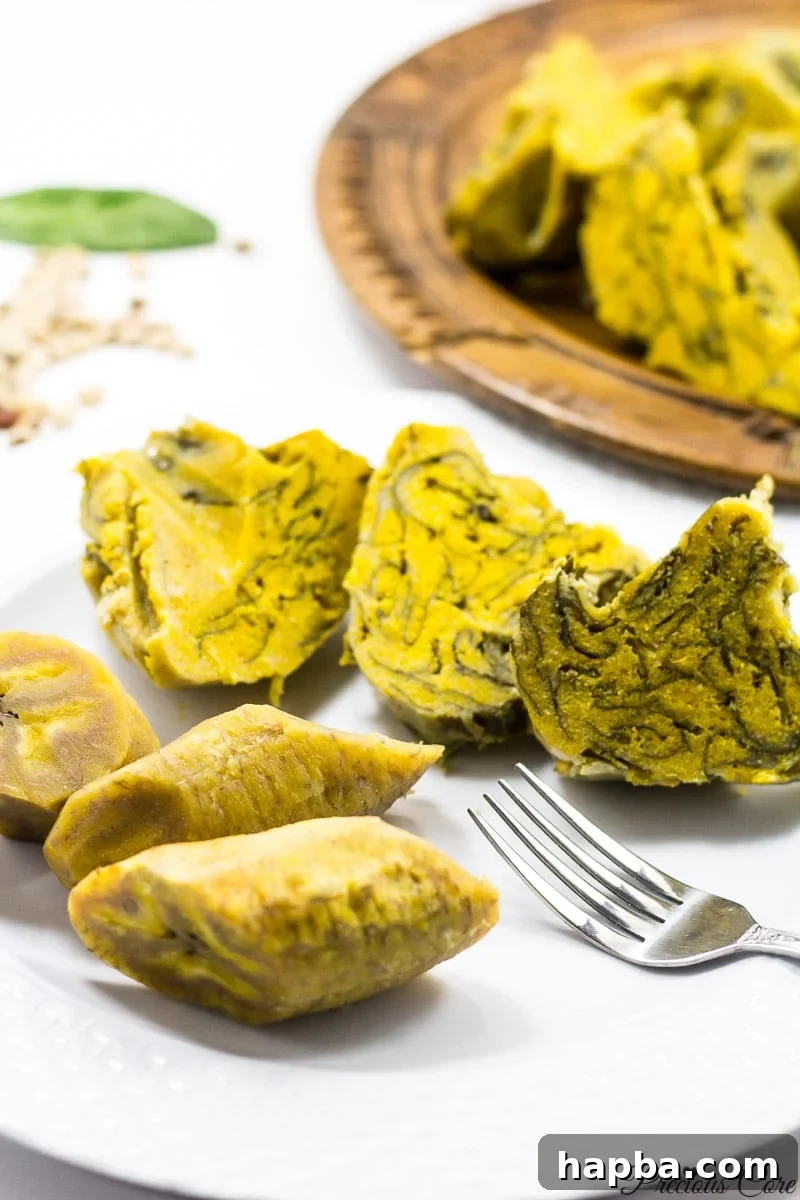
The Perfect Pairing: Koki Beans with Boiled Plantains
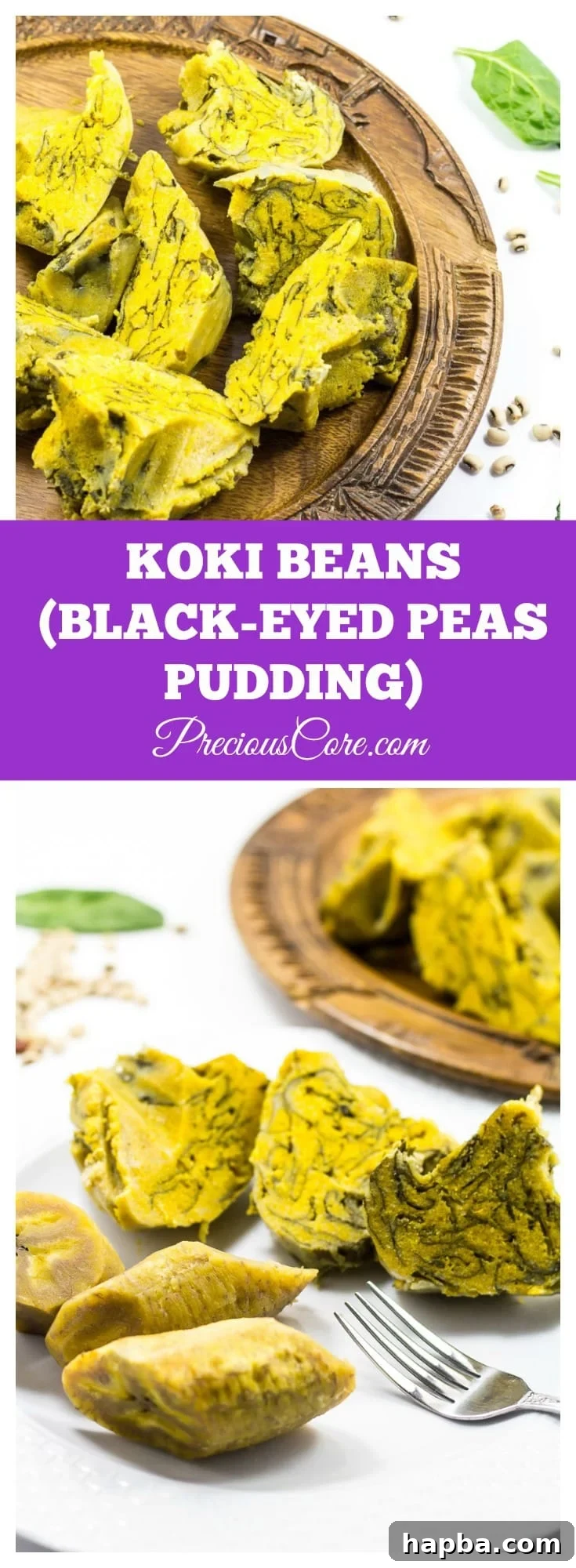
While Koki Beans can certainly be enjoyed on its own, it truly shines when paired with boiled ripe plantains. This combination is, in my opinion, a match made in culinary heaven. The subtle sweetness and soft texture of the ripe plantains perfectly complement the savory, slightly spicy, and spongy Koki, creating a balanced and incredibly satisfying meal. The contrast in flavors and textures elevates the entire dining experience, making it a staple pairing in Cameroonian households and a dish that truly embodies comfort food. Period.
To see how I create these delightful Koki Beans in my kitchen, be sure to watch the video. Below, you’ll find the comprehensive recipe to guide you in making this authentic Cameroonian dish right in your own home. Get ready to embark on a flavorful culinary adventure!
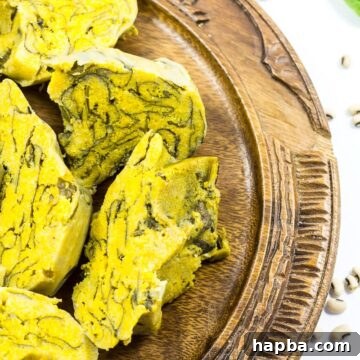
Koki Beans Recipe
Rating: 4.75 from 4 votes
A savory pudding made with black-eyed peas. It is moist, spongy and so tasty.
Prep: 1 hr
Cook: 1 hr 30 mins
Total: 2 hrs 30 mins
Servings: 12 bundles
Pin Recipe
Rate This Recipe
Print Recipe
Ingredients
- 8 cups black eyed peas (koki beans) – peeled, soaked and rinsed
- 1 1/2 cups palm oil
- 1 bag spinach (8 oz/227 grams)
- 1 1/2 – 2 tablespoons salt
- 6 cups water
- 5 chili peppers (or other hot pepper to taste)
For wrapping
- 1 bag frozen banana leaves and/ or 1 roll aluminium foil (preferably non-stick)
Instructions
- Put the soaked beans into a blender and blend together with 4 cups of water and all the pepper into a coarse paste. You will need to blend your beans in batches. I blended mine twice, so two cups of water went into each batch. (To see how I wash and soak the beans before blending, please watch this video.)
- Pour the ground beans into a large bowl.
- Lightly warm the palm oil; do not bleach it. Set aside.
- Chop the spinach into large chunks. You can use as much or as little spinach as you prefer. Set aside.
- Add salt into the bean paste and mix, using an egg whisk to incorporate air. This step is key for a spongy texture.
- Add the warm palm oil into the bean paste while whisking continuously. Mix until the oil is well incorporated. At this point, taste to ensure that it is well salted. It should taste slightly more salty than you desire for the cooked product, as the flavor will balance during cooking.
- Now add your chopped spinach and gently fold it into the mixture.
- Prepare your banana leaves for wrapping by warming them over a flame or immersing them in hot water to make them pliable. Wash them thoroughly and cut into rectangles. If using only aluminum foil, this step is not necessary.
- Wrap the Koki by placing a piece of foil paper (cut into a rectangle) in a small, deep bowl. Lightly press the part of the foil just above the bowl to create a cup shape. Add a banana leaf cut into a rectangle, or another layer of foil paper, on top of the first. Pour in about one cup of the bean mixture. Then, wrap by bringing together all the edges of the inner foil paper or banana leaf, and then similarly bringing together the edges of the outer foil paper to form a secure bundle.
- Place the bundles into a large pot lined with foil paper or banana leaves. Pour in about two cups of hot water, cover all the wraps with more foil paper to create a seal, then bring to a boil. After about 15 minutes, add in another 1-2 cups of water. Let it cook for 1 1/2 to 2 hours. Be sure to check the water level from time to time to prevent burning.
- Unravel a bundle and serve warm with boiled ripe plantains or any starchy side of your choice. Enjoy this authentic Cameroonian delicacy!
Notes
To obtain eight cups of soaked beans for this recipe, start with four cups of dried beans.
For a smaller quantity of Koki Beans, you can halve the recipe if desired.
Optional ingredients you could add are Maggi (seasoning cubes) and onions. However, these are not traditionally necessary, and Koki tastes perfectly delicious without them.
Nutrition
Calories: 623 kcal | Carbohydrates: 69g | Protein: 27g | Fat: 28g | Saturated Fat: 14g | Polyunsaturated Fat: 3g | Monounsaturated Fat: 10g | Sodium: 2140mg | Potassium: 1371mg | Fiber: 13g | Sugar: 8g | Vitamin A: 2275IU | Vitamin C: 11mg | Calcium: 151mg | Iron: 10mg
Additional Info
Course: Main Course
Cuisine: Cameroonian
Calories: 623
*Recipe updated after first posted on March 31, 2016.