
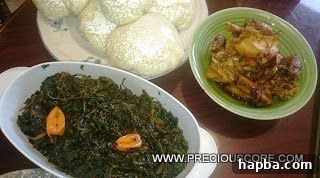
Experience the Authentic Flavors of Cameroon: Fufu, Njama Njama, and Kati Kati
Prepare your palate for an extraordinary culinary adventure! If you’re seeking a dish that embodies the rich heritage and vibrant tastes of West African cuisine, then Fufu, Njama Njama, and Kati Kati from Cameroon is an absolute must-try. This beloved trio offers a harmonious blend of textures and flavors that will transport you straight to the heart of Central Africa. It’s more than just a meal; it’s a celebration of tradition, community, and the simple joy of good food.
This classic Cameroonian delicacy is an explosion of savory goodness that promises to tantalize your taste buds. Imagine a perfectly balanced plate featuring the soft, pliable Fufu, the earthy, nutritious Njama Njama, and the uniquely smoky, tender Kati Kati chicken. This combination is, without a doubt, a culinary masterpiece that showcases the depth and complexity of Cameroonian traditional meals. Trust us when we say, authentic African cooking truly doesn’t get any better than this.
Unveiling the Components of This Exquisite Cameroonian Dish
To fully appreciate this incredible meal, let’s break down each of its essential components:
Fufu Corn: The Hearty Staple
At the foundation of this dish is Fufu Corn, a soft, dough-like staple made from finely ground corn flour. More than just a side, Fufu serves as the perfect vehicle for scooping up the rich sauces and stews that accompany it. Its neutral flavor and comforting texture make it an ideal complement to the more robust elements of the meal. In Cameroon, Fufu Corn is a fundamental part of many households, often prepared with a specific technique to achieve its characteristic smoothness and elasticity. While there are various types of fufu across Africa made from different starches like cassava, plantains, or yams, corn fufu holds a special place in Cameroonian culinary traditions.
Njama Njama: The Nutritious Green
Next up is Njama Njama, a flavorful vegetable side dish. In Cameroon, Njama Njama refers to garden huckleberry (scientifically known as Solanum scabrum), a leafy green celebrated for its slightly bitter yet deeply satisfying taste and impressive nutritional profile. These vibrant greens are typically prepared by boiling and then sautéing with aromatic ingredients to create a side that is both wholesome and incredibly delicious. For those who may not have access to garden huckleberry, readily available substitutes like kale or spinach can be used, offering a similar verdant element to the dish, though the authentic flavor of Njama Njama is truly unique.
Kati Kati Chicken: The Star of the Show
And now, for the undisputed star of this magnificent meal: Kati Kati. This isn’t just any chicken dish; Kati Kati features chicken that has been traditionally charred or “burnt” over an open flame, giving it an unparalleled smoky depth and a slightly crispy skin. This charring process is fundamental to its distinctive flavor profile, setting it apart from conventionally fried or grilled chicken. Once charred, the chicken is chopped into pieces and slow-cooked in rich, flavorful palm oil along with a medley of spices and vegetables. The result is an incredibly tender, succulent chicken bursting with savory flavors, with the palm oil adding a beautiful reddish hue and a luscious, earthy richness that ties the entire dish together. For the most authentic experience, “hard chicken” or older, tougher hens are preferred, as their robust flavor holds up beautifully to the charring and long cooking process.
Bringing the Experience to Your Kitchen
Imagine the aroma filling your kitchen as you prepare this incredible feast. Recently, I had the delightful opportunity to join my brother-in-law as he was about to whip up this very dish. Seizing the moment, I took over the reins and decided to capture the entire process on film, just for you! This step-by-step video guide will walk you through each stage, ensuring your homemade Fufu, Njama Njama, and Kati Kati turn out perfectly. Watch the video below, and then find all three detailed written recipes to guide you on your culinary journey. Let’s get cooking!
The Complete Cameroonian Feast: Recipes Explained
Fufu, Njama Njama, and Kati Kati: A Cameroonian Delicacy
This collection of recipes brings you the vibrant and authentic flavors of Cameroon, combining a hearty corn fufu, nutritious garden huckleberry greens, and smoky palm oil chicken into one unforgettable meal. Get ready to impress your family and friends with this traditional African feast!
Cook Time: 1 hr
Total Time: 1 hr 30 mins
Servings: 8
Ingredients
For the Fufu Corn
- 3 cups of fine corn flour
- 6 cups of fresh water
For the Njama Njama
- 2 pounds (about 1 kg) of garden huckleberry, prepared (cleaned, blanched, and roughly chopped). Substitutes: fresh kale or spinach.
- 6 ripe tomatoes, medium-sized
- 1 large onion
- 3 small seasoning cubes (e.g., Maggi or similar bouillon cubes)
- Salt to taste
- 1 cup of cooking oil (preferably palm oil, or vegetable oil)
- 2 habanero peppers (optional, for heat)
For the Kati Kati Chicken
- 1 whole chicken, preferably a hard hen (plucked and carefully charred over an open flame for a smoky flavor)
- 1 cup of rich palm oil
- 1 medium-sized onion
- 4 cloves of fresh garlic
- 2 seasoning cubes (e.g., Maggi or similar bouillon cubes)
- 1 habanero pepper (optional, for a spicy kick)
- Salt to taste
Instructions
To Make the Fufu Corn
- Measure six cups of water into a large, sturdy cooking pot. Place the pot on high heat and bring the water to a vigorous rolling boil. This is the crucial first step for achieving the perfect Fufu consistency.
- While the water is heating up, in a separate bowl, whisk together half a cup of corn flour with one cup of cool water until a smooth, lump-free paste forms. This paste will help thicken the fufu base.
- Once the water in the pot reaches a full boil, carefully remove approximately two cups of the hot water and set it aside. This reserved water will be used later to adjust the fufu’s texture.
- Reduce the heat to medium. Slowly pour the corn flour paste into the remaining boiling water in the pot, stirring continuously with a strong wooden spoon or fufu stick. Keep stirring as the mixture thickens considerably, forming a smooth, porridge-like consistency.
- Gradually add the remaining dry corn flour to the pot, continuing to stir vigorously and continuously in a circular motion. This step requires strength and persistence. If the Fufu becomes too stiff or hard to stir, use your wooden spoon to push the thick paste to one side of the pot, ensuring any lumps are thoroughly dissolved. Once all the flour is incorporated and the mixture is well combined, add the two cups of reserved hot water back into the pot. Cover the pot and allow it to cook on low heat for about 5-10 minutes. This steaming process helps soften the Fufu.
- After steaming, uncover the pot and mix the Fufu once more, ensuring everything is perfectly incorporated and smooth. Scoop out individual portions of the Fufu and wrap them tightly in plastic wrap, sandwich bags, aluminum foil, or traditionally, in warmed banana leaves. This keeps the Fufu warm and pliable until serving.
To Make the Njama Njama
- Begin by finely chopping the large onion and ripe tomatoes. Set these aside, ready for sautéing. If using garden huckleberry, ensure it’s been cleaned, blanched, and chopped according to traditional methods. If using kale or spinach, wash thoroughly and chop.
- Heat the cup of oil in a clean pot over medium heat. Once the oil is shimmering, add the chopped onions. Sauté the onions gently until they become translucent and fragrant, taking care not to burn them.
- Add the chopped tomatoes to the pot with the sautéed onions. Continue to cook, stirring occasionally, until the tomatoes have softened and their acidity has cooked out, indicated by the oil separating from the tomato mixture. If using, add the habanero peppers at this stage for flavor infusion.
- Season the tomato and onion mixture generously with salt and the seasoning cubes (Maggi). Stir well to combine. Finally, add the prepared garden huckleberry (or kale/spinach) into the pot. Stir thoroughly to ensure the greens are fully coated with the seasoned tomato and onion mixture. Cook for a few more minutes until the greens are tender but still retain their vibrant color. Remove from heat. C’est fini! Your Njama Njama is ready.
To Make the Kati Kati Chicken
- If not already done, cut the charred whole chicken into your desired serving pieces. The charring step is crucial for authentic Kati Kati flavor, traditionally done over an open wood fire or charcoal grill until the skin is slightly blackened and smoky.
- Place the chicken pieces into a large cooking pot. Add approximately 3 cups of water, or enough to partially cover the chicken. Bring the pot to a boil over medium-high heat. This initial boiling helps tenderize the chicken and infuse it with flavor.
- While the chicken is boiling, finely chop the medium-sized onion, habanero pepper (if using), tomatoes, and garlic cloves.
- Once the chicken has boiled for about 10-15 minutes, season it with salt and the seasoning cubes. Then, add all the chopped ingredients (onion, pepper, tomato, garlic) to the pot with the chicken. Stir gently to combine.
- Pour in the cup of palm oil. Continue to cook the chicken and ingredients together, uncovered, allowing the liquid to evaporate. Let it simmer gently, stirring occasionally, until all the water has completely cooked off, leaving behind only the succulent chicken glistening in the rich palm oil. This process allows the flavors to meld beautifully and the chicken to fry slightly in its own rendered fat and palm oil.
- Serve your exquisite Kati Kati chicken hot, accompanied by the freshly prepared Fufu Corn and Njama Njama. Enjoy this truly authentic Cameroonian masterpiece!
Notes and Pro Tips:
For the Kati Kati chicken, while the recipe suggests boiling the chicken first, an alternative method involves frying the chopped onions and tomatoes in palm oil before adding the raw charred chicken to the pot and then bringing it to a boil. My personal preference, however, is to boil the chicken first. This approach ensures that the delicate flavors and fresh textures of the other aromatic ingredients (onions, tomatoes, garlic, and pepper) are preserved and don’t overcook or lose their potency during the longer boiling process. Both methods yield delicious results, so feel free to experiment and discover which technique you prefer for your ideal Kati Kati.
Don’t be shy with the charring of the chicken; it’s what gives Kati Kati its distinctive smoky depth. If you don’t have an open flame, a broiler or even a gas stove burner can be used carefully to achieve a similar effect. When preparing Fufu, consistency is key—aim for a smooth, pliable dough that’s easy to scoop. For the Njama Njama, blanching the huckleberry first helps reduce any bitterness and tenderizes the greens before the final sauté.
Nutrition Information (per serving, estimated for 8 servings)
Calories: 742 kcal
Carbohydrates: 50g
Protein: 32g
Fat: 47g
Saturated Fat: 18g
Polyunsaturated Fat: 7g
Monounsaturated Fat: 18g
Trans Fat: 0.1g
Cholesterol: 97mg
Sodium: 1778mg
Potassium: 738mg
Fiber: 4g
Sugar: 4g
Vitamin A: 1131 IU
Vitamin C: 25mg
Calcium: 183mg
Iron: 6mg
Additional Information
Course: Main Course
Cuisine: Cameroonian
Keywords: Fufu, Njama Njama, Kati Kati, Cameroonian chicken, African food, Traditional recipe, Corn Fufu, Garden Huckleberry, Palm Oil Chicken
We hope you enjoy bringing the flavors of Cameroon into your home. Happy cooking!