
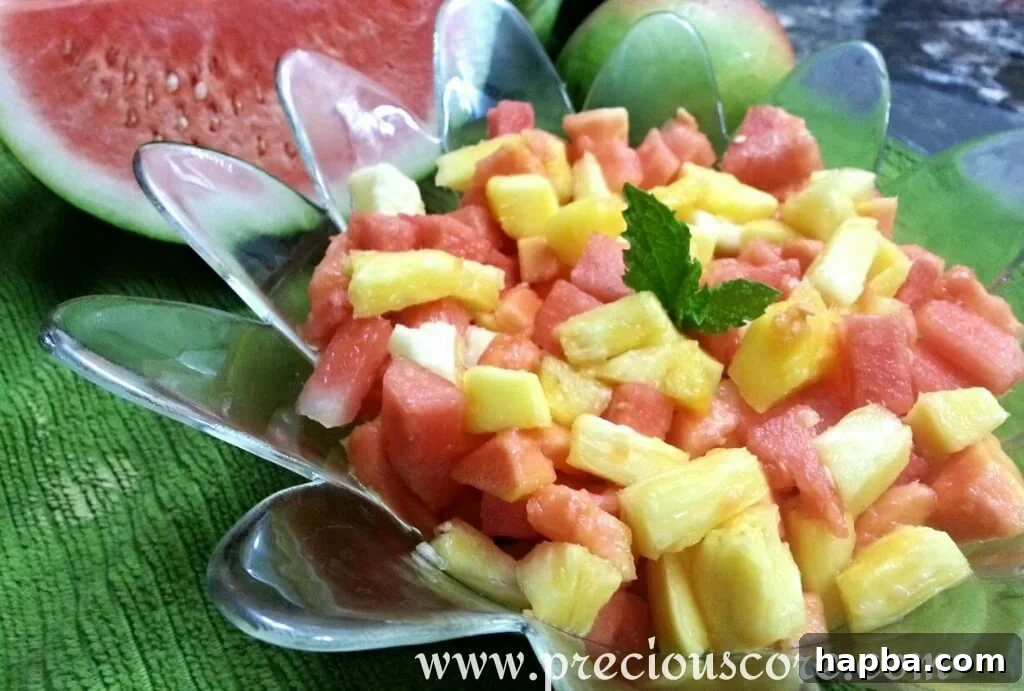
Exotic Tropical Fruit Salad: A Burst of Flavor and Unmatched Health Benefits
There’s something inherently delightful about a fruit salad. For many, it evokes cherished memories, perhaps of a loved one’s favorite dish or a refreshing treat on a hot day. My own father, for instance, always had a bowl of fruit salad ready, a simple pleasure that was both delicious and incredibly good for him. It’s truly effortless to fall in love with the vibrant colors and diverse textures of a perfectly combined fruit medley. More than just a feast for the eyes and palate, fruit salads are a powerhouse of nutrition, packed with essential vitamins, minerals, and fiber.
Health experts consistently recommend consuming at least five servings of fruits and vegetables daily to maintain optimal health. Making a fruit salad is arguably one of the most enjoyable and practical ways to meet this crucial dietary recommendation. By simply combining various fresh fruits in a single bowl, you create a wholesome and satisfying meal or snack that directly contributes to your daily nutritional intake. It’s a versatile dish that fits seamlessly into any meal plan, offering a natural sweetness and refreshing burst of flavor without the guilt.
This article will guide you through crafting an exotic tropical fruit salad, a recipe designed to be both simple and incredibly flavorful. We’ll focus on readily available tropical ingredients that come together to create a truly special treat. Beyond the step-by-step instructions, we’ll delve deeper into the health benefits of each fruit, offer tips for selecting the ripest produce, and provide creative suggestions for customizing your salad to perfectly suit your taste. Get ready to embark on a delicious journey that nourishes your body and delights your senses!
Why a Fruit Salad is Your Body’s Best Friend
Beyond its appealing taste, a fruit salad is a nutritional powerhouse. Fruits are naturally low in calories and fat, yet rich in essential nutrients. Here’s a closer look at the benefits you gain from every colorful spoonful:
- Rich in Vitamins and Minerals: Fruits are packed with vital vitamins like Vitamin C (an antioxidant powerhouse), Vitamin A (crucial for vision and immune function), and various B vitamins, along with minerals such as potassium and magnesium, which support heart health and muscle function.
- High in Dietary Fiber: The fiber content in fruits aids in digestion, helps prevent constipation, and promotes a feeling of fullness, which can be beneficial for weight management. It also helps regulate blood sugar levels.
- Excellent Source of Antioxidants: Many fruits contain antioxidants that combat free radicals in the body, reducing cellular damage and potentially lowering the risk of chronic diseases, including heart disease and certain cancers.
- Hydration: Fruits, especially those like watermelon and pineapple, have a high water content, contributing to your daily hydration needs and keeping your body functioning optimally.
- Natural Energy Boost: The natural sugars (fructose) in fruits provide a quick and healthy energy boost without the crash associated with processed sugars.
Incorporating fruit salad into your diet regularly is a delicious and effortless way to support your overall health and well-being. It’s a simple change that yields significant benefits.
Crafting the Perfect Tropical Fruit Salad: Ingredients & Selection
The beauty of a tropical fruit salad lies in the specific combination of sweet, tangy, and refreshing flavors. For this recipe, we focus on a selection of fruits that are not only incredibly tasty but also complement each other perfectly.
Essential Tropical Ingredients for Our Recipe
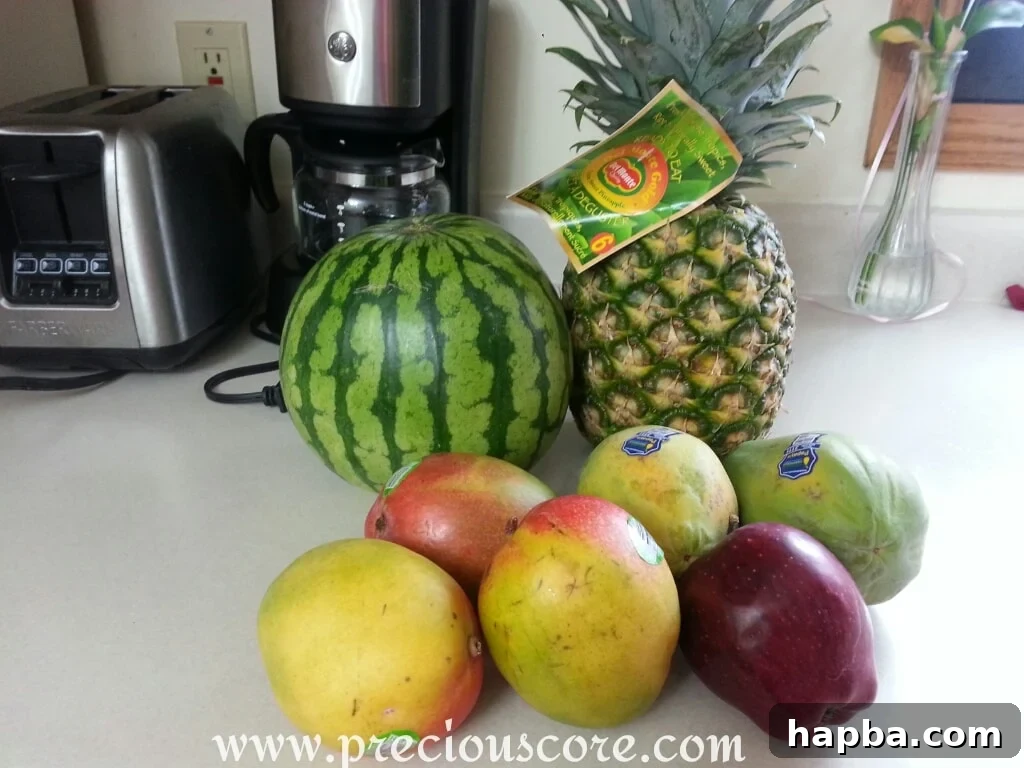
Here’s the cast of characters you’ll need for this exotic fruit salad:
Prep Time: 20 minutes
Cooking Required: None
Serves: 4 generous portions
Ingredients:
- 1 ripe pineapple
- 1 ripe pawpaw (also known as papaya)
- 2 firm, ripe mangoes
- 1 large apple (any variety you prefer)
- 1 small watermelon or half of a large one
Tips for Selecting Ripe Fruits:
- Pineapple: Look for a pineapple that feels heavy for its size. The skin should be golden yellow at the base, and you should be able to pull a leaf easily from the crown. A sweet, fragrant aroma at the base indicates ripeness.
- Pawpaw (Papaya): Choose a papaya that has started to turn yellow or orange. It should yield slightly to gentle pressure but not be too soft.
- Mangoes: Ripe mangoes typically have a sweet aroma near the stem and will give slightly when gently squeezed. Color isn’t always the best indicator, as some varieties remain green when ripe.
- Apple: Select firm apples with no bruises.
- Watermelon: Look for a dull-looking watermelon with a creamy yellow spot on its underside (where it rested on the ground). It should feel heavy and produce a hollow sound when thumped.
Step-by-Step Guide to Your Delicious Fruit Salad
Creating a visually appealing and delicious fruit salad involves careful preparation and uniform cutting. Remember, we eat with our eyes first, so consistent piece sizes enhance both the look and the eating experience.
Preparation Stage: Gathering Your Tools
Before you begin, ensure you have a clean cutting board, a sharp knife, and a large mixing bowl. Having everything within reach will make the process smooth and enjoyable.
The Art of Cutting: Achieving Uniformity and Appeal
Let’s start with the king of tropical fruits: the pineapple.
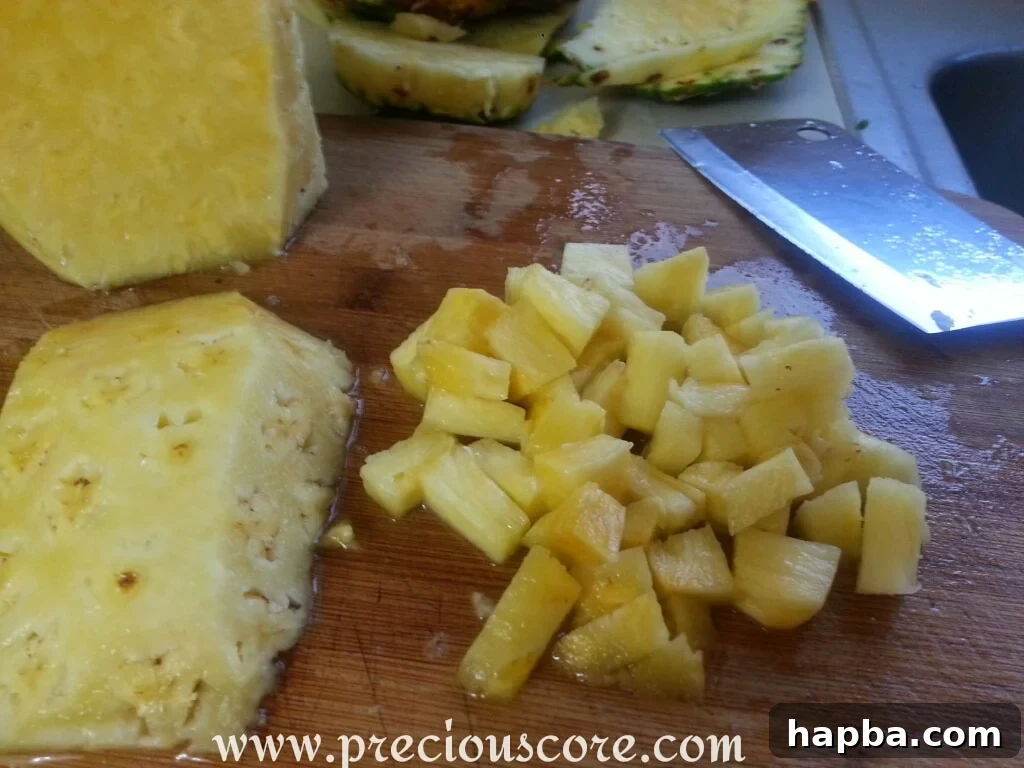
Carefully peel your pineapple using a sharp knife, slicing downwards to remove the spiky skin. Once peeled, identify the hard, fibrous core in the middle. Cut around this core, then chop the remaining sweet flesh into bite-sized pieces. Aim for pieces small enough that you can enjoy a medley of different fruits in a single spoon. Consistency in size across all fruits is key for an attractive and enjoyable salad. As you work, feel free to enjoy a few juicy pieces – it’s part of the chef’s privilege!
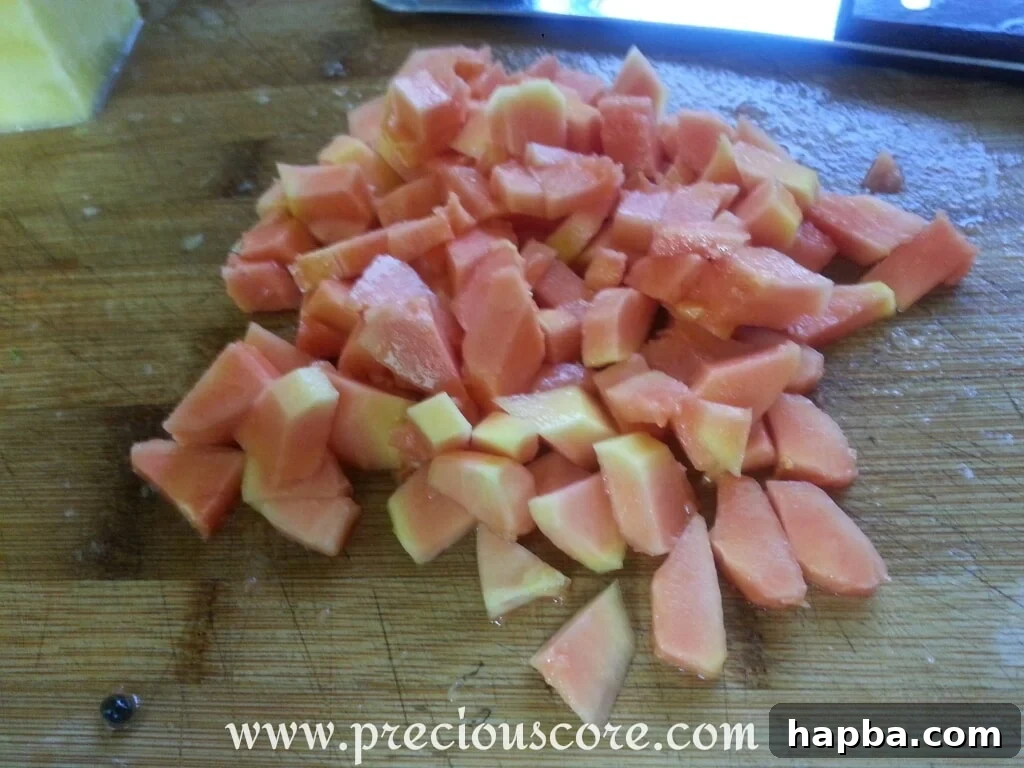
Next up is the pawpaw (papaya).

Once peeled, slice the pawpaw in half lengthwise. Using a spoon, scoop out all the black seeds from the center cavity. These seeds are edible but have a peppery, slightly bitter taste, which most people prefer to exclude from a sweet fruit salad.
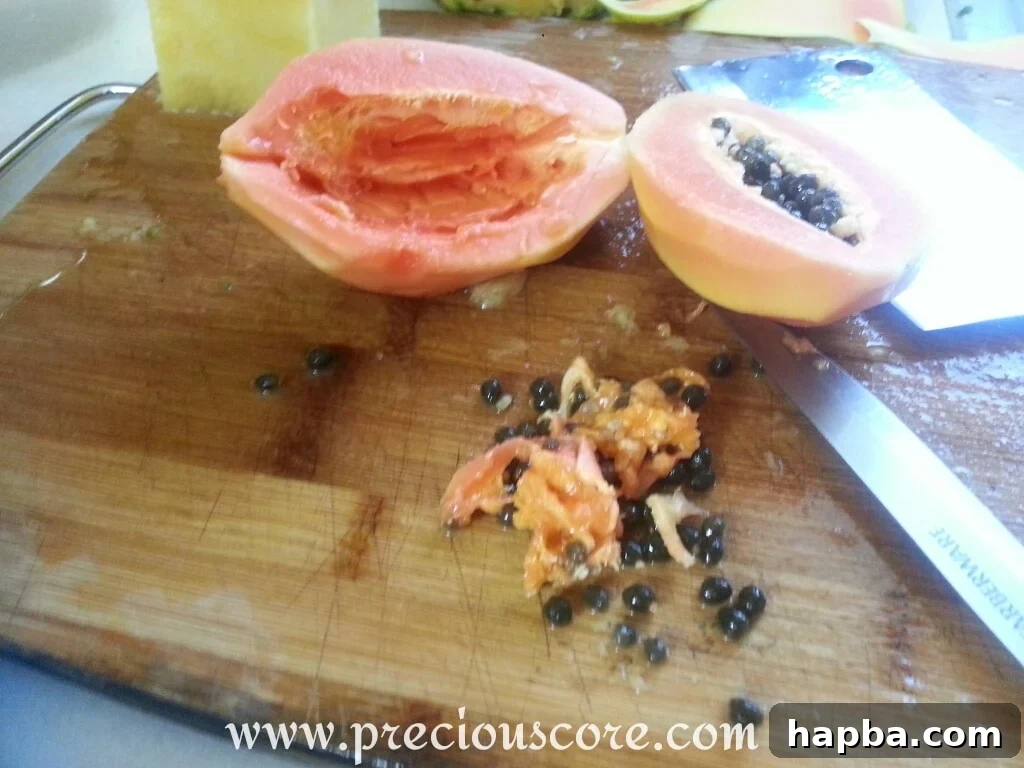
Now, cut the pawpaw flesh into pieces that are approximately the same size as your pineapple chunks. This uniformity enhances the overall presentation and makes for a more pleasant eating experience.
It’s mango time!
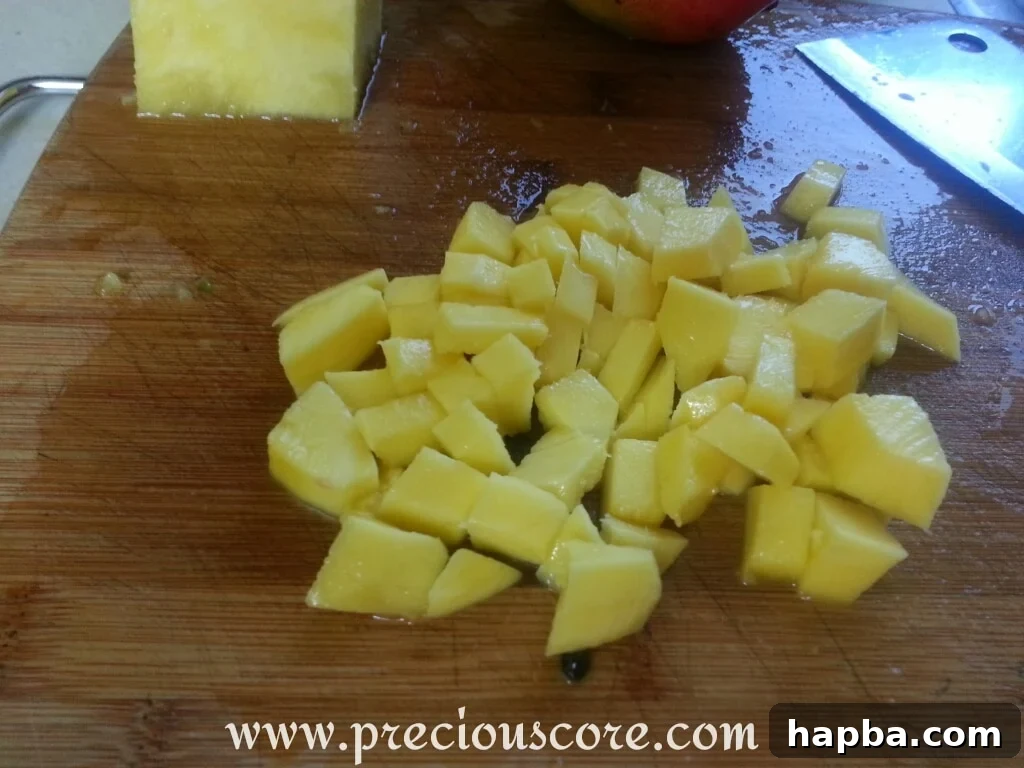
Peel your ripe mangoes. Mangoes have a large, flat pit in the center. To cut them efficiently, stand the mango on its end and slice downwards along both sides of the pit, getting as close as possible without cutting into it. You will be left with two large “cheeks” and the central pit. Score the flesh of the cheeks into a grid pattern without cutting through the skin, then scoop out the diced mango. Alternatively, slice the flesh away from the pit in smaller strips and then dice those. Aim for pieces consistent with the other fruits.
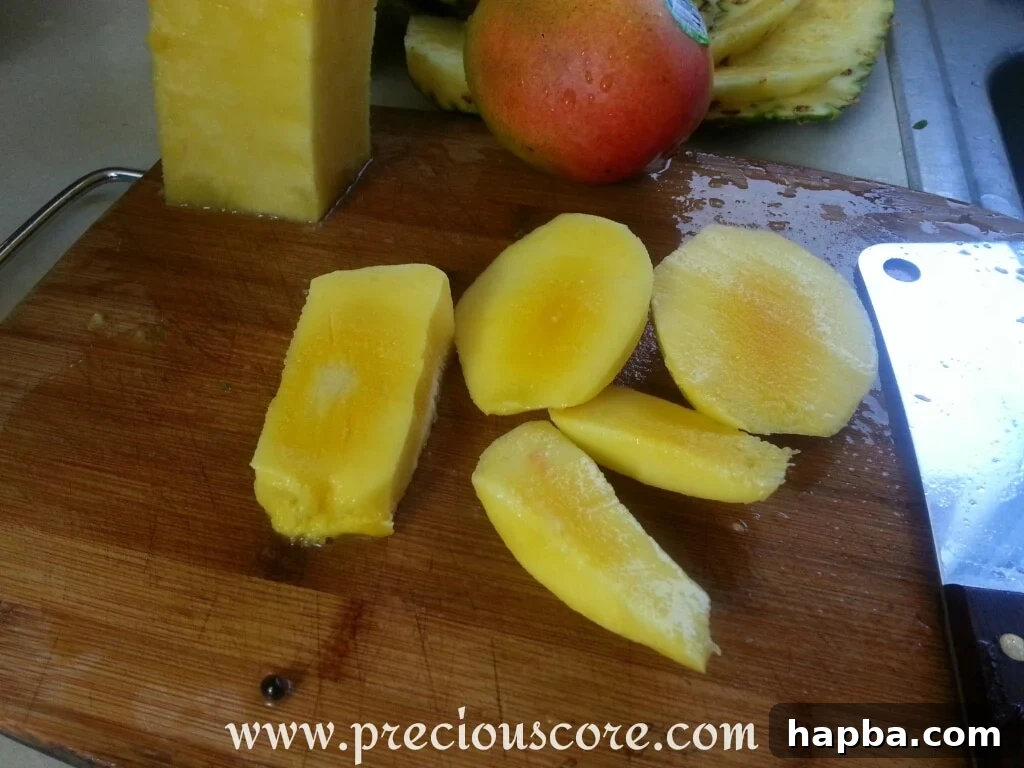
Add these glorious mango pieces to your large bowl alongside the pineapple and papaya. Their vibrant color and sweet juiciness are essential to this tropical blend.
Now, let’s tackle the refreshing watermelon.
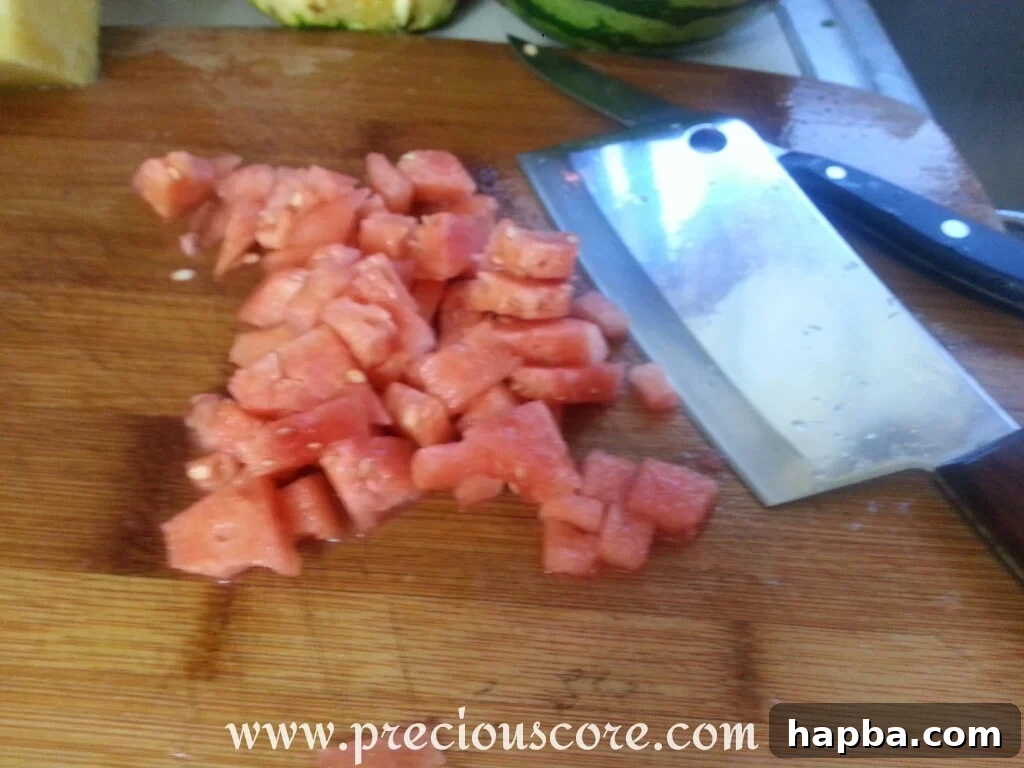
Cut a substantial piece of watermelon. If you have the luxury of time, it’s always tempting to enjoy a few bites of this refreshing fruit yourself – a little culinary break never hurts! Once you’ve indulged, get back to business. Use your knife to carefully separate the red watermelon flesh from the green rind. If your watermelon contains seeds, now is the time to remove them. You can use the tip of your knife or a spoon to carefully flick out the seeds, trying not to break the melon’s structure too much before dicing.
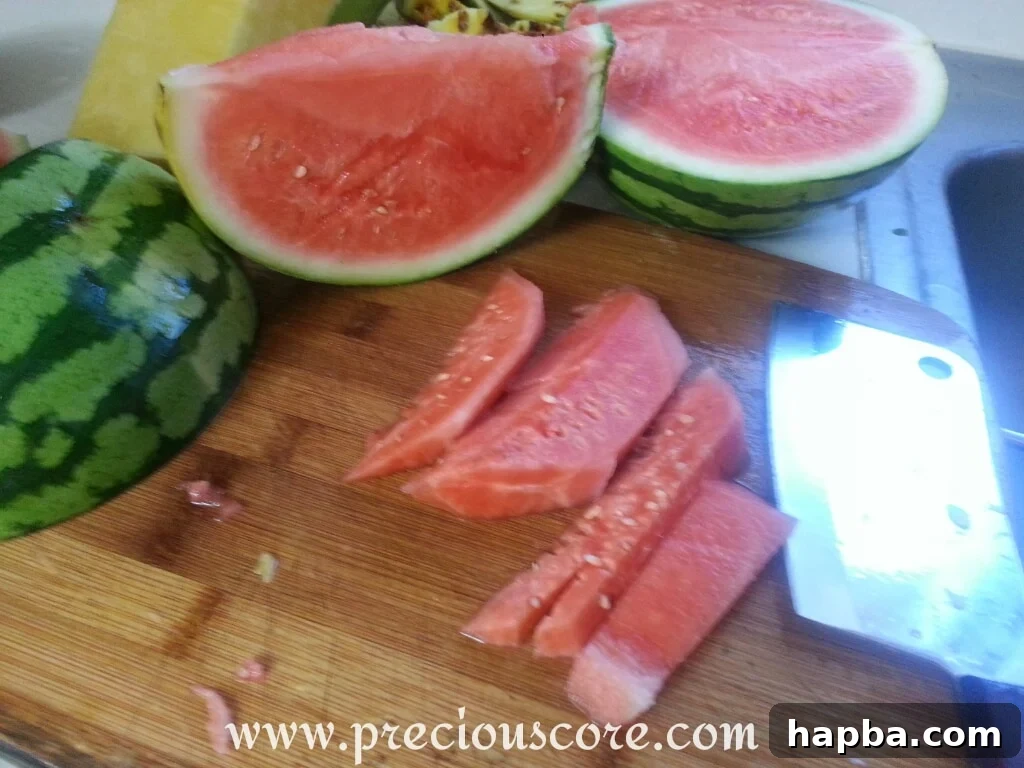
Chop the seedless watermelon into bite-sized cubes, maintaining the uniform size you’ve established for the other fruits. Add these hydrating pieces to the big bowl, where they’ll contribute a burst of freshness.
Finally, the versatile apple.
For the apple, the choice to peel or not is entirely yours. Some prefer the added texture and nutrients of the peel, while others prefer it removed. Wash the apple thoroughly. Cut it into quarters, remove the core and seeds, then chop it into pieces that match the size of your other fruits. To prevent the apple pieces from browning, you can lightly toss them in a small amount of lemon or lime juice before adding them to the bowl, though this step is optional if you plan to serve immediately.
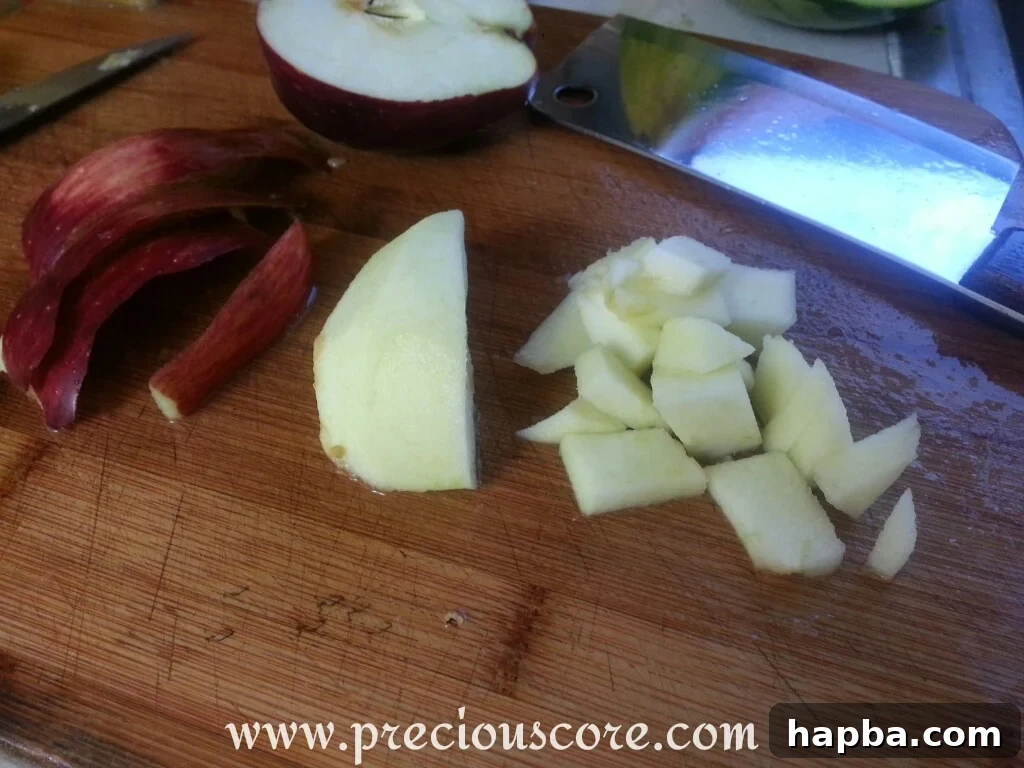
Add the chopped apple to the rest of the fruits in the large bowl.
Bringing It All Together: The Grand Mix
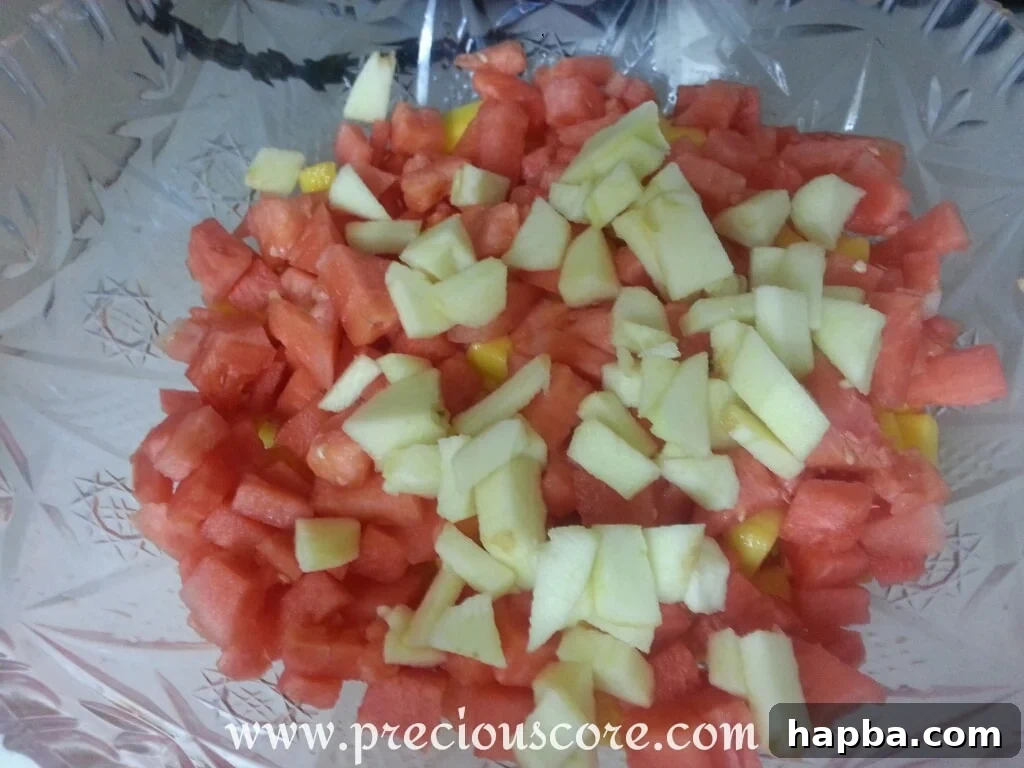
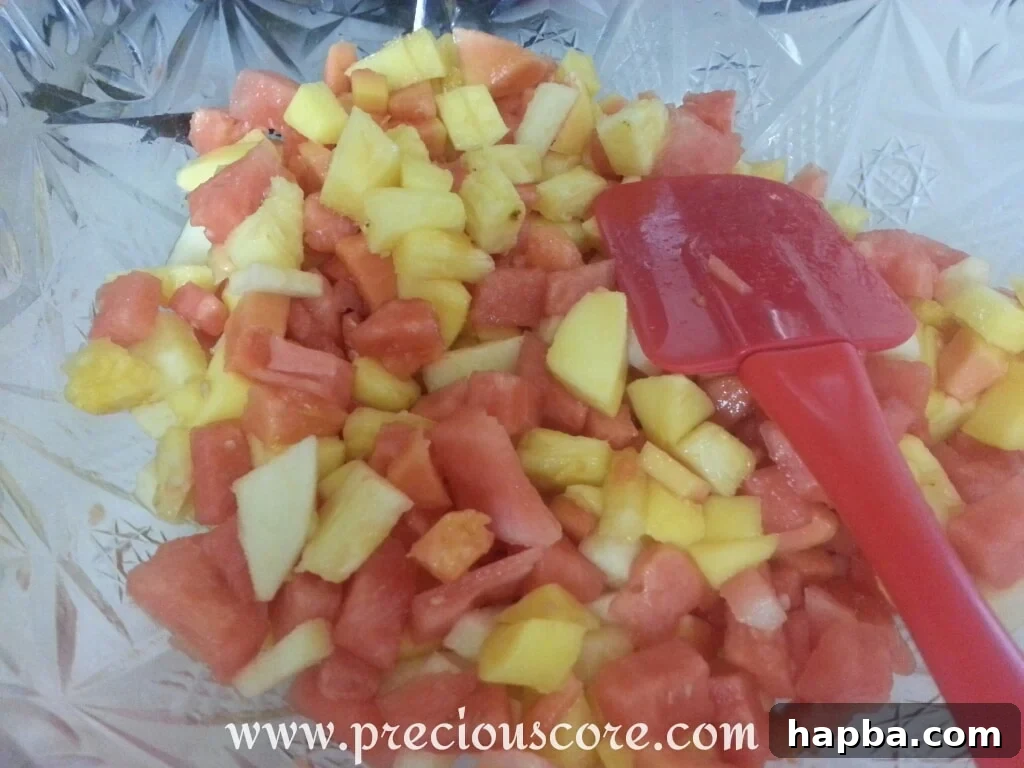
With all your fruits prepped and in the bowl, it’s time for the grand finale: gently mix all that goodness together. Use a large spoon or spatula and fold the fruits over each other until they are evenly distributed. Avoid aggressive stirring to keep the fruit pieces intact. And just like that, your exotic tropical fruit salad is done – a symphony of colors and flavors ready to be enjoyed!
Elevate Your Fruit Salad: Tips, Variations, and Serving Suggestions
While the basic recipe is fantastic on its own, there are many ways to customize and enhance your tropical fruit salad to suit your personal preferences or occasion.
Customizing Your Tropical Blend
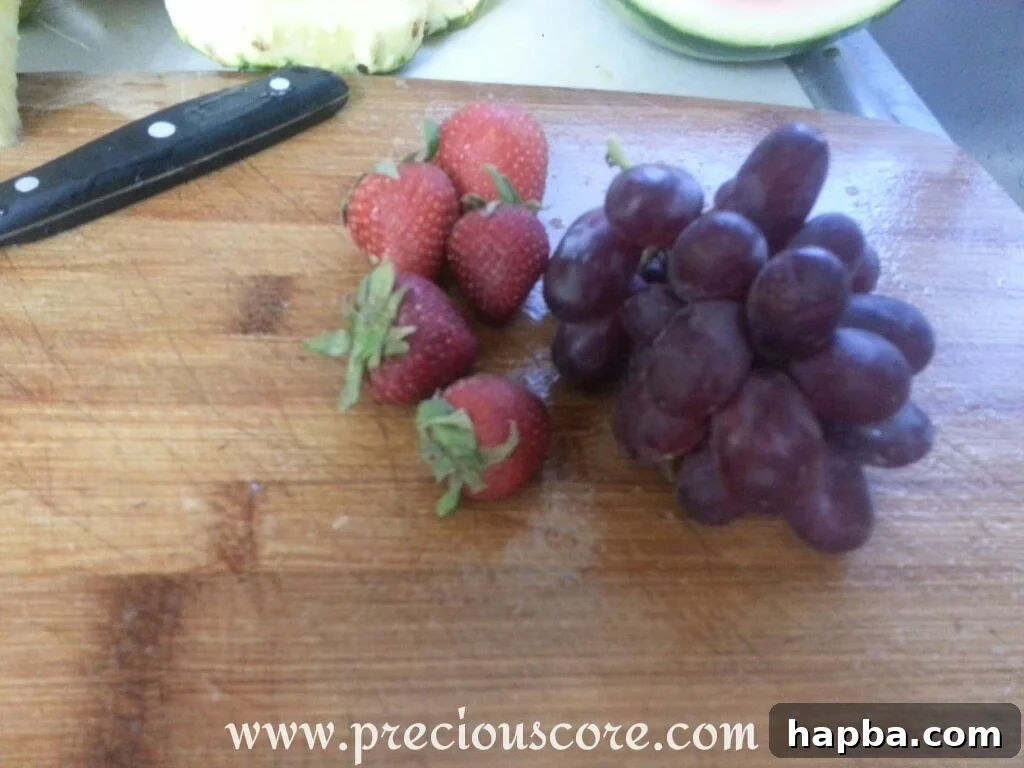
The beauty of a fruit salad lies in its versatility. While our core recipe uses readily available tropical fruits, don’t hesitate to experiment with other additions based on seasonal availability and your taste. The original recipe mentioned that some fruits were omitted due to limited availability in Cameroon, but if you can find them, they make wonderful additions:
- For a very colorful fruit salad, use as many colors of fruits as you can. Consider adding:
- Honeydew melon and cantaloupe: These add different shades of green and orange, along with a distinct sweetness and high water content.
- Green or red seedless grapes: Offer a juicy pop and varying tartness.
- Peaches or nectarines: If in season, their soft, sweet flesh and beautiful color are delightful.
- Seedless tangerines or oranges: Segments add a lovely citrusy brightness.
- Kiwi: Its vibrant green color and slightly tart flavor provide an excellent contrast.
- Berries (strawberries, blueberries, raspberries): These add a burst of color, antioxidants, and varying levels of sweetness and tartness.
- Star fruit or passion fruit: For an extra exotic touch and unique flavor profiles.
Dressings and Enhancements
While often enjoyed plain, a light dressing or a few simple additions can take your fruit salad to the next level:
- Citrus Drizzle: If you love your fruit salad with some liquid, you could gently toss it with a cup or two of a natural fruit juice of your choice, like fresh orange juice or pineapple juice. A squeeze of lime or lemon juice not only adds a zesty tang but also helps prevent fruits like apples and bananas from browning.
- Sweet Enhancements: A light drizzle of honey, maple syrup, or agave nectar can boost sweetness, especially if your fruits aren’t perfectly ripe.
- Herbal Freshness: Fresh mint leaves, finely chopped, or a few basil leaves can add an unexpected and wonderfully aromatic note.
- Texture Boosters: For added crunch and flavor, consider sprinkling in a handful of toasted coconut flakes, chopped nuts (like almonds or pecans), or even a dash of granola.
- Creamy Toppings: Serve with a dollop of Greek yogurt, a swirl of whipped cream, or a scoop of vanilla ice cream for a more decadent dessert.
Serving and Storage Tips
- Chilling: Fruit salad is best served chilled. Allow it to sit in the refrigerator for at least 30 minutes before serving to let the flavors meld and to ensure maximum refreshment.
- Presentation: For an extra special touch, garnish your fruit salad with a few whole mint leaves, some fresh berries, or a sprinkle of toasted coconut before serving.
- Serving Occasions: This versatile dish is perfect for breakfast, a healthy snack, a light dessert, or a vibrant side dish for brunches and barbecues.
- Storage: Store leftover fruit salad in an airtight container in the refrigerator. It’s best consumed within 1-2 days. The fresher, the better, as fruits can start to soften and release excess liquid over time. Adding a squeeze of citrus juice can help extend its freshness slightly.
Embrace the Freshness: Your Journey to Healthy Eating
Making a tropical fruit salad is more than just following a recipe; it’s an invitation to savor the natural bounty of the earth. It’s a simple act of self-care that provides immense nutritional benefits and brings joy with every spoonful. Whether you’re preparing it for a family meal, a social gathering, or simply for your own enjoyment, this vibrant dish promises a delightful experience.
So, gather your favorite tropical fruits, follow these easy steps, and enjoy the refreshing, healthful goodness of a homemade fruit salad. It’s a fantastic way to nourish your body, delight your palate, and make healthy eating an absolute pleasure. Have a fruity and fantastic rest of your week!