
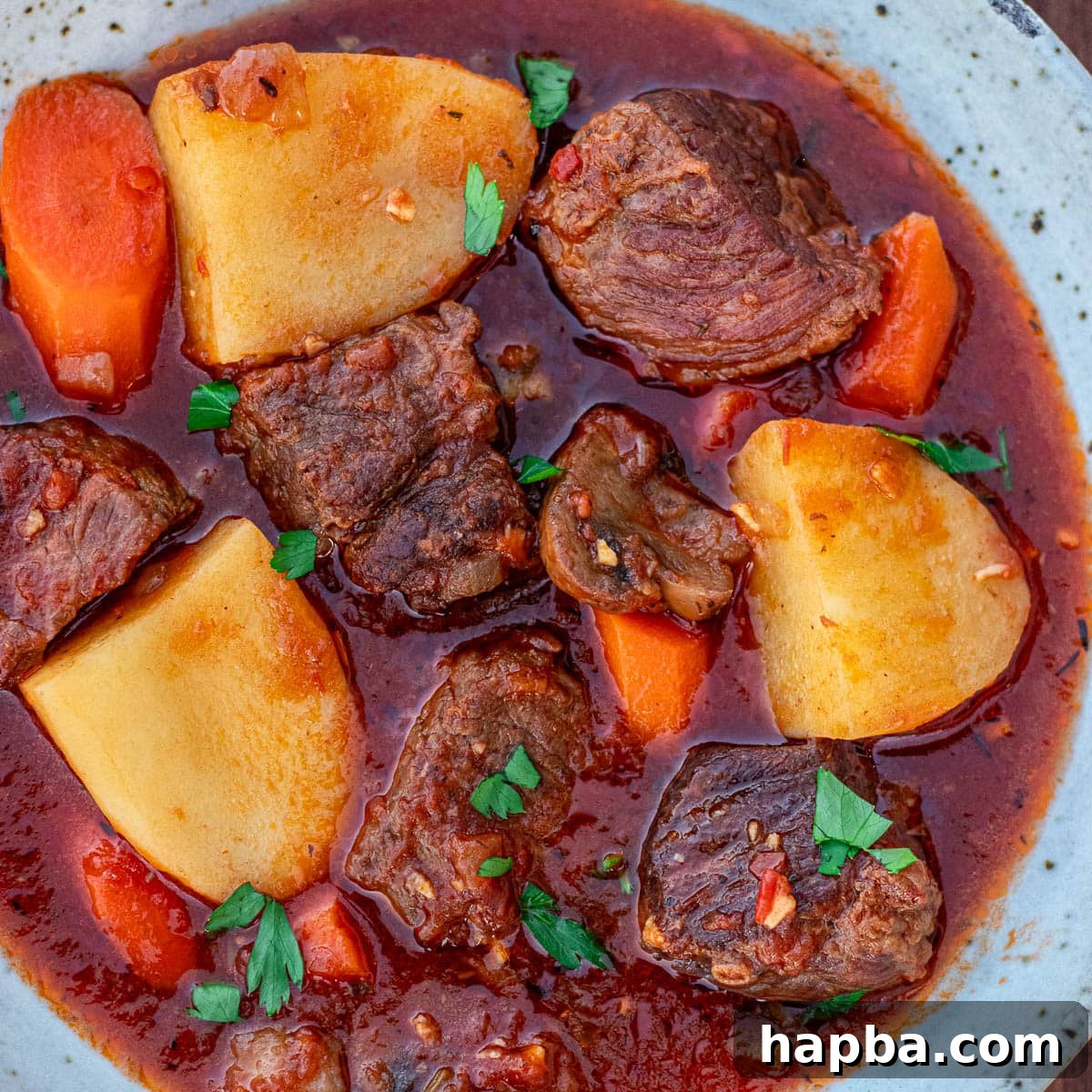
Delve into the comforting embrace of a classic meal with our recipe for super tasty Beef Stew Without Wine. This hearty dish masterfully combines fork-tender chunks of beef, vibrant carrots, and wholesome potatoes, all swimming in a profoundly rich and savory sauce. It’s more than just a meal; it’s a bowl of pure, unadulterated comfort, perfect for chilly evenings and family gatherings.
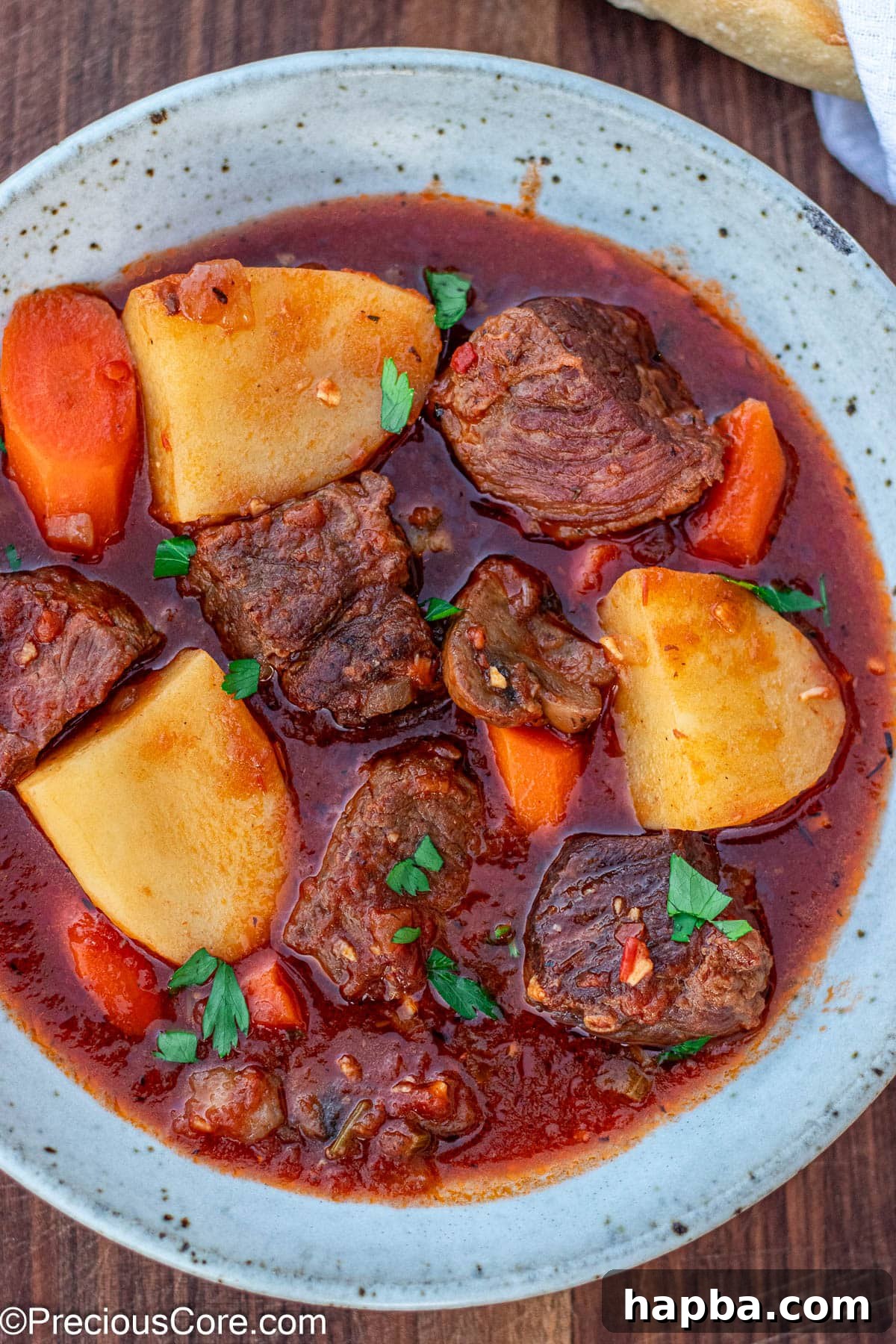
As the crisp air of autumn descends and the promise of winter whispers, there’s nothing quite like the warmth and nourishment of a homemade beef stew to bring coziness to your kitchen and joy to your table. This particular recipe takes an old-fashioned approach, skillfully crafted to deliver an exceptionally glossy, thick, and undeniably tasty stew without the addition of wine or flour. It’s an ideal choice for anyone seeking a more wholesome, naturally thickened, and deeply flavorful beef stew that caters to various dietary preferences and tastes.
This robust Beef Stew Without Wine stands gloriously as a complete meal on its own, satisfying and soul-warming. However, for those who appreciate an extra touch, it pairs wonderfully with freshly baked Easy Homemade French Bread or a delectable Sourdough Bread Grilled Cheese, perfect for soaking up every last drop of the exquisite sauce.
Table of Contents
- Mastering Stovetop Beef Stew Without Wine
- Essential Ingredients for a Flavorful Beef Stew
- Step-by-Step Guide: How To Make Beef Stew Without Wine
- Top Tips for Beef Stew Success
- Smart Substitutions for Beef Stew
- Delicious Variations to Explore
- Common Beef Stew Questions Answered
- More Comforting Recipes to Try
- Perfect Serving Suggestions
- Beef Stew Without Wine Recipe Card
Mastering Stovetop Beef Stew Without Wine
This remarkable recipe proudly demonstrates that you don’t need expensive wine or thickening agents like flour to create a truly exceptional beef stew. With just a few humble yet powerful ingredients, such as rich crushed tomatoes and savory beef stock, you can achieve an incredible, restaurant-quality stew right on your stovetop. Forget the need for specialized gadgets; this isn’t a slow cooker or Instant Pot recipe. Instead, it’s a tribute to the timeless, classic stovetop method, proving that a simple large pot is all you need for tender, succulent beef and a deeply satisfying meal.
Through extensive testing of various classic beef stew recipes over the years, I’ve found that versions incorporating wine, like beef bourguignon, often introduced a flavor profile that wasn’t to our family’s liking, and we also preferred to avoid alcohol in our cooking. Subsequently, I experimented with wine-free easy beef stew recipes. While these were an improvement, the typical inclusion of all-purpose flour or even a tablespoon of cornstarch often resulted in an unnecessarily heavy and gloopy consistency, masking the true flavors of the stew. This realization led to the quest for a more refined and naturally delicious alternative.
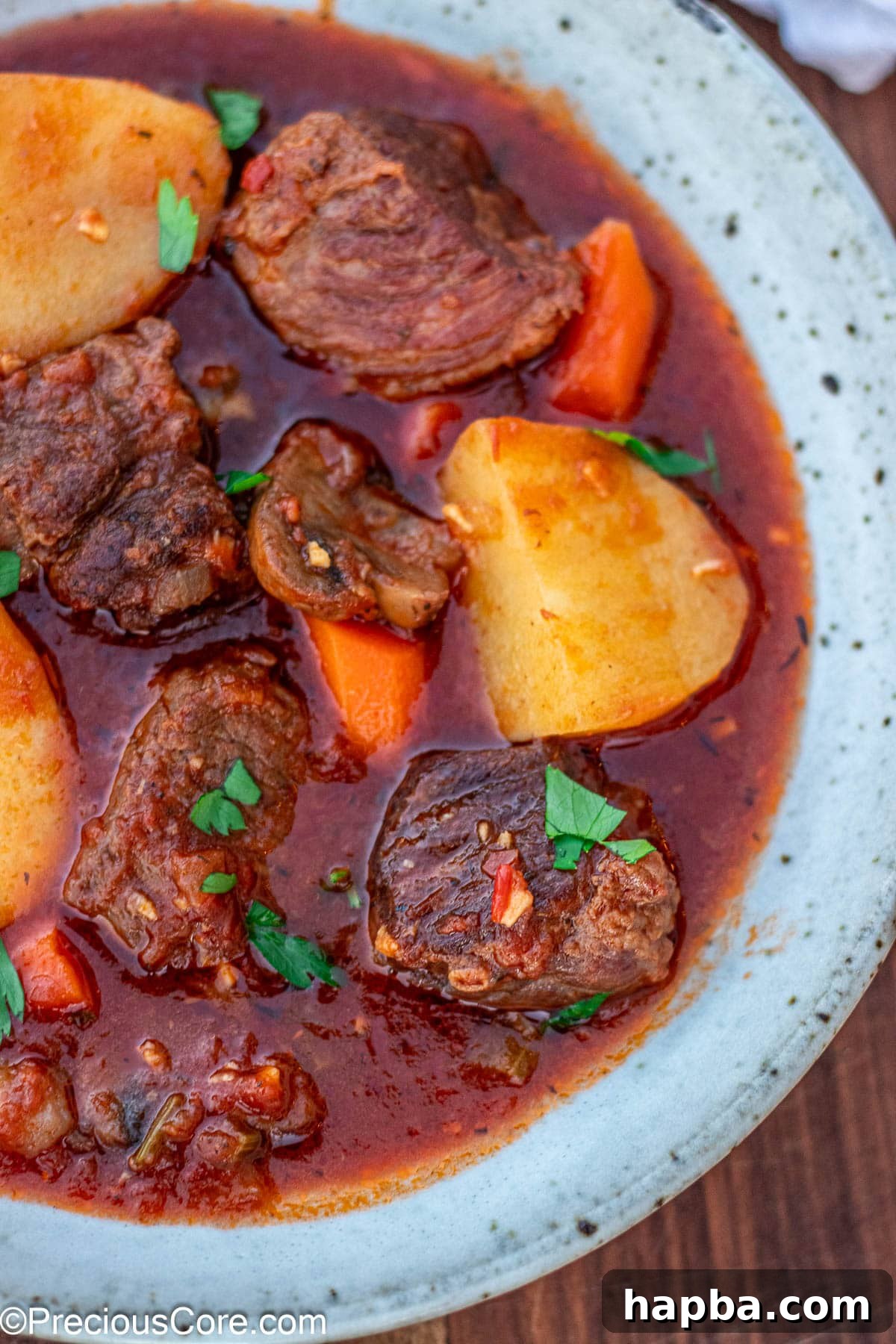
The breakthrough came when I eliminated flour entirely from the recipe. The consistency was perfectly balanced, allowing the vibrant flavors of the spices and herbs to truly bloom and shine. Crushed tomatoes proved to be the secret ingredient, providing not only sufficient natural thickness but also a crucial touch of acidity. This acidity effectively balances the richness of the beef, much in the same way wine is often used, but without any alcoholic notes. This innovative approach means you can enjoy a beautifully thickened stew that’s free from any starchy residue or masked flavors.
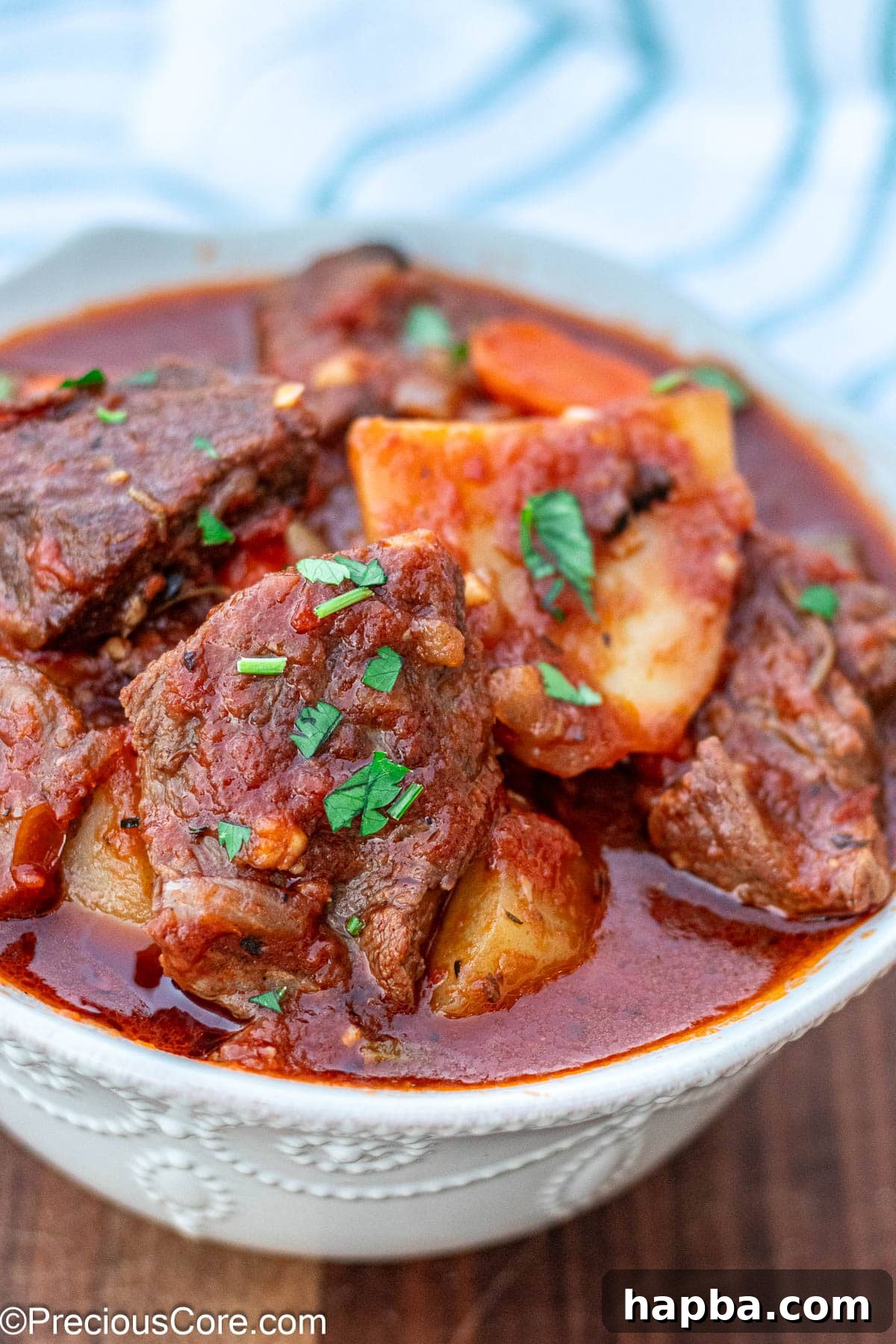
Furthermore, the inherent starchiness of potatoes contributes to the stew’s lovely texture, providing just the right amount of body without the need for artificial thickeners. This combination of crushed tomatoes and potatoes creates a wholesome, naturally thick sauce that perfectly coats every tender piece of beef and vegetable.
This Stovetop Beef Stew Without Wine has quickly become a cherished family favorite, so much so that my kids now insist it appears on our weekly menu. It’s truly the epitome of comfort food, especially on a cold night or a chilly day. This magnificent one-pot meal is everything you need: nutritious, incredibly flavorful, and wonderfully simple to prepare. We are confident it will become a regular and beloved staple at your family table too.
For those who appreciate robust flavors and easy-to-follow recipes, don’t miss my insanely good Roasted Tomato and Garlic Soup, a perfect complement to yummy crusty bread.
Essential Ingredients for a Flavorful Beef Stew
Crafting this traditional beef stew requires a selection of simple yet high-quality ingredients. Pay close attention to these key components to ensure the most delicious results:
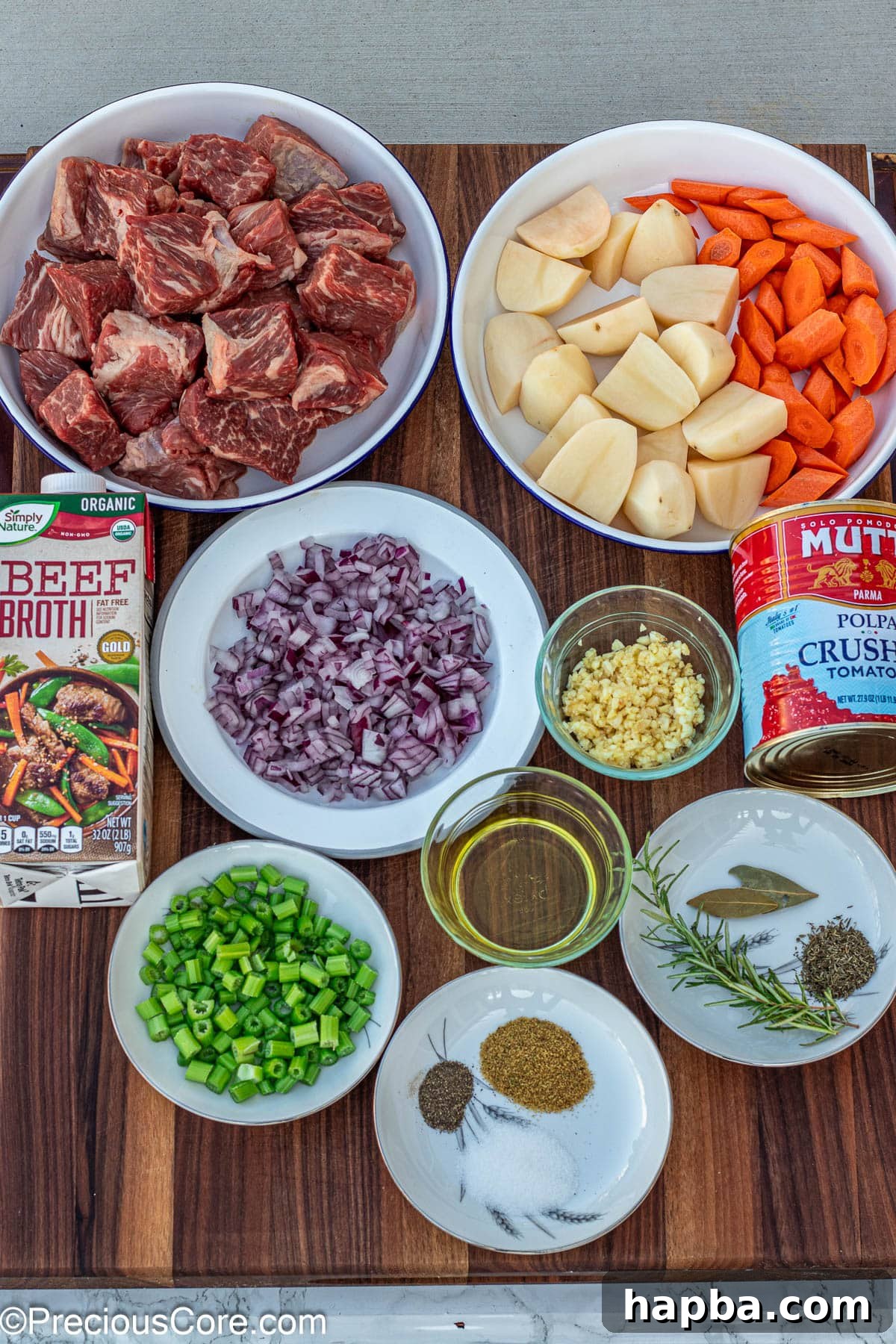
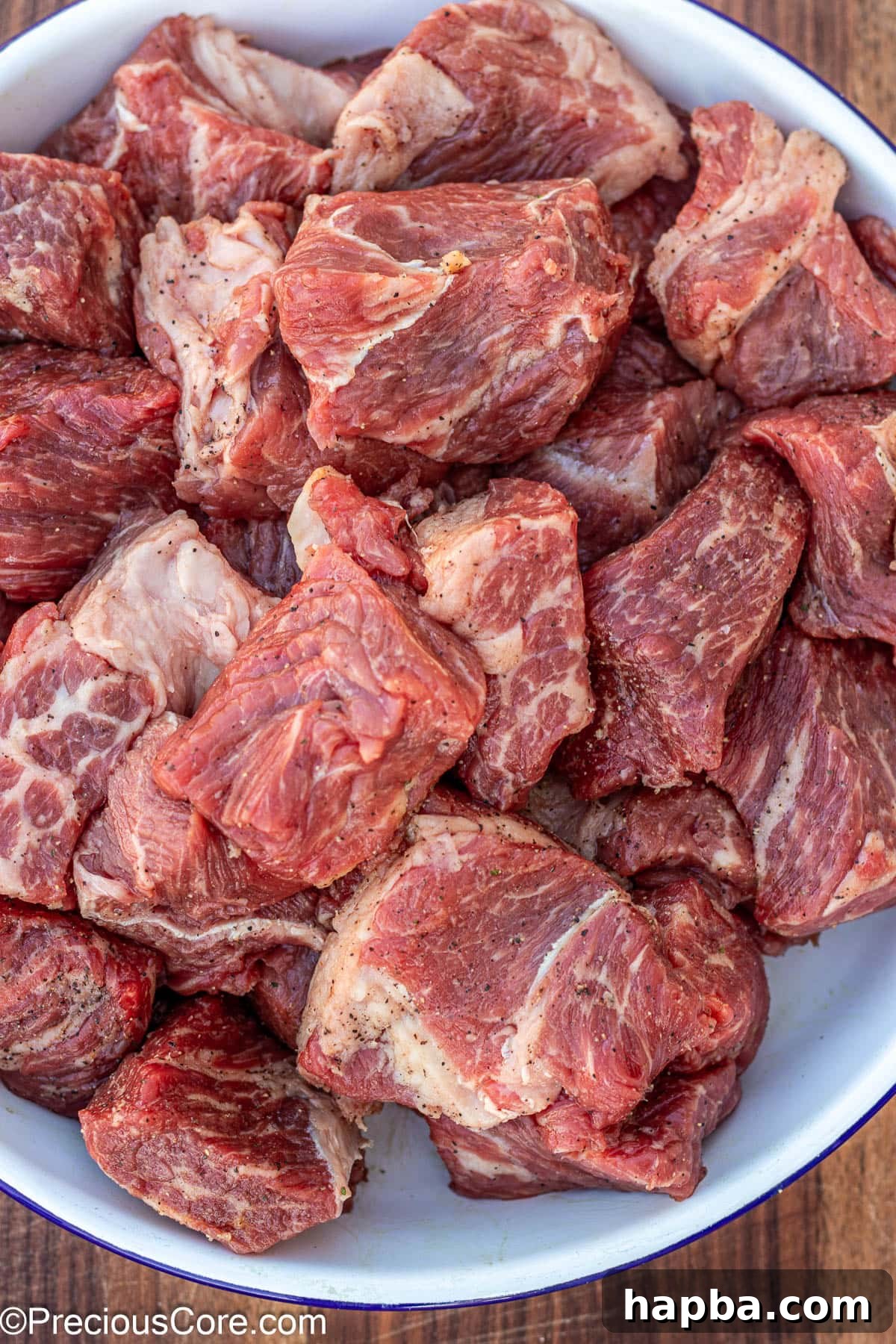
- Beef: For unparalleled tenderness and flavor, opt for chuck roast. Look for a cut with excellent marbling – those fine veins of fat running through the meat are crucial for moisture and flavor as the stew slowly cooks. Avoid generic “stew meat” labels, as these cuts can often be tougher and won’t achieve the melt-in-your-mouth tenderness that chuck roast delivers. The quality and specific cut of beef are paramount for this recipe.
- Beef Bouillon Powder: This is truly one of the secret weapons of this recipe. It’s an invaluable ingredient for amplifying the inherent beef flavor, adding an incredible depth and umami that elevates the entire dish. Our personal favorite for consistent, high-quality results is Knorr Beef Bouillon Powder.
- Crushed Tomatoes: A stellar multitasker, crushed tomatoes eliminate the need for separate tomato paste, tomato sauce, or diced tomatoes. Their ideal consistency—not too chunky, not too smooth—adds both texture and natural thickness to the stew. More importantly, the natural acidity of the tomatoes provides a crucial balance to the richness of the beef, expertly replacing the acidic notes traditionally provided by red wine.
- Beef Stock or Broth: The liquid base for our stew. To ensure you have full control over the saltiness of your final dish, we highly recommend using a low-sodium beef stock or broth. This allows you to season precisely to your taste throughout the cooking process.
- Herbs: A carefully chosen combination of dried thyme, fresh rosemary, and fragrant bay leaves infuses the stew with a complex and aromatic depth. For a fresh, vibrant finish, chopped fresh parsley is an excellent garnish. Remember to check the recipe details for which herbs are dried and which are fresh to ensure maximum flavor extraction.
- Minced Garlic: Absolutely essential for a truly tasty stew, garlic forms a foundational layer of flavor. Ensure your garlic is finely minced – whether you achieve this on a chopping board, pass it through a garlic press, or grate it on a microplane zester – to allow its aromatic qualities to fully integrate into the sauce.
For the complete list of ingredients with precise measurements, please refer to the comprehensive recipe card below.
Step-by-Step Guide: How To Make Beef Stew Without Wine
- First, season the beef to perfection. In a bowl, toss your beef chunks generously with salt, ground black pepper, and our secret ingredient: beef bouillon powder. This step is critical for ensuring that every piece of beef is deeply flavored from the inside out, making it irresistibly delicious before it even hits the pot.
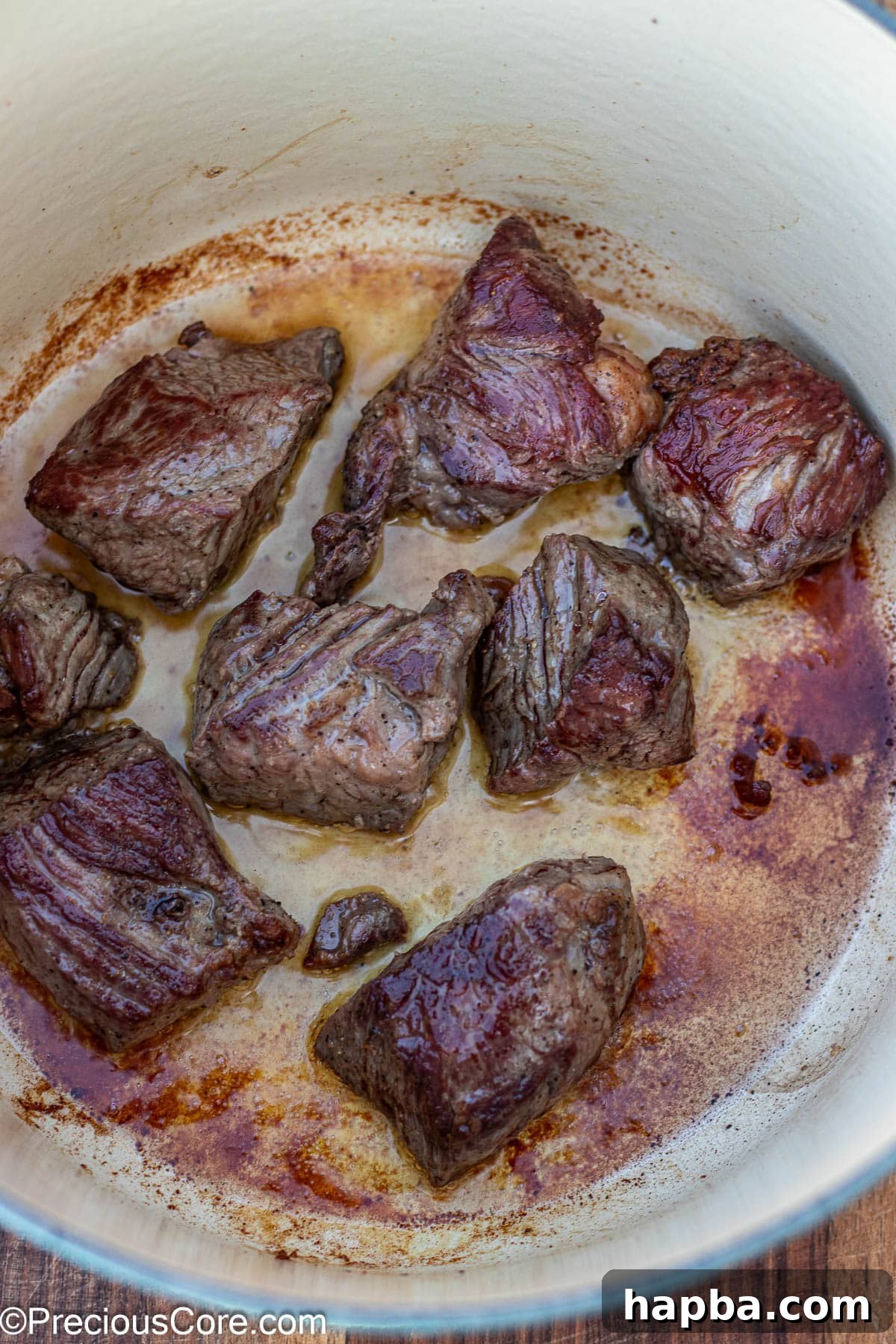
- Next, brown the beef to lock in flavor. Heat a generous amount of olive oil or vegetable oil in a large, heavy-bottomed Dutch oven over high heat. Once shimmering, add the seasoned beef in batches, ensuring not to overcrowd the pan. Browning in a single layer allows the beef to sear beautifully and develop a rich, brown crust (the Maillard reaction!), which is crucial for building deep flavor. If you overcrowd the pan, the beef will steam rather than brown. The aroma from this simple seasoning and browning step is so incredible, you might be tempted to sneak a few pieces!
- Sauté the aromatics to build your flavor base. With the beef removed, leave the flavorful beef fat and browned bits in the Dutch oven. Add the diced onions and celery, stirring frequently. Cook them down until they are soft and translucent, about 4-5 minutes. This creates the foundational layer of flavor that will elevate your entire stew.
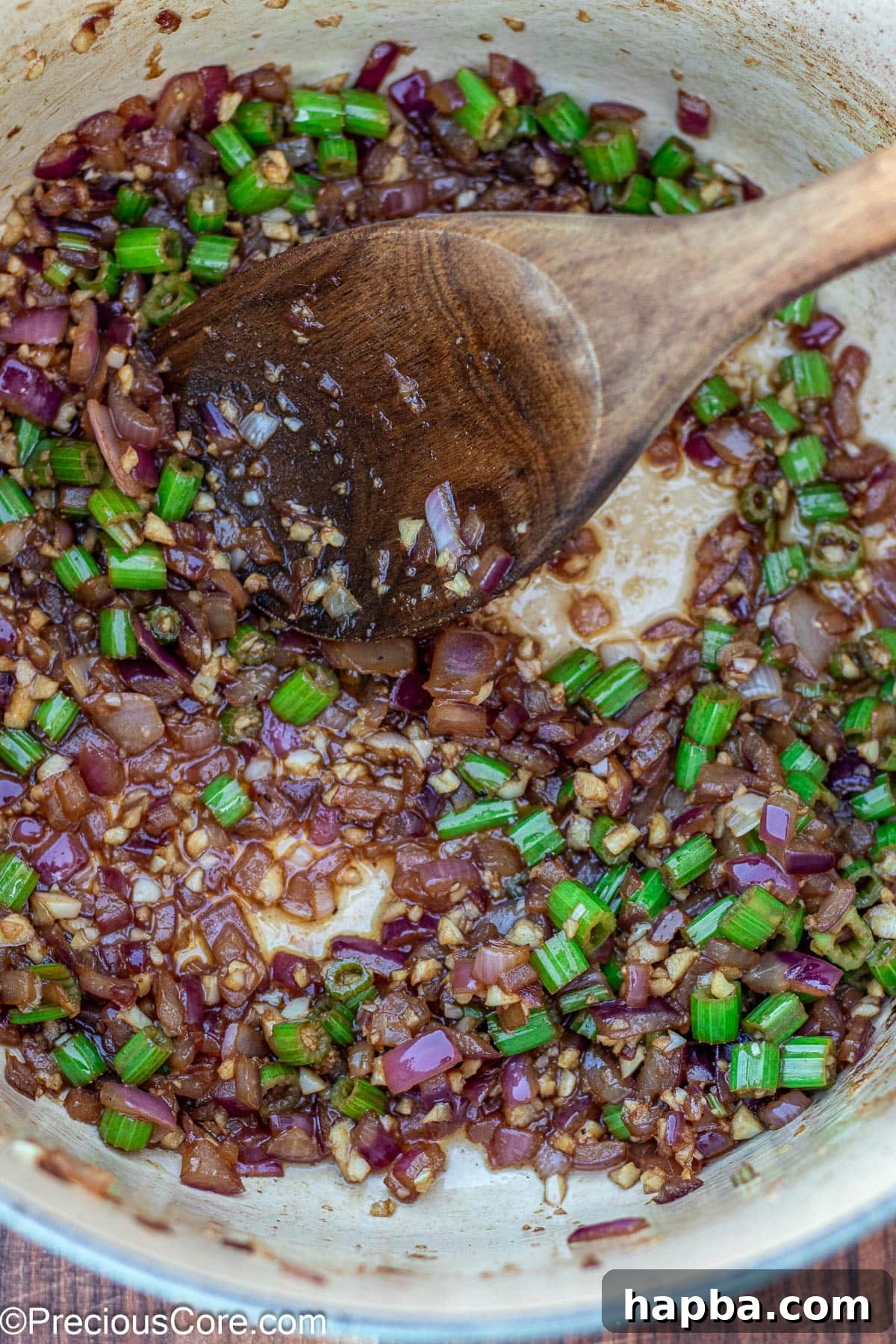
- Introduce the garlic and optional mushrooms. Stir in the minced garlic and cook for just about 30 seconds until fragrant. Be vigilant here, as garlic can burn quickly and turn bitter. At this point, if you wish to add extra umami, texture, and nutrients, you can also add a cup or two of sliced mushrooms and sauté them until they release their moisture and begin to soften.
- Combine and simmer for flavor development. Return the browned beef to the pot. Add the crushed tomatoes, beef broth, bay leaves, dried thyme, and fresh rosemary. Stir everything thoroughly with your wooden spoon, scraping up any delicious browned bits from the bottom of the pot – this is called deglazing and adds immense flavor. Bring the mixture to a boil, then reduce the heat to a gentle simmer. Cover the pot and let it cook for about 10-15 minutes, allowing the initial flavors to meld beautifully.
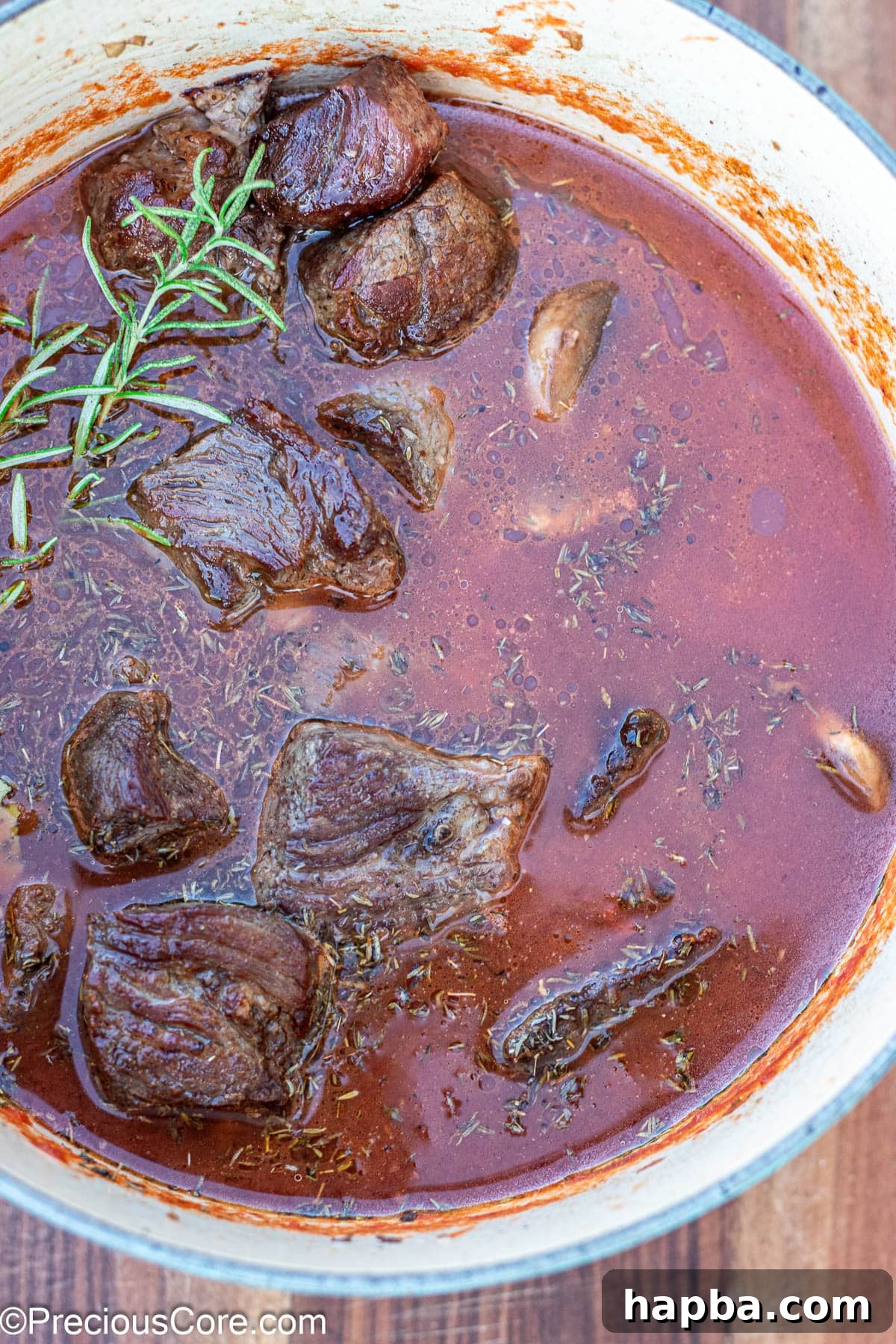
- Continue simmering until beef is tender. Let the stew continue to simmer gently, allowing the beef to become incredibly tender. This process will fill your home with an absolutely delightful aroma. While the beef is cooking, avoid lifting the lid too often to maintain a consistent temperature.
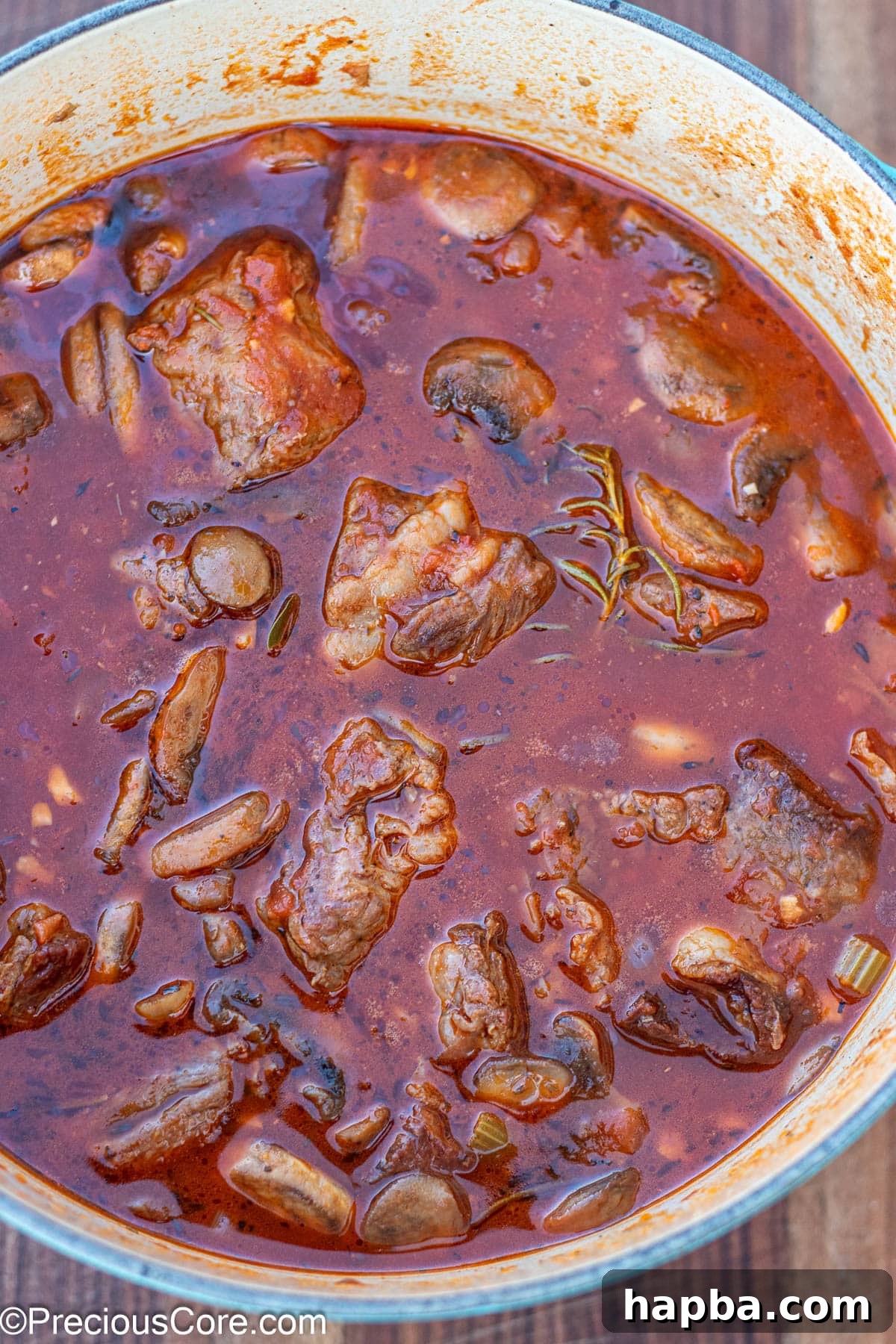
- Add the classic vegetables. The stew looks fantastic already, but it’s time to elevate it further. Add your chunky carrots and potatoes – these are essential for a classic beef stew. Distribute them evenly throughout the pot.
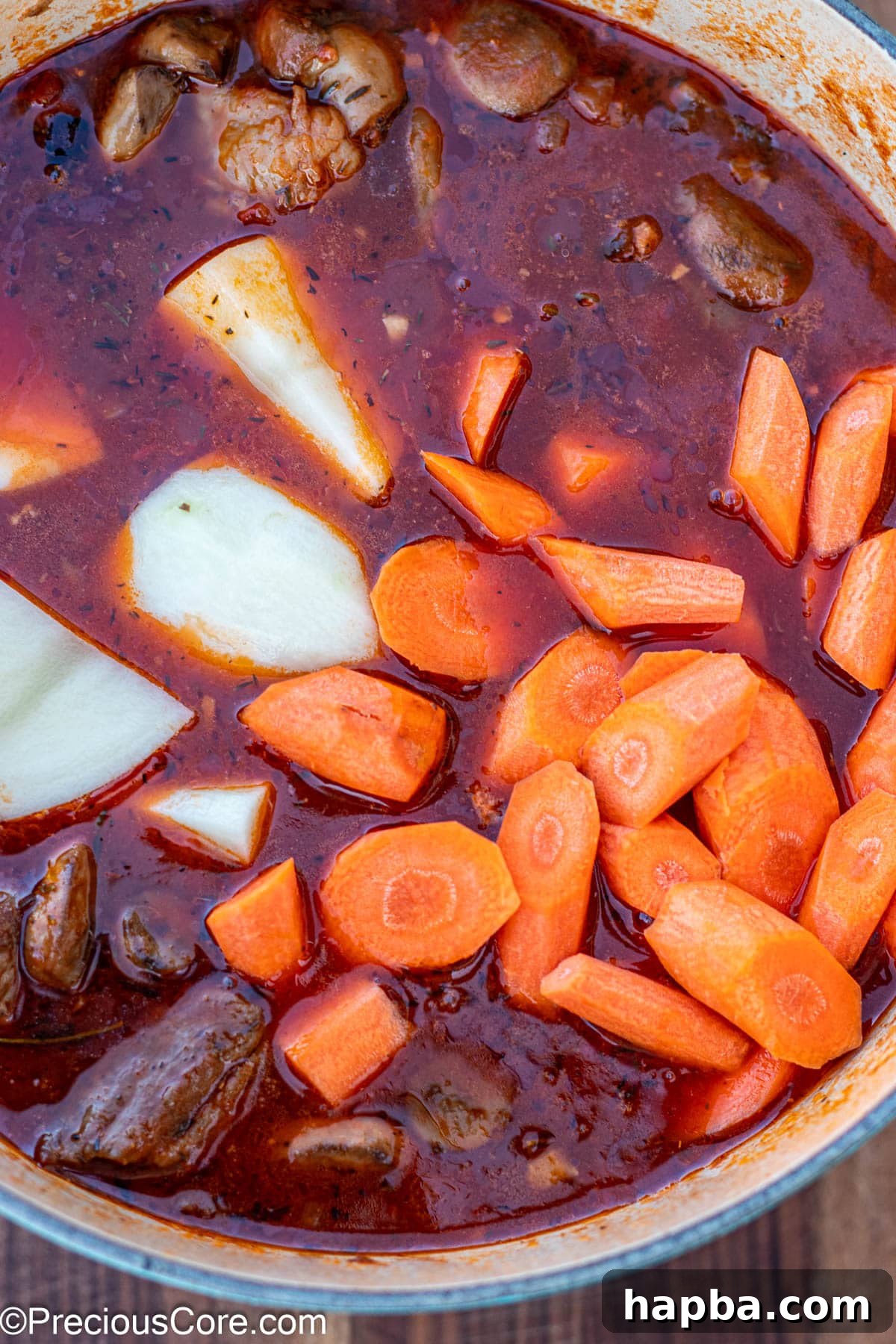
- Cook until potatoes are fork-tender. Cover the pot once more and allow the stew to simmer on medium-low heat. The potatoes and carrots will need more than just 10-15 minutes; expect them to cook through in approximately 25 to 30 minutes. Keep the heat moderate to prevent the bottom of the pot from scorching and to ensure gentle, even cooking.
- Adjust texture and taste to perfection. Once the vegetables are tender, taste the stew and adjust the seasoning as needed. If the stew is too thick, add a bit more beef stock until it reaches your desired consistency. If it’s too runny, uncover the pot and let it simmer on medium-high heat until it reduces and thickens. This is also a good moment to add a little more beef bouillon powder and a pinch of black pepper if desired. Once satisfied, remember to carefully remove the rosemary stems and bay leaves before serving.
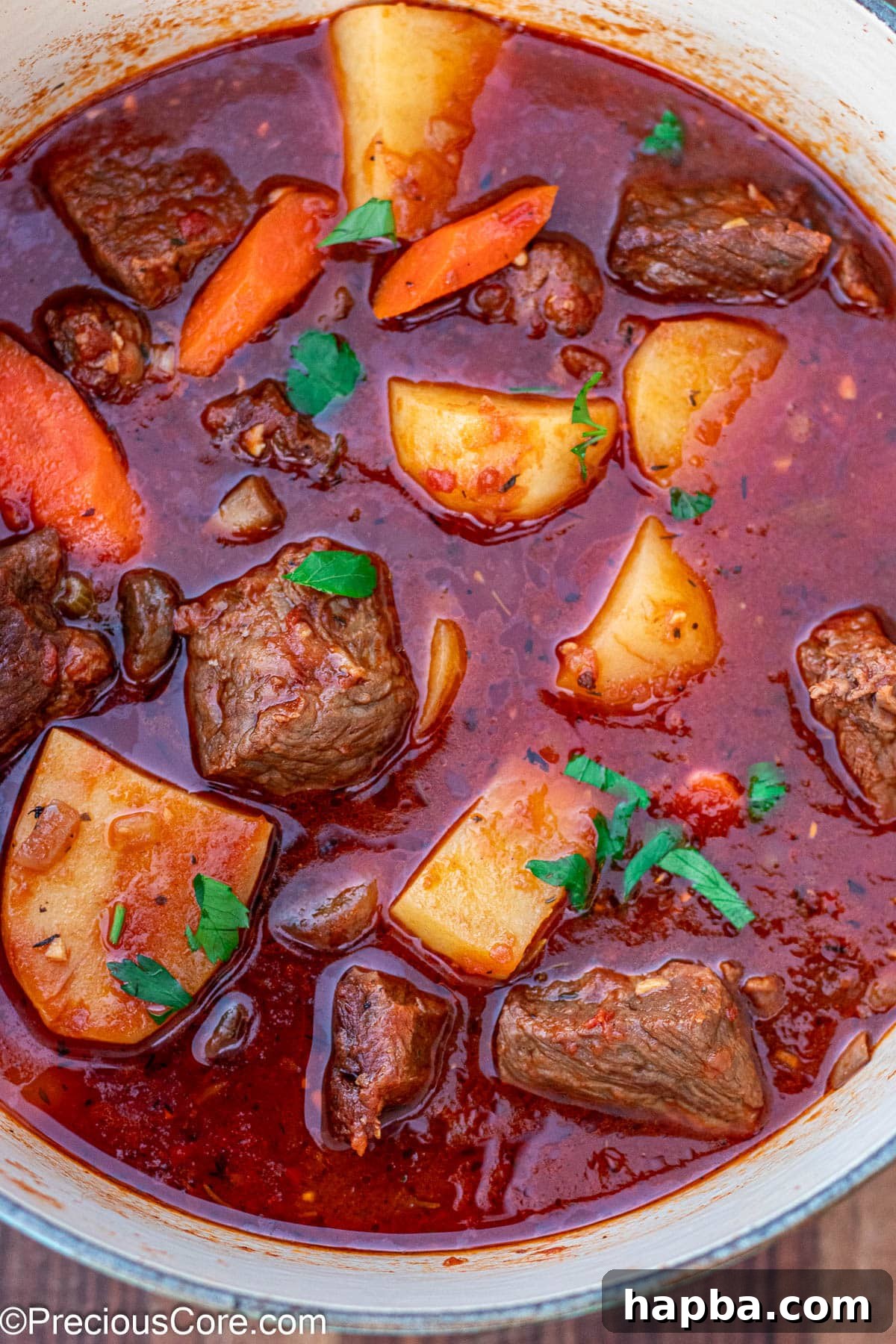
- Garnish and serve with pride. For that professional, “cheffy” finishing touch, sprinkle a generous amount of freshly chopped parsley or chives over the stew just before serving.
Serve this delightful Beef Stew Without Wine warm, either as a stand-alone, comforting meal or alongside your favorite side dishes. Consider pairing it with fluffy Easy Dinner Rolls or a crisp, refreshing Lettuce Salad for a perfectly balanced meal.
Top Tips for Beef Stew Success
- Choose the Right Pot: The foundation of a great stovetop stew is a sturdy, adequately large, heavy-duty pot or Dutch oven. A Le Creuset Dutch oven, for example, is excellent for even heat distribution. Ensuring enough room prevents overcrowding, which can lead to steaming instead of browning, and allows for proper simmering without spills.
- Strategic Herb Addition: While some dried herbs like thyme and bay leaves can be added early in the cooking process to infuse flavor, delicate fresh herbs such as parsley or chives should be reserved until the very end. Adding them just before serving preserves their vibrant color, fresh aroma, and prevents them from wilting or losing their potency.
- Patience is Key for Tenderness: Avoid the temptation to rush the cooking process by using excessively high heat throughout. High heat can cause the bottom of your pot to burn and, more importantly, can result in tough, chewy beef. A slow, steady simmer ensures the connective tissues in the chuck roast break down beautifully, yielding incredibly tender, melt-in-your-mouth beef.
- Uniform Cutting for Even Cooking: To ensure that all pieces of beef cook at the same rate and reach optimal tenderness simultaneously, cut the meat into evenly sized chunks. We recommend approximately 1 to 1½-inch cubes. Don’t worry about perfect squares; a rustic, rough-cut look is perfectly charming.
- Chunky Vegetables for Texture: Similarly, cut your vegetables (carrots and potatoes) into chunky pieces, ideally 1 to 1½-inch cubes. If cut too small, they risk overcooking and dissolving into the sauce, losing their distinct texture. Larger chunks retain their integrity, providing delightful bites of vegetables throughout the thick, savory stew.
- Smart Storage for Leftovers: This stew often tastes even better the next day! Transfer any leftovers to an airtight container and refrigerate for up to 5 days. For longer storage, beef stew freezes exceptionally well. To save freezer space, ladle cooled stew into freezer bags, pressing out as much air as possible. Lay the bags flat in the freezer until solid, then stack them neatly. Thaw overnight in the refrigerator before gently reheating on the stovetop or in the microwave.
One of the most common pitfalls when browning beef is overcrowding the pan. If you attempt to brown all the beef at once, the temperature of the pot will drop significantly, causing the beef to steam rather than sear. Achieving that desirable rich, caramelized crust (the Maillard reaction) requires patience and proper space. Always brown your beef in batches to ensure each piece gets a beautiful, flavorful sear.
Smart Substitutions for Beef Stew
- Lamb – For a different, equally rich flavor profile, substitute the beef with an equivalent amount of lamb shoulder or leg, cut into stewing pieces. The cooking time will be similar.
- Chicken – While the flavor will be lighter, boneless, skinless chicken thighs can be used in place of beef for a quicker-cooking stew. Add them closer to the end of the stew’s cooking time to prevent them from becoming dry.
- Vegetarian – To transform this into a hearty vegetarian stew, replace the beef with a generous amount of various mushrooms (cremini, shiitake, portobello), firm root vegetables like parsnips, or even robust plant-based beef substitutes.
- Potatoes– While russet potatoes are excellent, Yukon Gold potatoes or small baby potatoes can also be used. Yukon Golds will offer a creamier texture, while baby potatoes can be added whole or halved for a rustic touch.
- Broth– Beef broth is undoubtedly the best choice for a deep, rich flavor. However, if you find yourself without it, a good quality chicken broth can be used as a substitute, though it will impart a slightly different, milder overall flavor to the stew. Vegetable broth is also an option for a lighter profile.
Delicious Variations to Explore
- Peas: For a touch of sweetness and color, stir in a cup of frozen peas during the last 5 minutes of cooking. They will quickly warm through and maintain their vibrant green hue.
- Spicy Kick: Introduce a delightful heat by adding a pinch or two of red pepper flakes or a dash of cayenne pepper along with the other seasonings, adjusting the amount to your preferred spice level.
- Global Flavors: Experiment with international flair! Add a teaspoon of ground cumin and a pinch of cinnamon for a stew with a Moroccan-inspired twist. For an added layer of umami and depth, consider a splash of Worcestershire sauce, a teaspoon of soy sauce, or a hint of balsamic vinegar.
- Hearty Noodles: Towards the end of the cooking time, stir in your favorite egg noodles directly into the stew. Ensure there’s enough liquid for them to cook through, and let them simmer until tender.
Don’t stop here! Explore other comforting stews like this vibrant African Chicken Stew and the wholesome Lentil Stew.
Common Beef Stew Questions Answered
Excellent substitutes for wine in beef stew include beef stock or beef broth. For an even richer flavor, you can use a combination of beef bouillon powder dissolved in cold water, which mimics the depth that wine can offer.
Absolutely, you can skip red wine in beef stew without compromising flavor. While red wine traditionally adds depth and acidity, it is by no means an essential ingredient. You can still craft an incredibly flavorful and satisfying beef stew using alternative ingredients to achieve similar culinary effects.
Red wine traditionally serves a dual purpose in beef stew: it contributes an extra layer of complex flavor and helps tenderize the meat through its acidity. However, you can perfectly achieve both a rich flavor and tender meat by using high-quality beef broth or stock, coupled with sufficient cooking time on the stovetop. Long, slow simmering will effectively break down the meat fibers, resulting in a wonderfully tender stew.
More Comforting Recipes to Try
If you’ve fallen in love with this Beef Stew Without Wine recipe, you’ll surely appreciate these other heartwarming and comforting dishes:
Quick Chicken Noodle Soup
Cameroonian Pepper Soup
Lentil Stew
Nigerian Beef Stew
Perfect Serving Suggestions
Enhance your hearty beef stew experience by serving it with these delightful side dishes:
Cornbread Without Buttermilk
Garlic Butter Rolls
Honey Whole Wheat Dinner Rolls
Easy Dinner Rolls
If you make this recipe, please consider leaving a star rating below. Your feedback helps others discover and enjoy this delicious recipe, and I always love hearing from you! Thank you!
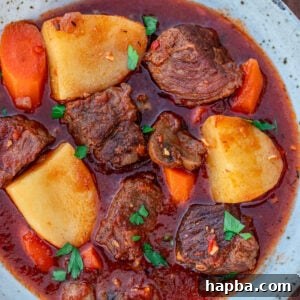
Beef Stew Without Wine
Ingredients
- 2 Tablespoons olive oil
- 3 pounds chuck roast cut into 1½ inch chunks
- 1 teaspoon salt
- ¼ teaspoon ground black pepper
- 1 teaspoon beef bouillon powder
- 1 medium onion diced
- 2 celery stalks diced
- 2 Tablespoons minced garlic from about 8 cloves
- 28 oz crushed tomatoes
- 4 medium carrots peeled and cut into 1-inch chunks
- 4 cups beef stock
- 1 pound russet potatoes about 4 medium potatoes, peeled and cut into 1½-inch chunks
- 1 teaspoon dried thyme
- 3 sprigs fresh rosemary
- 2 bay leaves
- Minced parsley or chives for garnish
- Crusty bread for serving
Instructions
-
Season the beef: Add the salt, ground black pepper, and beef bouillon powder to the beef chunks. Toss well to combine, ensuring all pieces are coated.
-
Brown the beef: Place a large Dutch oven on high heat. Add the olive oil and heat for two minutes until shimmering. Add part of the seasoned beef and brown all around. You’ll need to brown the beef in batches to avoid overcrowding the pan and ensure a beautiful sear.
-
Sauté the aromatics: To the same pot where the beef was browned, leaving the rendered fat and browned bits, add the diced onion and celery. Cook, stirring occasionally, for about 4 minutes until the onion softens and becomes translucent. Add the minced garlic and sauté for 30 seconds until fragrant, being careful not to burn it.
-
Add the remaining ingredients: To the pot, add the crushed tomatoes, beef stock, browned beef, dried thyme, fresh rosemary, and bay leaves. Stir well to combine all ingredients. Bring the mixture to a boil over high heat, then reduce to a gentle simmer on medium heat and let it cook for about 10-15 minutes, allowing the flavors to deepen.
-
Add carrots and potatoes: Now, add the chopped carrots and potatoes to the stew. Cover the pot and continue to simmer for approximately 25 to 30 minutes, or until the potatoes are completely fork-tender. Taste the stew and adjust seasoning as needed; I often add about ½ a teaspoon more beef bouillon powder at this stage.
-
Adjust the stew’s consistency: If the stew appears too soupy for your liking, remove the lid, increase the heat slightly, and let it cook down until it reaches your desired thickness. Before serving, remember to remove the rosemary stems and bay leaves.
-
Garnish and serve: Garnish your rich beef stew with freshly minced parsley or chives for a pop of color and freshness, then serve warm with your favorite crusty bread.
Notes
Potatoes: After peeling and cutting the potatoes into chunks, it’s a good practice to soak them in cold water. This helps prevent oxidization, which can cause them to turn an unappealing color.
Adding mushrooms: Mushrooms make a fantastic addition to this beef stew, lending an earthy flavor and added texture. If you choose to include them, use approximately 8 ounces of sliced mushrooms and sauté them in the same pot after cooking the aromatics, before adding the crushed tomatoes.
Storage: This beef stew stores wonderfully. You can refrigerate leftovers in an airtight container for up to 5 days, or freeze it for up to 3 months.