
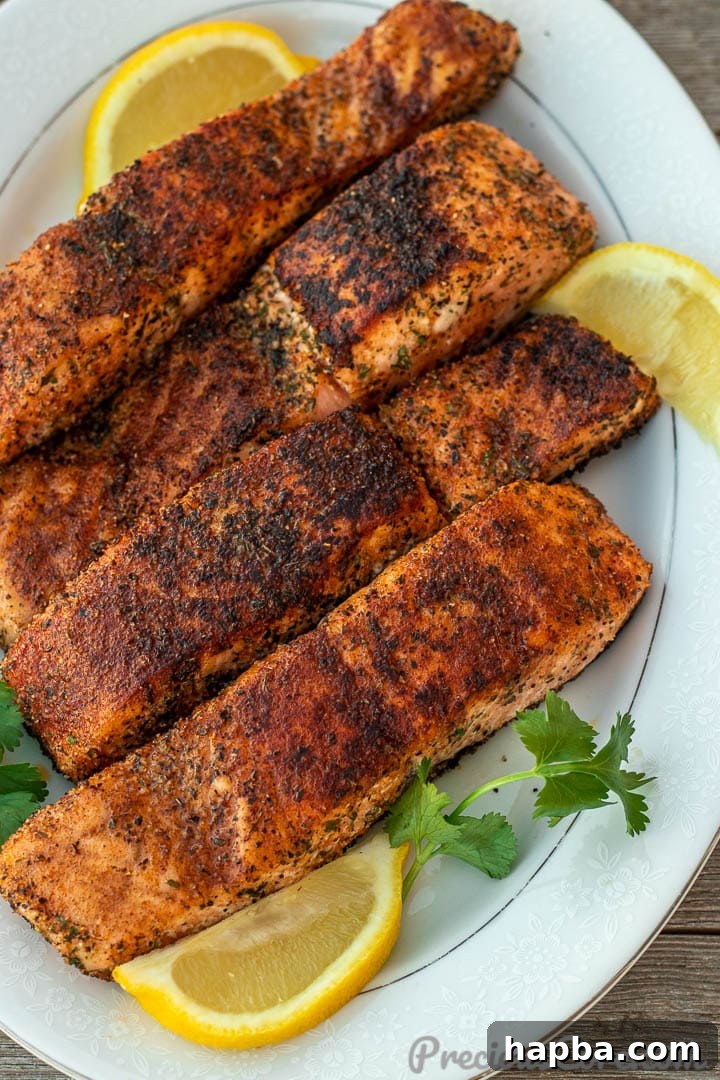
Master the art of preparing incredibly tasty Pan Grilled Salmon right in your kitchen. This foolproof method guarantees salmon that is irresistibly crispy on the outside, beautifully tender and flakey on the inside, and ready to serve in as little as 15 minutes! It’s the perfect solution for a fast, flavorful, and healthy weeknight dinner.
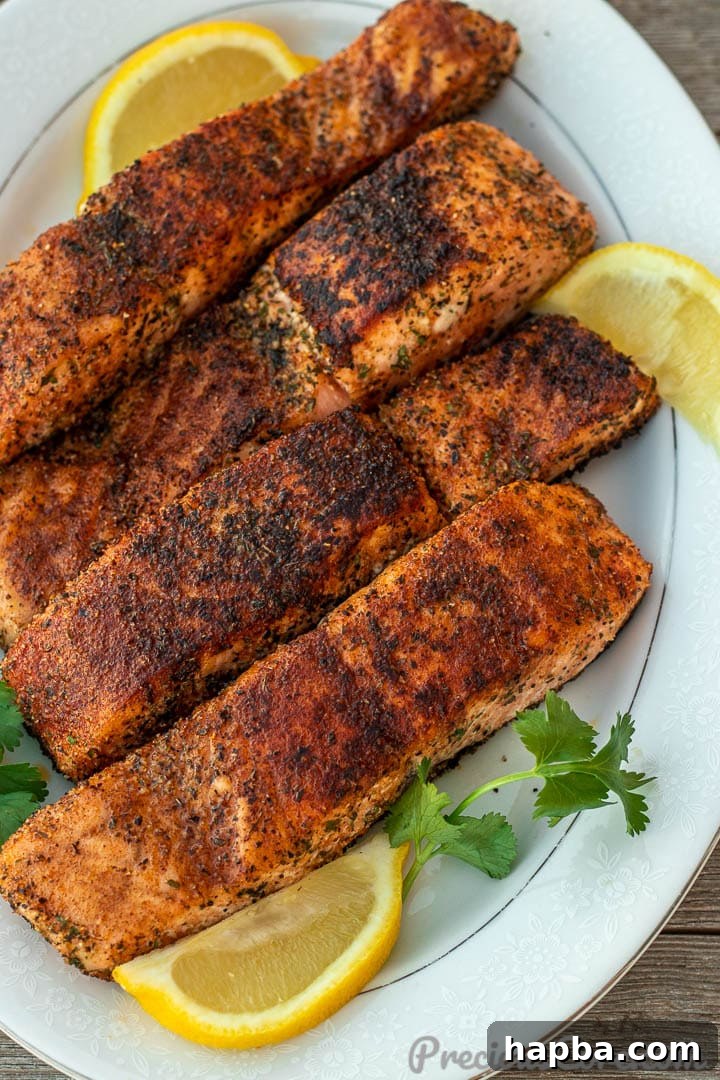
When it comes to whipping up a quick and impressive dinner, pan-grilled salmon stands out as an absolute game-changer. This recipe is my tried-and-true favorite, transforming simple salmon fillets into a culinary masterpiece with a golden-brown, crispy exterior that’s simply divine. The secret lies in a hot pan and a carefully crafted dry rub that infuses every bite with incredible flavor.
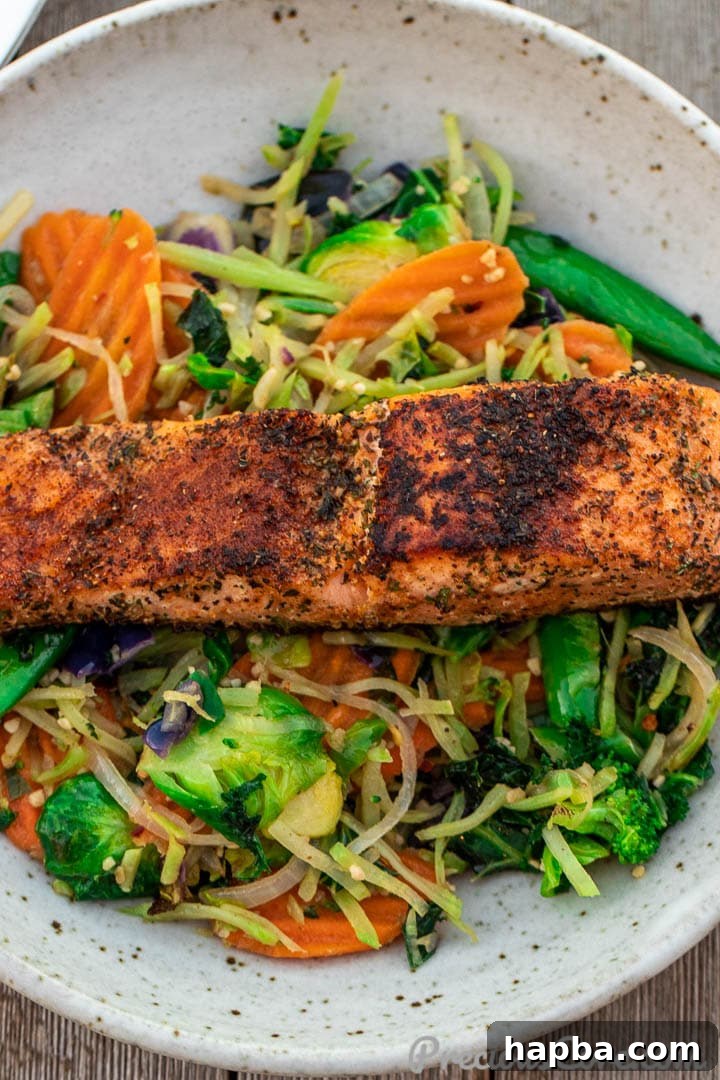
Elevate your meal by serving this exquisite salmon alongside vibrant sides such as a refreshing Mango Avocado Salsa, a medley of perfectly Sautéed Vegetables, or a fragrant bowl of Easy Coconut Rice. Each pairing promises a truly satisfying and wholesome dining experience.
Table of Contents
- Why Pan-Grilled Salmon is a Must-Try
- Health Benefits of Salmon
- Choosing the Perfect Salmon
- Essential Ingredients for Flavorful Salmon
- Crafting the Ultimate Salmon Seasoning
- Step-by-Step Guide to Pan-Grilling Salmon
- Expert Tips for Flawless Pan-Grilled Salmon
- Pan-Frying vs. Baking Salmon: Which is Better?
- Delicious Variations to Try
- Frequently Asked Questions
- What to Serve with Pan Grilled Salmon
- Storage and Reheating Tips
- More Quick and Easy Dinner Recipes
- Explore More Salmon Recipes
- Other Pan-Grilled Delights
- Pan Grilled Salmon Recipe Card
Why Pan-Grilled Salmon is a Must-Try
Pan-grilling salmon on your stovetop is not only incredibly efficient but also delivers exceptional flavor and texture. Utilizing a sturdy cast iron skillet or a specialized grill pan allows you to achieve that coveted crispy skin and succulent flesh quickly and with minimal fuss. This method is truly foolproof, making it accessible even for novice cooks. If you prefer outdoor grilling, don’t miss our fantastic recipe for Grilled Sockeye Salmon.
There are countless reasons to make this pan-seared salmon recipe your new favorite:
- Speed and Simplicity: Forget complicated recipes and lengthy cooking times. This dish comes together in just 15 minutes, allowing you to enjoy a gourmet meal even on your busiest days. It’s truly a lifesaver for busy individuals and families.
- Nutrient Powerhouse: Salmon is celebrated for its impressive nutritional profile. Rich in Omega-3 fatty acids, high-quality protein, and essential vitamins like D and B, it’s a smart choice for a health-conscious diet.
- Unmatched Versatility: The beauty of pan-grilled salmon lies in its adaptability. It pairs wonderfully with a vast array of side dishes, from zesty Sautéed Peppers and creamy Buttermilk Mashed Potatoes to wholesome steamed vegetables, aromatic Garlic Butter Green Beans, or flavorful Garlic Herb Rice. You can even flake it into a fresh salad for a protein-packed lunch. The culinary possibilities are truly endless!
While a cast iron pan is highly recommended for its superior heat retention and even cooking, a good nonstick pan will also work wonders, especially if you’re looking for an even easier cleanup. For more fish-focused dinner ideas, explore our recipes for Pan-Seared Tilapia, Lemon Butter Tilapia, and Oven Grilled Red Snapper.
Health Benefits of Salmon
Salmon is not just delicious; it’s a nutritional powerhouse. It’s one of the best sources of omega-3 fatty acids, which are vital for heart health, brain function, and reducing inflammation. A single serving provides a significant amount of high-quality protein, essential for muscle repair and growth. Furthermore, salmon is packed with B vitamins (B3, B5, B6, B9, B12), which play crucial roles in energy production and nerve function. It’s also a great source of Vitamin D, selenium, and potassium. Incorporating salmon into your diet regularly can contribute to overall well-being and a balanced lifestyle, making this pan-grilled salmon recipe a delicious way to boost your health.
Choosing the Perfect Salmon
The quality of your salmon can significantly impact the final dish. Here’s what to look for when selecting your fillets:
- Fresh vs. Frozen: Both fresh and high-quality frozen salmon fillets work beautifully for this recipe. If using frozen, ensure it’s properly thawed in the refrigerator overnight or under cold running water.
- Wild-Caught vs. Farmed: Wild salmon, such as Sockeye or Coho, is often praised for its distinct flavor and vibrant color, typically having a leaner texture. Farmed salmon, like Atlantic salmon, tends to be fattier and more readily available. If opting for farmed salmon, look for labels indicating responsible and sustainable farming practices.
- Types of Salmon:
- Sockeye Salmon: Known for its deep red flesh and strong flavor, often leaner.
- Atlantic Salmon: Commonly farmed, with a milder flavor and higher fat content, making it very tender.
- King Salmon (Chinook): The largest and fattiest salmon, prized for its rich, buttery texture and flavor.
- Coho Salmon: Has a milder flavor than Sockeye, with a firm texture and orange-red flesh.
- Appearance: Look for fillets with bright, moist flesh and no discoloration. If skin-on, the skin should be shiny and intact.
Essential Ingredients for Flavorful Salmon
Crafting mouthwatering pan-grilled salmon requires only a few key ingredients: quality salmon, a neutral cooking oil, and a balanced blend of dried spices and herbs. Here’s a detailed breakdown:
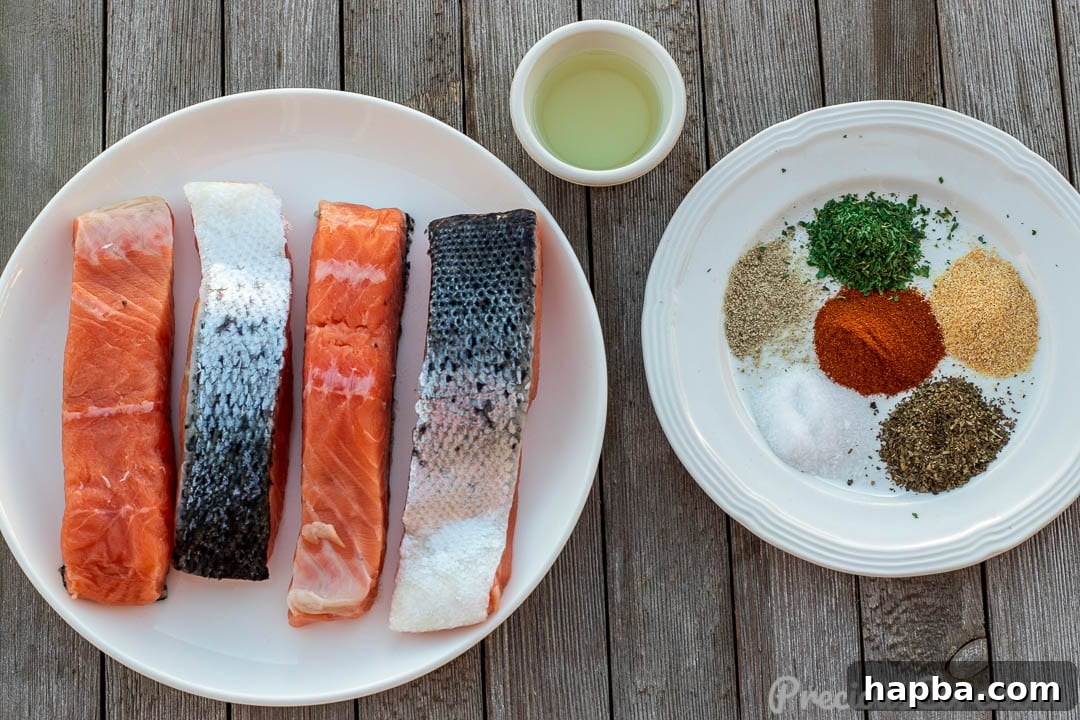
- Salmon Fillets: Whether fresh or thawed from frozen, aim for high-quality fillets. Wild-caught varieties like Sockeye often offer a richer flavor profile, but responsibly farmed Atlantic salmon is also an excellent choice.
- Ground White Pepper or Black Pepper: White pepper, with its subtle heat and earthy notes, beautifully complements the delicate flavor of fish. However, if unavailable, freshly ground black pepper is a perfectly acceptable substitute that adds a classic kick.
- Spices and Herbs: Our signature dry rub combines garlic powder (or granules), dried basil, paprika powder, onion powder, and parsley flakes. This blend creates a harmonious flavor profile that is both savory and aromatic, elevating the salmon without overpowering its natural taste.
- Olive Oil: A light olive oil or any neutral-flavored cooking oil, such as vegetable or canola oil, is ideal for pan-grilling. These oils have a high smoke point, ensuring your salmon develops a beautiful sear without burning.
For precise measurements, refer to the full recipe card below.
Top Tip: Always season your salmon just before you’re ready to cook it. Salting fish too far in advance can draw moisture out, resulting in a drier fillet. For the crispiest skin and most tender flesh, prompt cooking after seasoning is key!
Crafting the Ultimate Salmon Seasoning
Creating your own restaurant-quality salmon seasoning at home is surprisingly simple and incredibly rewarding. Just combine garlic granules, salt, a dash of white or black pepper, dried parsley, dried basil, onion powder, and paprika. This balanced blend provides a savory, aromatic, and slightly sweet flavor that transforms plain salmon into an extraordinary dish.
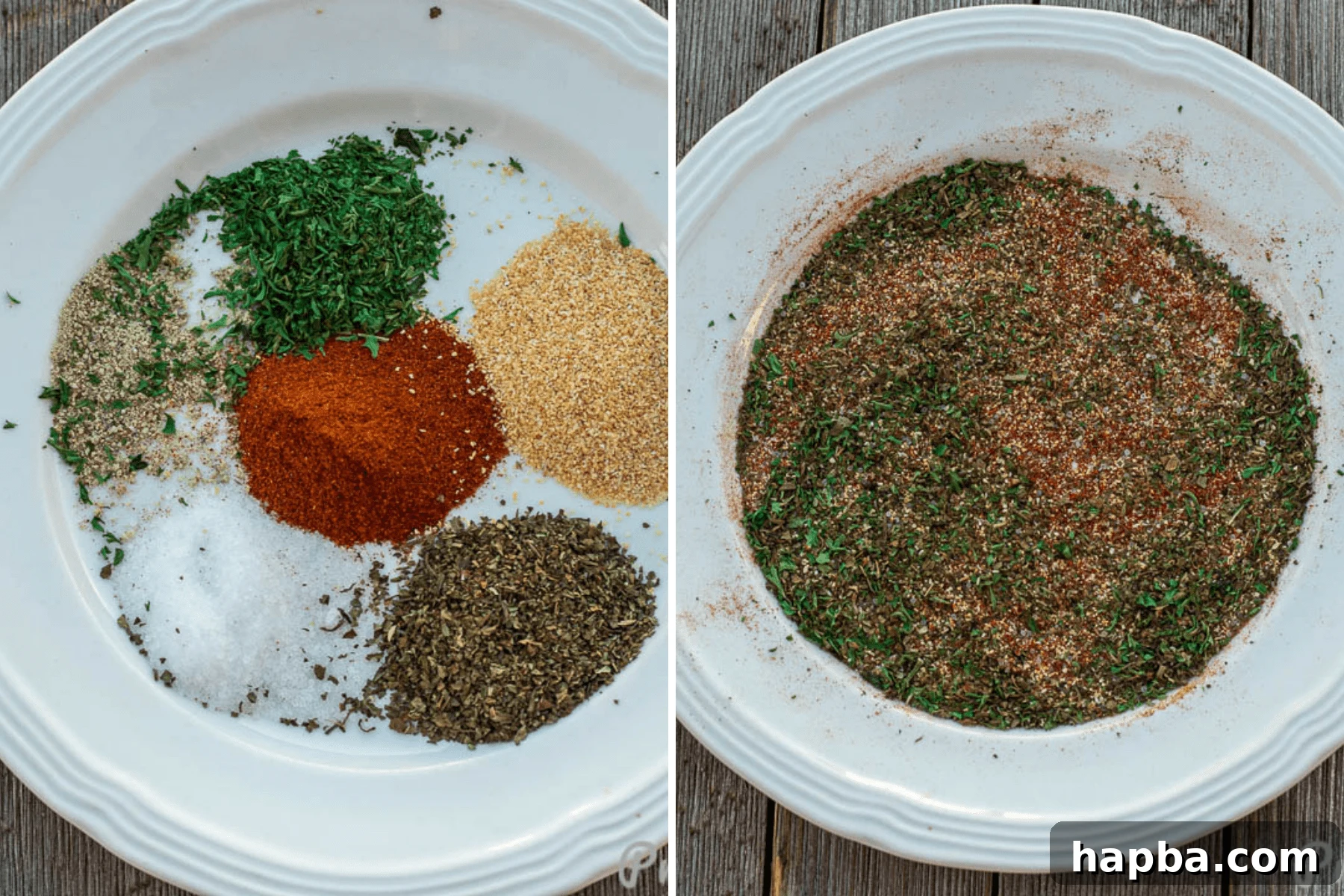
This versatile dry rub isn’t just for salmon! Feel free to experiment by using it on other proteins like steak, pork chops, or even chicken thighs. Its robust flavor profile enhances a wide range of dishes, making it a staple in your spice cabinet.
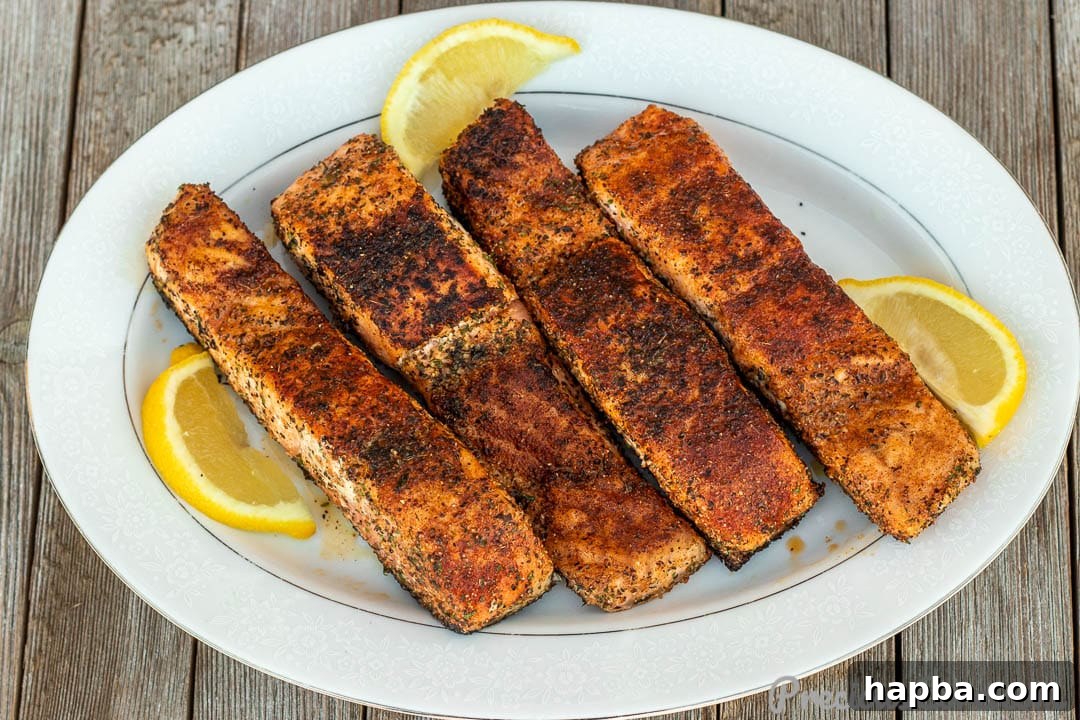
Crucial Tip for Success: For evenly cooked and perfectly tender pan-grilled salmon, always bring your fish to room temperature before cooking. If the salmon is cold from the refrigerator, different parts will cook at varying rates, leading to an unevenly done fillet. Allow your salmon to sit out at room temperature for 20-30 minutes prior to cooking.
Step-by-Step Guide to Pan-Grilling Salmon
Achieving restaurant-quality pan-grilled salmon at home is simpler than you think. Follow these steps for perfect results every time:
- Prepare the Salmon: Begin by thoroughly patting your salmon fillets dry with paper towels. This crucial step removes excess moisture, which is essential for developing that desirable crispy, golden crust on the fish.
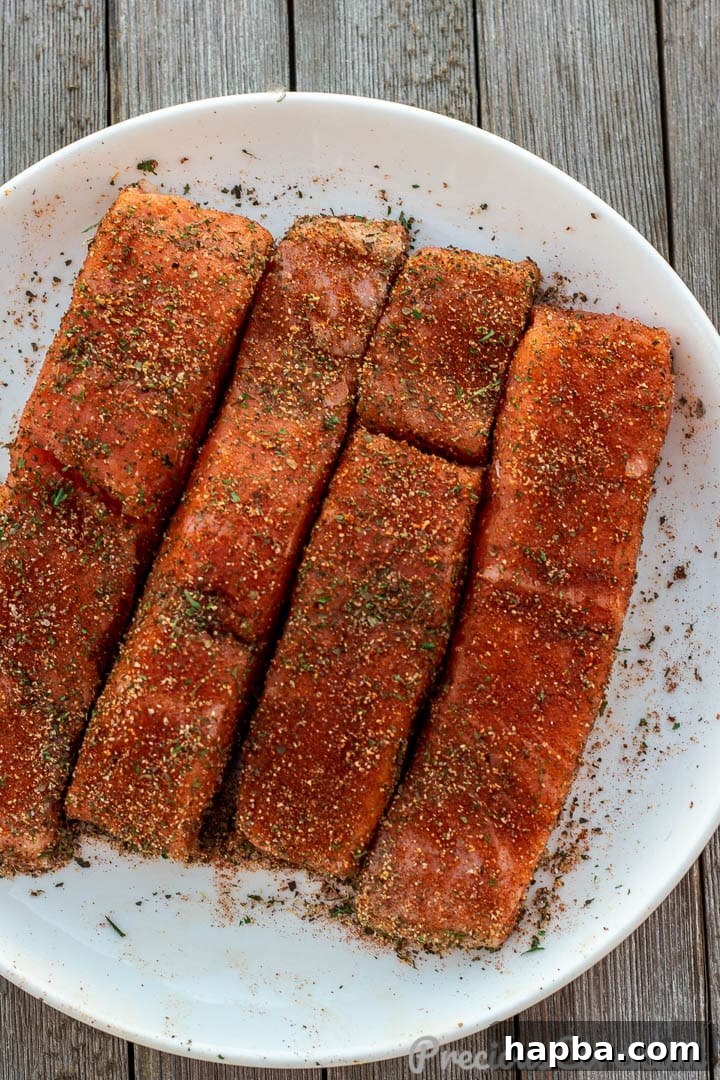
- Season Generously: In a small bowl, combine your chosen seasoning mix (garlic granules, salt, pepper, dried parsley, dried basil, onion powder, paprika). Sprinkle approximately a teaspoon of this blend over each salmon fillet. Using your fingers, gently rub the seasoning all over the fish, ensuring even distribution on both sides and edges.
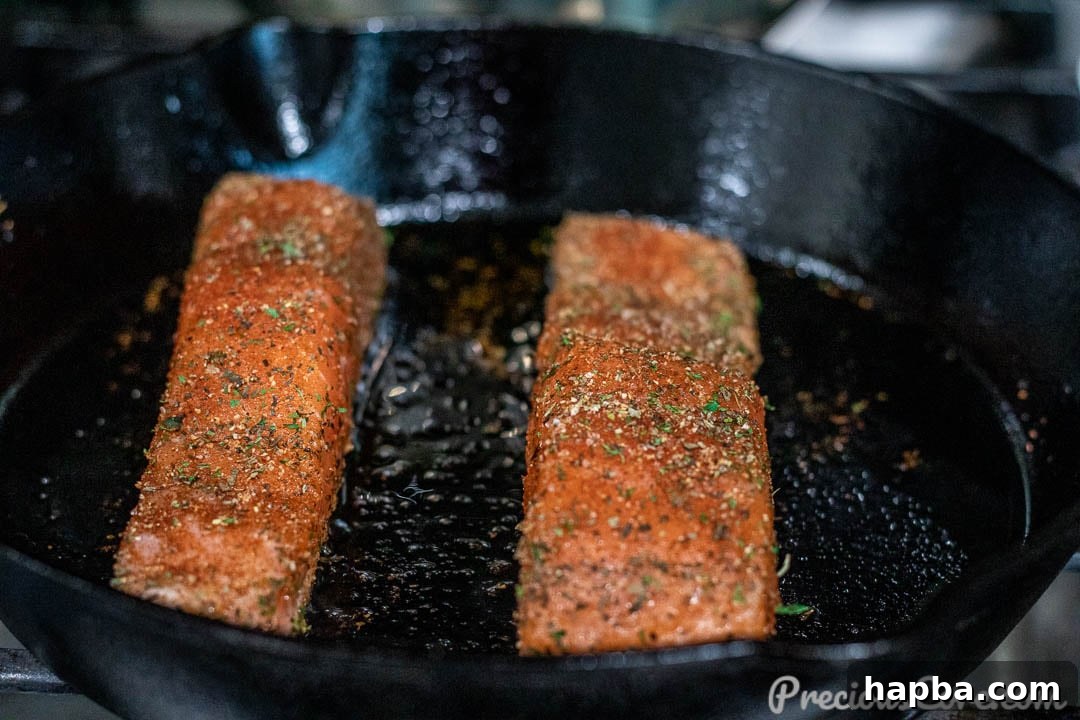
- Heat the Pan: Place your preferred pan, ideally a cast iron skillet or a grill pan, over medium-high heat. Allow it to preheat until it’s quite hot. Add the olive oil to the pan and let it shimmer for 1-2 minutes, indicating it’s ready for the fish.
- First Side Sear (Skin-Side Down): Carefully place the seasoned salmon fillets into the hot skillet, skin-side down (if your fillets have skin). Cook undisturbed for approximately 3 to 4 minutes. This allows the skin to crisp up beautifully and renders some of the fat, contributing to a richer flavor. For even cooking and extra crispy skin, gently press down on the fillets with a spatula for the first minute of cooking.
- Flip and Finish: Using a fish spatula, carefully flip the salmon to the other side. Continue to cook for another 3 to 4 minutes, or until the fish is opaque throughout and easily flakes with a fork. The internal temperature should register 145 degrees F for optimal doneness, though it’s often best to remove it from heat around 140 degrees F, as it will continue to cook as it rests.
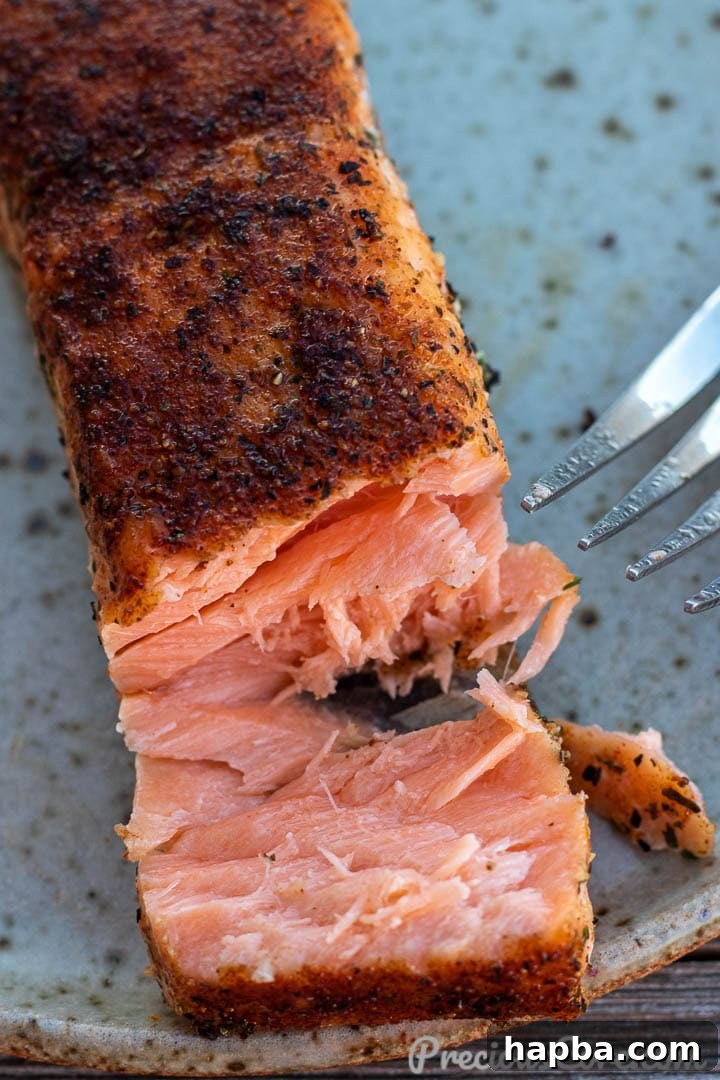
Once cooked, transfer the salmon to a plate. For the juiciest results, allow the salmon to rest, lightly tented with foil, for about 5 minutes before serving. This resting period allows the juices to redistribute throughout the fillet, ensuring a soft and moist texture. As a delightful finishing touch, squeeze fresh lemon juice over the cooked salmon and garnish with finely minced fresh parsley. For an extra touch of indulgence, consider drizzling a homemade lemon butter sauce over your fillets, similar to our Lemon Butter Salmon recipe.
Expert Tips for Flawless Pan-Grilled Salmon
To ensure your pan-grilled salmon is nothing short of perfect every time, keep these expert tips in mind:
- Pat Dry, Always: This cannot be stressed enough. Using paper towels to remove all surface moisture from the salmon fillets is crucial for achieving that beautiful, crispy skin and golden-brown sear. Wet fish will steam rather than sear.
- Choose Your Pan Wisely: A cast iron pan is often considered the gold standard for its even heat distribution and ability to create a fantastic crust. A good nonstick pan is also excellent, especially for ease of flipping. While stainless steel works due to even heat, it can be prone to sticking; ensure it’s generously greased if you use one.
- Hot Pan, Hot Oil: Always add salmon to a preheated pan with shimmering hot oil. This immediate high heat creates a crust and prevents sticking.
- Start Skin-Side Down: If your salmon has skin, always begin cooking skin-side down. The skin acts as a protective layer, allowing the fat to render and crisp up without overcooking the delicate flesh. It also provides a sturdier surface for flipping. Gently pressing down on the salmon with a spatula for the first minute ensures full contact with the pan and maximizes crispiness.
- Avoid Overcrowding: Cook salmon in batches if necessary. Overcrowding the pan will lower the temperature, leading to steaming instead of searing, and a lack of crispy skin. Leave ample space between fillets.
- Check for Doneness Accurately: Overcooked salmon is dry and unappealing. The best way to check for doneness is with an instant-read thermometer. The Food and Drug Administration (FDA) recommends cooking salmon to an internal temperature of 145 degrees Fahrenheit. However, to account for carryover cooking, remove the fish from the heat when it reaches about 140 degrees F. The cooking time will vary based on the thickness of your fillets.
- Clean Between Batches: If cooking multiple batches in a smaller skillet, quickly wipe out any burnt bits and add a little more oil to the pan before adding the next fillets. This prevents a burnt taste and ensures a clean sear.
- Grill Marks for Aesthetics: For those appealing grill marks, opt for a ridged grill pan. This not only looks professional but also adds a subtle charred flavor.
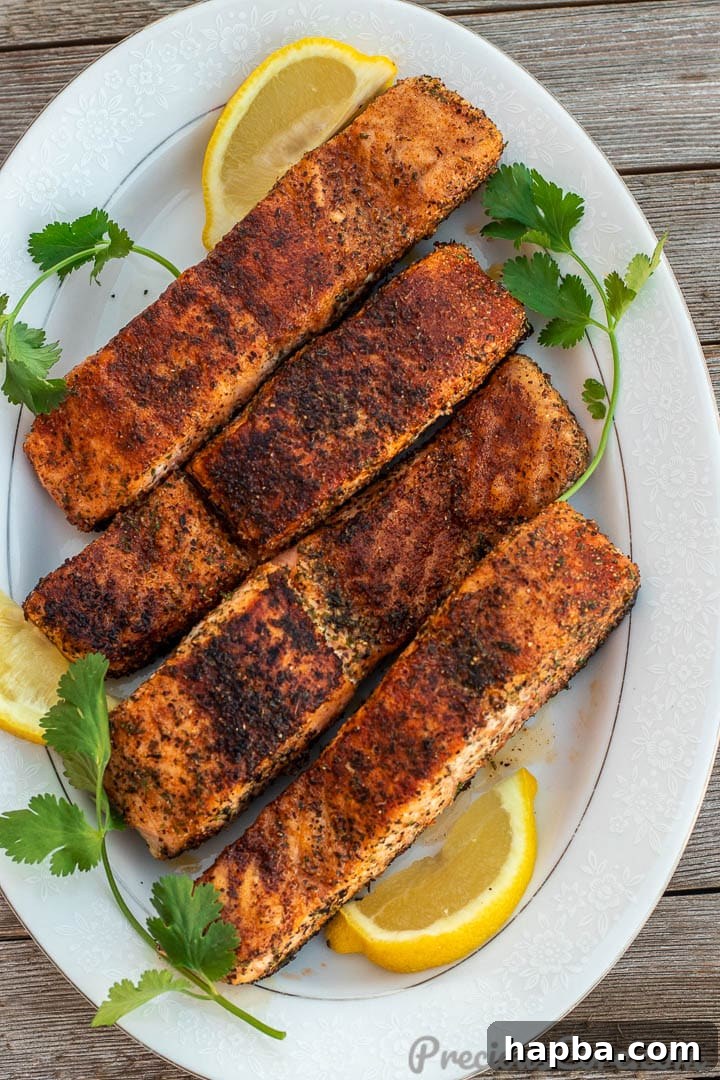
Pro Tool: A fish spatula is an invaluable tool for gently flipping delicate proteins like salmon. Its thin, flexible blade slides easily under the fish without tearing, ensuring your fillets stay intact and beautiful.
Pan-Frying vs. Baking Salmon: Which is Better?
The choice between baking and pan-frying salmon largely depends on your desired outcome and available time.
- Baking Salmon: This method requires minimal hands-on time. After a quick prep, the oven does most of the work, making it perfect for hands-off cooking or when preparing multiple dishes simultaneously. Baked salmon tends to be very tender and moist throughout.
- Pan-Frying Salmon: If you crave a distinct crispy crust and flaky interior, pan-frying is the undisputed champion. It’s also significantly quicker, with fillets cooking in just about 4 minutes per side. This makes it ideal when you need dinner on the table fast and want to avoid turning on your oven.
The good news? The versatile seasoning blend used in this recipe works wonderfully for both pan-grilled and oven-baked salmon, so you can easily adapt based on your preference!
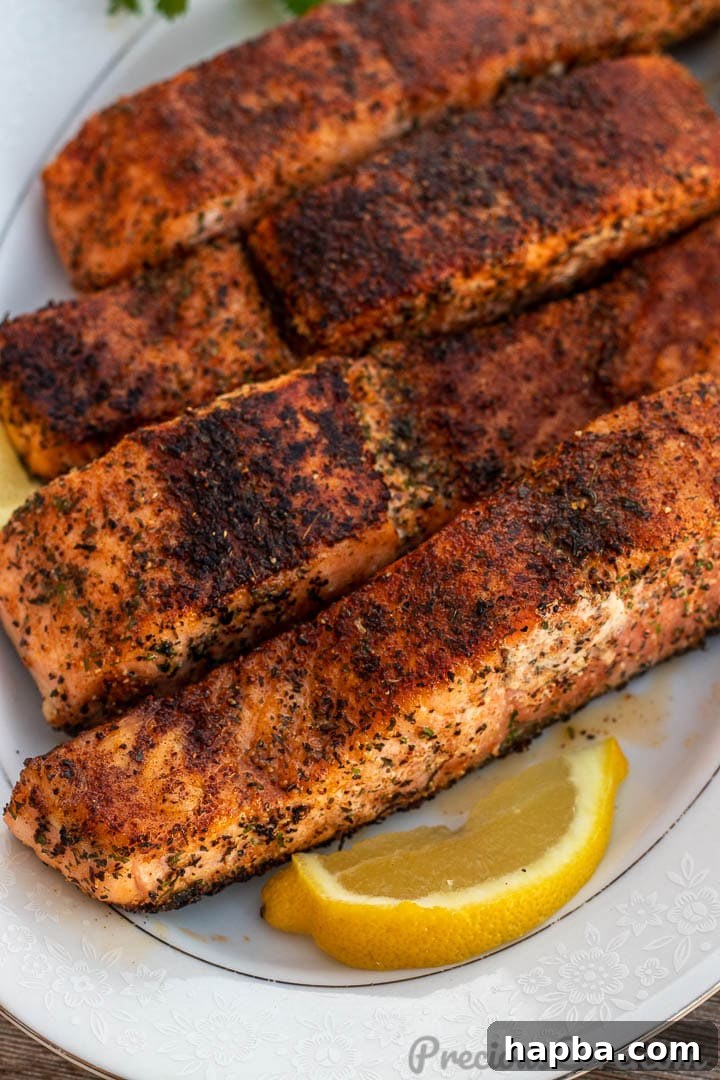
Delicious Variations to Try
While our signature dry rub is fantastic, feel free to customize your pan-grilled salmon with these exciting variations:
- Spice it Up: For those who love a bit of heat, simply add a pinch of cayenne pepper or red pepper flakes to your seasoning mix.
- Buttery Richness: After cooking your salmon, add a tablespoon of butter to the hot pan. Once melted, spoon the luscious butter over the fillets for an extra layer of flavor and moisture. You can also add fresh herbs like dill or thyme to the melting butter.
- Explore Other Seasonings: Don’t limit yourself! Experiment with different seasoning blends such as vibrant Italian seasoning, bold Cajun seasoning, or a simple yet effective combination of salt, black pepper, and a squeeze of fresh lemon.
- Herb Crusted: Before cooking, press a mixture of finely chopped fresh herbs (like dill, parsley, and chives) onto the flesh side of the salmon for a fresh, aromatic crust.
Frequently Asked Questions
Yes, it is essential to flip salmon when cooking in a pan. This ensures that both sides cook evenly, leading to a perfectly flaky interior and a beautifully seared exterior on both sides. Typically, you’ll start cooking skin-side down for 3-5 minutes, then flip and cook for another 3-5 minutes on the flesh side, depending on thickness.
For most salmon fillets (about 1-inch thick), cook for approximately 3-5 minutes per side over medium-high heat. The exact cooking time will vary based on the thickness of the fish and your preferred level of doneness. To determine if it’s done, gently press on the thickest part of the fish with a fork; if it flakes easily, it’s ready. For ultimate accuracy, use a meat thermometer.
The easiest way to check if grilled salmon is done is by performing the fork test. Insert a fork into the thickest part of the fillet and gently twist; if the flesh flakes easily, it’s ready. Alternatively, and for the most accurate results, use an instant-read meat thermometer. Salmon is considered safely cooked when it reaches an internal temperature of 145 degrees Fahrenheit. Remember to remove it from the heat a few degrees before, as it will continue to cook as it rests.
Absolutely! Just make sure to thaw the salmon thoroughly before seasoning and cooking. The best way to thaw is overnight in the refrigerator. If you’re short on time, you can thaw it in a sealed bag under cold running water for about 30-60 minutes.
Several factors help prevent sticking: ensure your pan is thoroughly preheated before adding oil, use enough oil to coat the bottom of the pan, and place the salmon skin-side down first as the skin creates a barrier. A well-seasoned cast iron pan or a good quality nonstick pan also significantly reduces sticking.
What to Serve with Pan Grilled Salmon
Pan-grilled salmon is incredibly versatile and pairs beautifully with a wide array of side dishes. Here are some of my favorite recommendations to create a perfectly balanced and flavorful meal:
- Creamy Buttermilk Mashed Potatoes: A comforting and rich accompaniment.
- Colorful Sautéed Vegetables: A healthy and vibrant mix, such as asparagus, bell peppers, or broccoli.
- Fluffy Rice: Simple white rice, brown rice, or fragrant coconut rice provides a great base.
- Fresh Mango Avocado Salsa: Adds a bright, tangy, and sweet contrast to the savory fish.
- Crispy Roasted Potatoes: A hearty and satisfying starchy side.
- Garlic Butter Green Beans: A simple yet flavorful green vegetable option.
- Sweet and Tangy Sautéed Peppers: Adds color and a lovely sweetness.
- Lemon Wedges: Always keep fresh lemon wedges on hand. A squeeze of fresh lemon juice brightens the flavor of any seafood, including this salmon, and enhances its natural freshness.
This recipe is one of my ultimate go-to choices and easily my favorite way to prepare salmon. I sincerely hope you enjoy making and savoring this incredible dish as much as I do!
Storage and Reheating Tips
If you happen to have any leftover pan-grilled salmon, proper storage and reheating can keep it delicious for another meal:
- Storage: Allow the salmon to cool completely, then transfer it to an airtight container. Store in the refrigerator for up to 2-3 days.
- Reheating: To prevent drying out, avoid reheating salmon in the microwave. Instead, gently reheat it in a preheated oven at 275-300°F (135-150°C) for about 10-15 minutes, or until just warmed through. You can also re-sear it briefly in a lightly oiled pan over medium-low heat until heated.
- Serving Cold: Leftover salmon is also excellent flaked over salads, in sandwiches, or mixed into pasta dishes.
More Quick and Easy Dinner Recipes
If you appreciate the simplicity and speed of this salmon recipe, you’ll love exploring these other effortless dinner ideas:
- Perfect Pan Seared Steak
- Creamy Chicken Drumsticks
- Tender Chicken in White Sauce
- Speedy Pan Seared Tilapia
- Flavorful Pan Seared Lamb Chops
- Zesty Lemon Pepper Turkey Wings
- Rich Lemon Butter Tilapia
Explore More Salmon Recipes
Pan Fried Teriyaki Salmon
Lemon Butter Salmon
Baked Cajun Salmon
Sheet Pan Salmon and Broccoli
Other Pan-Grilled Delights
Grilled Chicken Nuggets
Grilled Boneless Chicken Thighs
The Best Grilled Chicken Tenders
If you make this recipe, we’d love to hear from you! Please consider leaving a star rating below in the comments section. Your feedback helps others discover and enjoy this delicious recipe, and we truly appreciate it!
Pan Grilled Salmon
★★★★★
4 mins
11 mins
15 mins
4 people
Rate
Print Recipe
Ingredients
- 4 salmon fillets, 6 ounces each, skin on (fish should be at room temperature)
- ¾ teaspoon salt
- ¼ teaspoon ground white pepper or ground black pepper
- 1 teaspoon garlic powder or granules
- 1 teaspoon onion powder or granules
- 1 teaspoon paprika
- 1 teaspoon dried basil
- 1 teaspoon dried parsley
- 2 tablespoons olive oil
Instructions
- Pat room temperature salmon fillets thoroughly dry with paper towels on both sides. This helps create a beautiful golden crust.
- Prepare the seasoning mix. In a small bowl, combine the salt, white or black pepper, garlic powder, onion powder, paprika, dried basil, and dried parsley. Mix well.
- Sprinkle about a teaspoon of the seasoning mix over each salmon fillet. Using your fingers, rub the seasoning evenly over the fillets, ensuring it covers all sides.
- Place a cast iron skillet or grill pan on medium-high heat and allow it to heat up until hot. Add 1 tablespoon of olive oil to the pan and swirl to coat the surface. Let the oil heat for 1-2 minutes until shimmering. Carefully add the seasoned salmon fillets, skin side down, to the pan. Cook undisturbed on this side for 3-5 minutes, depending on the thickness of the fish. (Avoid overcrowding the pan; cook in batches if necessary. I usually cook 2-3 fillets at a time in a standard 10-inch pan.)
- Using a fish spatula, carefully flip the salmon to the other side. Cook for another 3-4 minutes, or until the fish is opaque throughout and easily flakes with a fork. The internal temperature should reach 145 degrees F. If cooking in batches, remove the cooked salmon, add the remaining olive oil, and repeat the process for the rest of the fillets.
- Note on Doneness: Thicker fillets may require slightly longer cooking times. Watch your fish carefully. For precise doneness, remove the fish from the heat when its internal temperature registers around 140 degrees F, as it will continue to cook as it rests.
- Serve this delicious Pan Grilled Salmon warm with your favorite vegetable or carbohydrate side dish. It pairs wonderfully with sautéed vegetables!
Video
Notes
1. It is crucial to use fish at room temperature for even cooking. Cold fish will cook unevenly, with some parts finishing before others. Take your salmon out of the refrigerator at least 30 minutes to an hour before cooking.
2. Patting the fish dry with paper towels is essential for developing that desirable crispy crust on the outside.
3. White pepper is fantastic with fish, as its flavor subtly enhances the salmon without overpowering it. If you don’t have white pepper, black pepper is a good substitute.
4. To ensure proper searing and even cooking, avoid overcrowding the pan. Cook only 2-3 fillets at a time in a standard 10-inch cast iron pan to maintain sufficient heat.
5. This recipe is easily scalable. If you need to prepare fewer or more servings, simply adjust the quantity of all ingredients proportionally.
Nutrition
Carbohydrates: 1g
Protein: 34g
Fat: 18g
Saturated Fat: 3g
Polyunsaturated Fat: 5g
Monounsaturated Fat: 9g
Cholesterol: 94mg
Sodium: 512mg
Potassium: 861mg
Fiber: 0.4g
Sugar: 0.1g
Vitamin A: 317IU
Vitamin C: 0.1mg
Calcium: 29mg
Iron: 2mg
Additional Info
Tried this recipe?
Mention @preciouscore or tag #PreciousCore!