
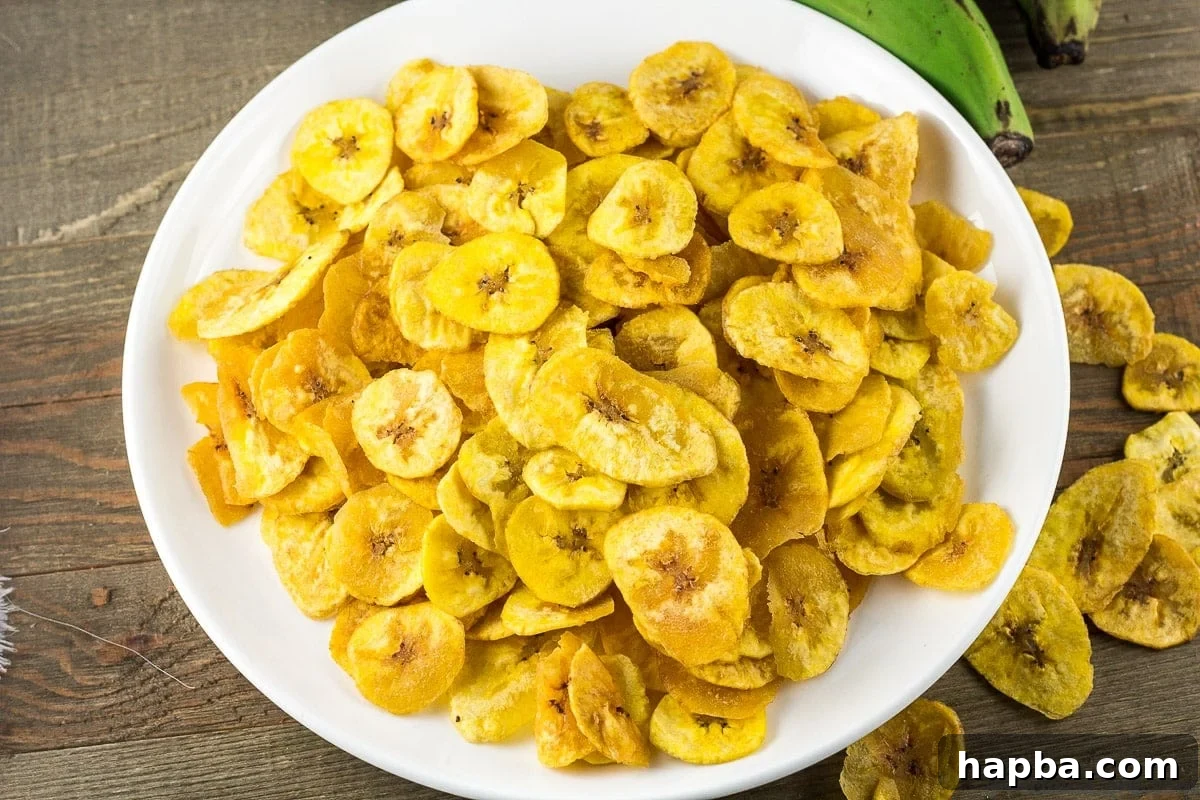
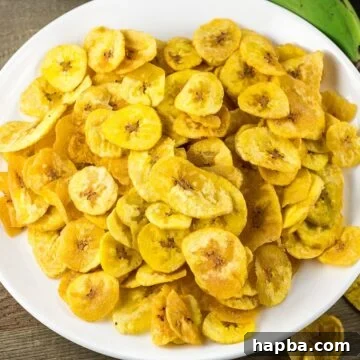
Embark on a culinary journey to create the ultimate homemade plantain chips right in your kitchen! As a cherished snack from my homeland of Cameroon, plantain chips hold a special place in my heart, and I’m excited to share my perfected guide on How To Make Crispy Plantain Chips.
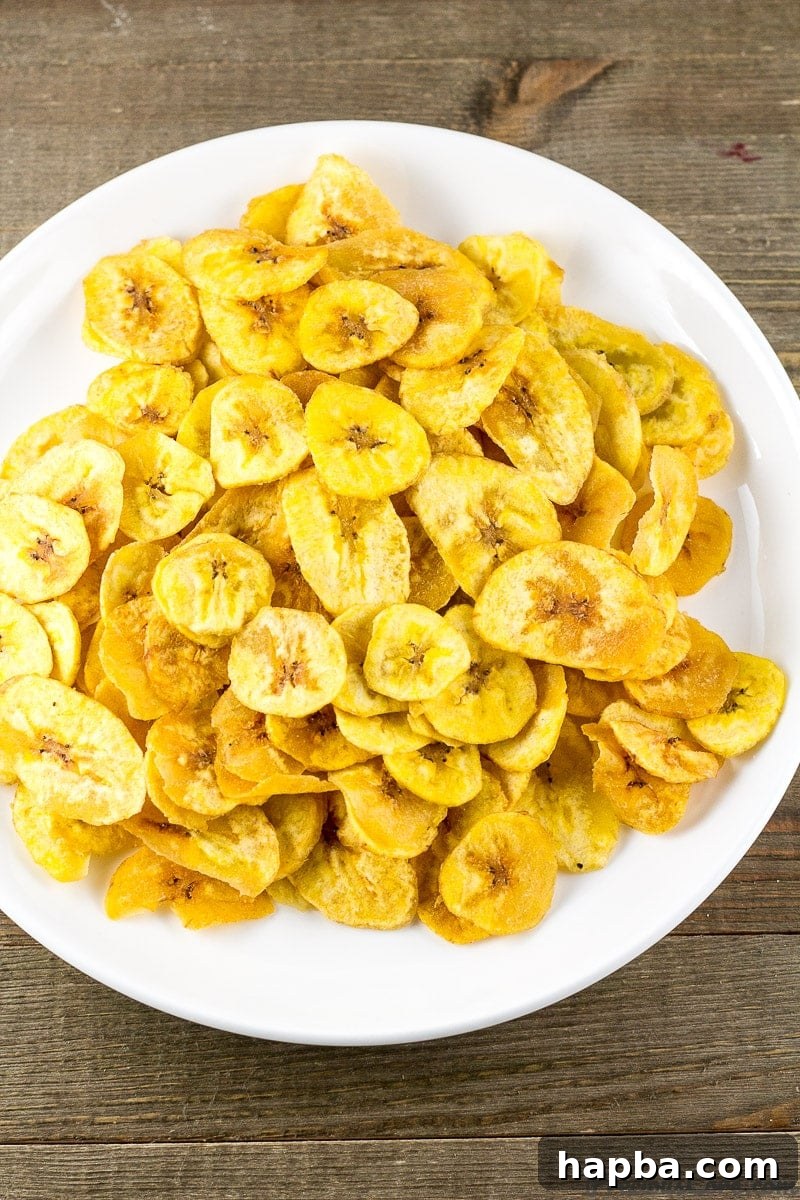
These savory, crunchy delights offer a delightful alternative to traditional potato or tortilla chips, boasting a unique plantain flavor that’s utterly irresistible. They are fantastic on their own, or you can elevate your snacking experience by pairing them with a vibrant 4-Ingredient Guacamole or your favorite creamy dipping sauce. Get ready to discover the secrets to achieving plantain perfection!
If you’re as passionate about plantains as I am, be sure to explore more of my recipes, including Baked Plantains, indulgent Sweet Fried Plantains, and the savory Twice-Fried Plantains (Tostones). Plantains are incredibly versatile, offering endless possibilities for delicious meals and snacks.
Table of Contents
- The Irresistible Crunch of Plantain Chips
- Why Make Homemade Plantain Chips?
- Understanding Plantains: The Key Ingredient
- Essential Ingredients for Perfect Plantain Chips
- Equipment You’ll Need
- Step-by-Step Guide to Making Plantain Chips
- Expert Tips for Unbeatable Crispy Plantain Chips
- Flavor Variations
- Troubleshooting Common Plantain Chip Problems
- Watch How to Make Homemade Plantain Chips
- Serving Suggestions
- Storage Tips for Freshness
- More Plantain Recipes
- How To Make Plantain Chips Recipe
The Irresistible Crunch of Plantain Chips
There’s something uniquely satisfying about perfectly crispy plantain chips. For me, they are an ultimate weakness – a snack so delightful that any attempt to make a large batch for future enjoyment inevitably fails. They disappear almost as soon as they emerge from the frying pan, devoured by my family and me with an enthusiasm that sometimes borders on competitive!
The joy of making these chips at home far surpasses the experience of buying them. It’s not just about the incredible taste; it’s about the simplicity of the process and the fresh, mouth-watering aroma that fills your kitchen. Homemade plantain chips are undeniably addictive. Their distinct plantain-y flavor and remarkable crispiness often lead me to declare them superior to conventional potato chips.
Beyond their delicious taste, plantains offer a naturally vegan and gluten-free base, making them a fantastic choice for various dietary needs. This versatile fruit is a staple in many cuisines, celebrated for its nutritional value and adaptability. Whether you boil them, bake them into Baked Plantain Fries, incorporate them into hearty dishes like Poulet DG (a rich chicken and plantain stew), or transform them into sweet treats like Plantain Puff Puff doughnuts, plantains consistently deliver on flavor and health benefits.
When I seek a truly special indulgence, these crispy, irresistible plantain chips are always my go-to. They are not just a snack; they are a celebration of flavor and texture!
Why Make Homemade Plantain Chips?
While store-bought plantain chips are readily available, there are numerous compelling reasons to opt for the homemade version:
- Unmatched Freshness: Nothing compares to the taste of chips made moments before you eat them. The flavor is more vibrant, and the crunch is far superior.
- Control Over Ingredients: You dictate the quality of oil, the amount of salt, and whether any extra seasonings are added. This is especially beneficial for those with dietary restrictions or who prefer to avoid artificial additives and excessive sodium found in many commercial snacks.
- Cost-Effective: Making your own plantain chips is often significantly cheaper than purchasing pre-packaged bags, especially when buying plantains in bulk.
- Customization: From perfectly savory to subtly sweet, and with various spice levels, you have complete freedom to tailor the flavor profile to your personal preference.
- Dietary Benefits: Knowing exactly what goes into your chips means you can ensure they are truly vegan, gluten-free, and free from unwanted preservatives.
- A Rewarding Experience: There’s immense satisfaction in creating a delicious snack from scratch, impressing yourself and your guests with your culinary prowess.
Understanding Plantains: The Key Ingredient
Often mistaken for bananas, plantains are a distinct starchy fruit, essential in many tropical cuisines. While they look similar, plantains are typically larger, firmer, and must be cooked before eating. Their flavor and texture change dramatically with ripeness, which is crucial for making the perfect chips:
- Green Plantains (Unripe): These are firm, starchy, and have a very mild flavor. They are ideal for savory, crispy chips like the ones in this recipe. As they cook, they achieve a delightful potato-like texture.
- Slightly Yellow Plantains (Semi-Ripe): If the plantains are beginning to show hints of yellow but are still firm to the touch, they will yield chips with a touch of sweetness. These are excellent for those who enjoy a sweet and savory profile. Avoid overly soft or brown plantains for chips, as they contain too much sugar and moisture, making them difficult to crisp up and prone to burning.
Beyond taste, plantains are a nutritional powerhouse, rich in essential vitamins and minerals. They are an excellent source of potassium, vitamin C, vitamin B6, and dietary fiber, contributing to heart health, digestion, and energy levels. Incorporating plantains into your diet is a delicious way to boost your nutrient intake.
Essential Ingredients for Perfect Plantain Chips
Crafting delectable homemade plantain chips requires only a handful of simple ingredients. The quality and type of each ingredient play a significant role in the final outcome:
- Green Plantains: The foundation of our crispy snack. Select plantains that are distinctly green, firm to the touch, and free of any major blemishes. The firmer they are, the starchier and less sweet they will be, resulting in that ideal savory crispness. While slightly yellow, firm plantains can also be used for a sweeter chip, the green ones are paramount for the classic savory version.
- Salt: A simple yet powerful flavor enhancer. Fine sea salt is often preferred for its pure taste and ability to dissolve easily in the salt-water solution, ensuring even seasoning. You can adjust the amount to your liking, but a moderate hand is best to let the natural plantain flavor shine through.
- Oil for Frying: The choice of oil is crucial for achieving that golden crisp texture. Opt for a neutral-flavored oil with a high smoke point, such as vegetable oil, canola oil, sunflower oil, or corn oil. These oils won’t impart unwanted flavors to your chips. While olive oil can be used for shallower frying, its lower smoke point makes it less ideal for deep-frying at the temperatures required for truly crispy chips. Ensure you use enough oil for proper deep frying, allowing the plantain slices to be fully submerged and cook evenly.
That’s it! Just three core ingredients are all you need to create a truly spectacular snack.
Equipment You’ll Need
Having the right tools can make the plantain chip-making process smoother and guarantee superior results:
- Mandoline Slicer: This is arguably the most crucial tool for achieving uniformly thin slices, which is essential for even cooking and ultimate crispiness. A mandoline makes quick work of slicing and ensures consistency that’s hard to achieve with a knife alone. Always use the safety guard to protect your fingers. If you don’t have a mandoline, the slicing side of a box grater or a very sharp knife with steady hands can work.
- Large Heavy-Bottomed Pot or Dutch Oven: Essential for safe deep frying. A heavy bottom ensures even heat distribution, and a large pot prevents oil from splattering excessively.
- Slotted Spoon or Spider Strainer: For safely adding and removing the plantain slices from the hot oil. A spider strainer is particularly effective for scooping out multiple chips at once.
- Paper Towels or Wire Rack: To drain excess oil from the freshly fried chips, ensuring they remain light and crispy. Placing them on a wire rack allows air to circulate around them, preventing sogginess.
- Sharp Paring Knife: For easily peeling the tough skin of green plantains.
- Small Bowl: For mixing the salt-water solution.
- Tongs (Optional): Useful for gently stirring the chips as they fry.
Step-by-Step Guide to Making Plantain Chips
Making crispy plantain chips at home is surprisingly simple, but a few key techniques make all the difference. Follow these steps for perfect results every time:
- 1. Prepare the Plantains:
Begin by peeling your green plantains. Use a sharp paring knife to carefully trim off both ends of each plantain. Then, score a shallow line lengthwise along each ridge of the plantain skin, being careful not to cut too deep into the flesh. Gently lift the skin from the cut portion and peel it away with your hands. Green plantain skin can be quite stubborn, so take your time and use the knife to assist if needed. Once peeled, you might want to briefly rinse them to remove any sticky residue.
- 2. Slice Them Thinly:
This is where precision truly pays off. The thinner and more uniform your slices, the crispier and more evenly cooked your chips will be. The easiest and most effective way to achieve this is by using a mandoline slicer set to its thinnest setting. If you don’t have a mandoline, you can use the slicing side of a box grater, or carefully slice them by hand with a very sharp knife. Aim for slices that are about 1/16 to 1/8 inch thick (approximately 1.5 to 3 mm). Keep the slices separate to prevent them from sticking together.
- 3. Prepare the Salt-Water Solution:
In a small bowl, combine about a quarter cup of water with 1/2 teaspoon of salt. Stir until the salt is fully dissolved. This salt solution will be added to the hot oil, ensuring that every plantain slice gets perfectly seasoned from within as it fries.
- 4. Heat the Oil:
Pour a sufficient amount of neutral oil (about 3-4 inches deep) into your large heavy-bottomed pot or Dutch oven. Heat the oil over medium-high heat. The ideal temperature for frying plantain chips is around 350-375°F (175-190°C). If you don’t have a thermometer, you can test the oil by dropping a tiny piece of plantain into it; if it sizzles vigorously and floats to the top, the oil is ready. Do not let the oil smoke.
- 5. Fry in Batches:
Carefully add a single layer of plantain slices to the hot oil. Avoid overcrowding the pot, as this will drop the oil temperature and lead to soggy, unevenly cooked chips. As soon as you add the plantains, immediately add 2-3 tablespoons of your salt-water solution to the hot oil. Be cautious as the water will cause the oil to splatter vigorously for a few seconds. Gently stir the plantains occasionally with a slotted spoon or tongs to ensure even cooking and prevent sticking.
- 6. Cook Until Golden and Crispy:
Allow the plantain chips to fry for approximately 5-7 minutes per batch, stirring frequently. They will gradually turn a beautiful golden brown and become visibly crispy. The sizzling sound will also diminish as they become drier and crispier. Watch them closely, as they can go from perfectly golden to burnt very quickly.
- 7. Drain and Cool:
Once the chips are golden brown and crispy, use a slotted spoon or spider strainer to remove them from the oil. Transfer them to a plate lined with several layers of paper towels, or place them on a wire rack set over a baking sheet, to drain any excess oil. As they cool, they will continue to crisp up even further, reaching their peak crunchiness. Repeat the frying process with the remaining plantain slices, ensuring the oil returns to temperature between batches.
- 8. Enjoy!
Once cooled to room temperature, your homemade plantain chips are ready to be savored. They are incredibly addictive, so be prepared for them to disappear quickly!
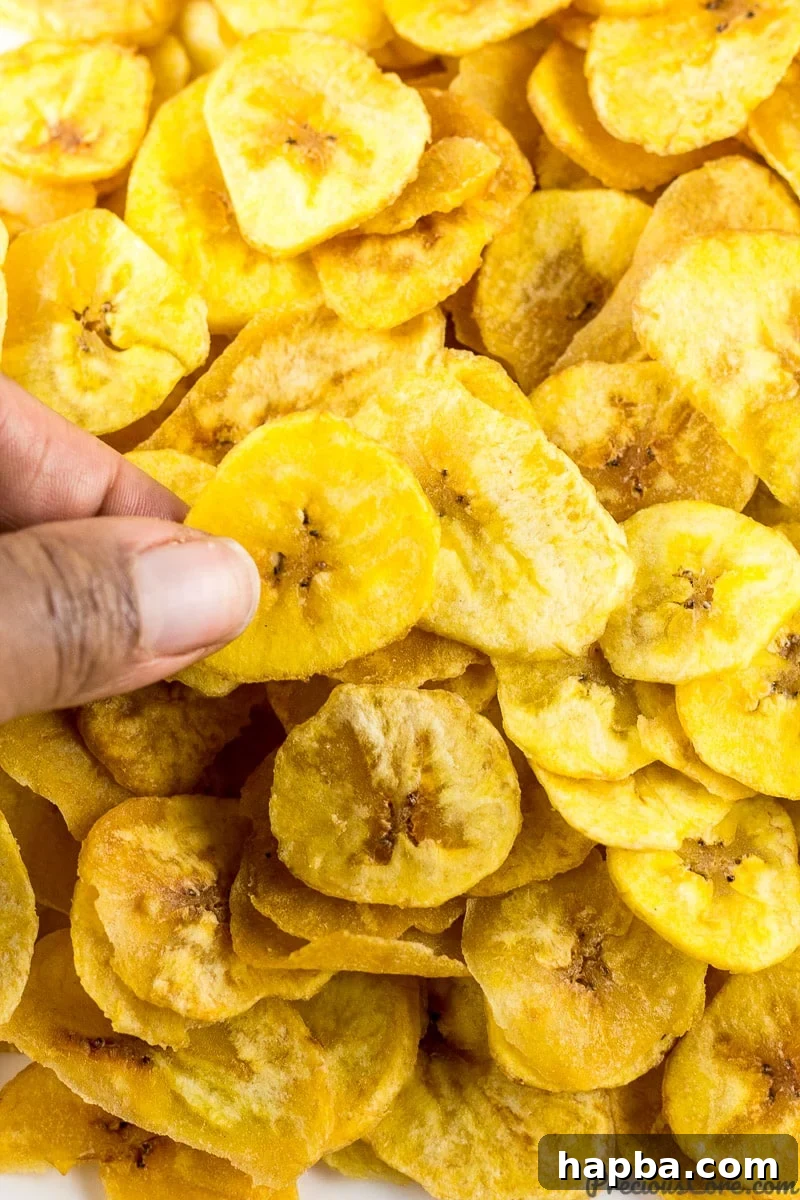
I can barely keep my hands off homemade plantain chips once they’re made. It feels like a delicious trap – I keep eating until every last chip is gone! If you manage to save some, store them in an airtight container at room temperature to maintain their freshness and crunch.
Expert Tips for Unbeatable Crispy Plantain Chips
Achieving perfectly crispy, flavorful plantain chips is an art, but these expert tips will guide you to success:
- Embrace the Salt-Water Solution: Instead of directly sprinkling salt on the plantains, which can lead to uneven seasoning and potential clumping, use a salt-water solution. This method ensures that the salt evenly permeates every nook and cranny of the plantain as it fries, resulting in a perfectly seasoned chip. You can add the salt water to the hot oil either just before adding the sliced plantains or immediately after, to prevent excessive splattering. If adding after the plantains, take a cautious step back as the water will react with the hot oil, causing temporary but intense splatters.
- Master the Slice: The thickness of your plantain slices is paramount. Utilize a mandoline slicer or the slicing side of a box grater to ensure consistently thin and even slices. Uneven slices will cook at different rates, leading to some chips being burnt while others remain soft. Uniformity guarantees that every chip achieves that desired ultra-crispy texture.
- Avoid Overcrowding the Pot: Resist the urge to dump all your sliced plantains into the oil at once. This drastically lowers the oil’s temperature, causing the plantains to steam rather than fry, resulting in soggy chips that stick together. Instead, fry the plantains in small batches, adding them one after another in a single layer to the hot oil. This might seem like extra work, but trust me, it’s worth it for a batch of uniformly ultra-crispy chips.
- Maintain Optimal Oil Temperature: The oil temperature is critical. Too low, and your chips will be greasy and soggy. Too high, and they’ll burn before they crisp up. Aim for 350-375°F (175-190°C). If you don’t have a thermometer, a small piece of plantain should sizzle immediately when dropped in. Adjust your heat source as needed between batches.
- Don’t Underestimate Cooling Time: While the chips will be golden and firm when you remove them from the oil, they develop their ultimate crispiness as they cool. Allow them to cool completely on paper towels or a wire rack. This allows any residual moisture to evaporate and the structure to firm up.
- Prioritize Safety: Working with hot oil requires caution. Always step back when adding the salt-water solution to prevent splashes. Use long-handled tools, and never leave hot oil unattended.
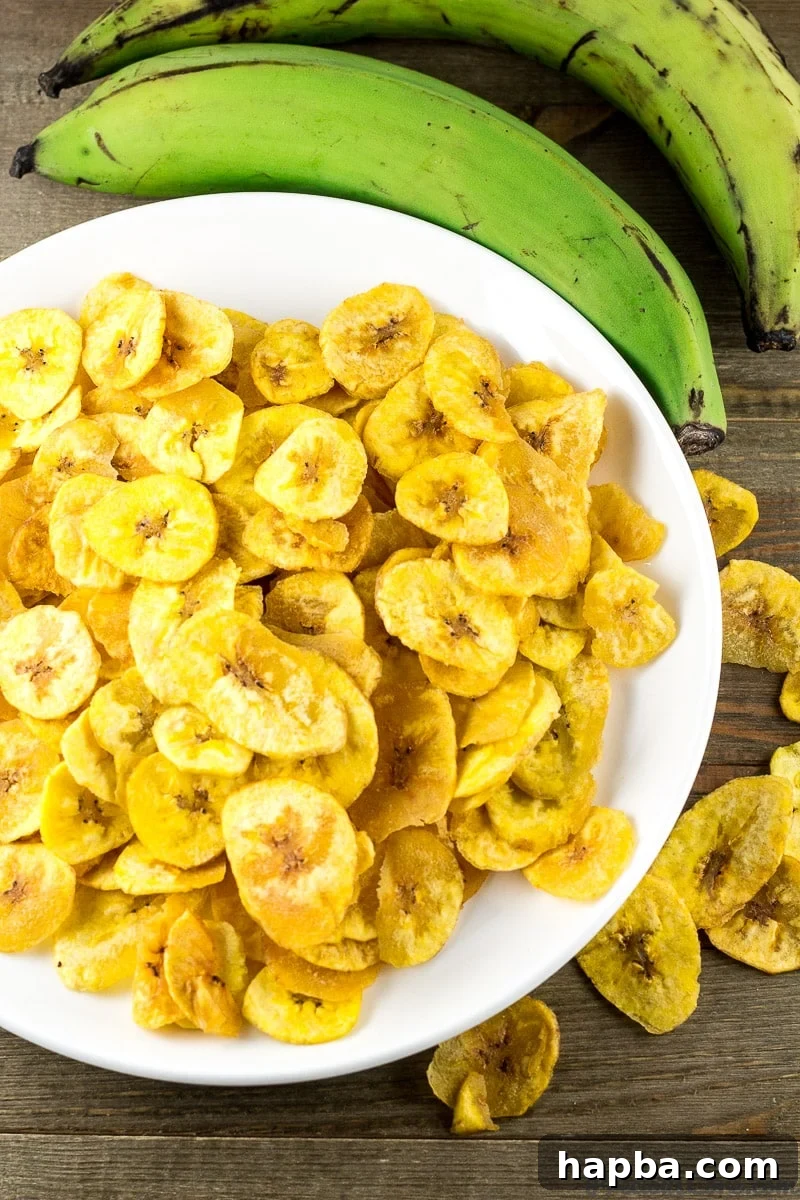
These tips are garnered from years of experience making this beloved snack. Follow them closely, and you’ll be enjoying the finest homemade plantain chips in no time!
Flavor Variations
While classic salted plantain chips are undeniably delicious, don’t hesitate to experiment with different seasonings to add your unique twist:
- Spicy Kick: Sprinkle a pinch of cayenne pepper or chili powder over the freshly fried chips while they are still warm.
- Garlic Infusion: Add a dash of garlic powder for a savory, aromatic flavor.
- Herbal Notes: A tiny sprinkle of dried herbs like oregano or thyme can introduce a subtle complexity.
- Sweet & Savory: If using slightly riper plantains, a light dusting of brown sugar after frying can create a delightful contrast.
- Smoky Flavor: A hint of smoked paprika can add depth and a warm, earthy taste.
Always season your chips immediately after frying while they are still hot, as this allows the seasonings to adhere best.
Troubleshooting Common Plantain Chip Problems
Even with the best intentions, things can sometimes go awry. Here’s how to address common issues when making plantain chips:
- Soggy or Oily Chips:
- Slices too thick: If your plantain slices are too thick, they won’t crisp up properly. Use a mandoline for thin, even slices.
- Oil not hot enough: Low oil temperature causes the chips to absorb too much oil, making them greasy and soft. Ensure the oil reaches 350-375°F (175-190°C).
- Overcrowding the pot: Adding too many slices at once drops the oil temperature. Fry in small batches.
- Insufficient draining: Chips must be drained thoroughly on paper towels or a wire rack to shed excess oil.
- Burnt Chips:
- Oil too hot: If the oil is smoking or causes the chips to brown too quickly, it’s too hot. Reduce the heat.
- Slices too thin: Extremely thin slices will burn very fast. Aim for a consistent thickness.
- Not stirring enough: Chips need to be stirred occasionally to cook evenly and prevent hot spots from burning them.
- Chips Sticking Together:
- Overcrowding: This is the main culprit. Always add plantain slices individually and in small batches.
- Oil not hot enough: If the oil isn’t hot enough, chips might not separate easily.
- Lack of Flavor/Uneven Seasoning:
- Skipping the salt-water solution: This method is key for even flavor.
- Not enough salt: Adjust salt to your preference, but ensure it’s mixed well in the water.
By understanding these common pitfalls, you can easily adjust your technique and achieve perfect plantain chips every time.
I’ve also created a video tutorial to demonstrate each step clearly. Watch the video below, print the recipe, and get ready to make your own batch of irresistible homemade plantain chips!
Watch How to Make Homemade Plantain Chips:
Subscribe to my channel
Subscribe
Serving Suggestions
These versatile plantain chips are perfect on their own, but they also shine when paired with various dips and dishes. Here are some serving suggestions:
4 Ingredient Guacamole Recipe
Mango Avocado Salsa
African Pepper Sauce
Storage Tips for Freshness
To keep your homemade plantain chips delightfully crispy, proper storage is essential:
- Airtight Container: Once completely cooled, store the chips in an airtight container at room temperature. This protects them from moisture in the air, which can make them soggy.
- Avoid Refrigeration: Do not store plantain chips in the refrigerator, as the moisture inside will quickly soften them.
- Shelf Life: Properly stored, homemade plantain chips can remain fresh and crispy for up to 3-5 days. While they are best enjoyed fresh, they still taste great for several days.
- Reviving Stale Chips: If your chips lose some of their crispness over time, you can easily revive them. Spread them in a single layer on a baking sheet and bake in a preheated oven at 300°F (150°C) for 5-10 minutes, or until they crisp up again. Be sure to watch them closely to prevent burning.
More Plantain Recipes
Plantains are a culinary marvel, offering a spectrum of flavors from savory to sweet. Dive into an abundance of plantain recipes that showcase the versatility of this incredible fruit:
Poulet DG Recipe
Plantain Fries
PLANTAIN FRITTATA
Plantain Lasagna – Pastelon
PLANTAIN PUFF PUFF RECIPE
Sweet Fried Plantains
If you make this recipe, please leave a star rating below. Your rating helps others find the recipe, and I love hearing from you! Thank you!
How To Make Crispy Plantain Chips
Pin Recipe
Rate
Print Recipe
Ingredients
- 3 green plantains (unripe and firm to the touch)
- 1/2 teaspoon salt
- Oil for frying (e.g., vegetable, canola, sunflower)
Instructions
-
1. Peel the plantains: Cut off both tips of each green plantain. Make shallow lengthwise cuts along the ridges of the plantain skin. Lift the skin from the cut portion and remove the entire skin with your hands or with the help of the knife.
-
2. Slice thinly: Using a mandoline slicer (recommended for best results), the slicing side of a box grater, or a very sharp knife, slice the peeled plantains into very thin, uniform chips (about 1/16 to 1/8 inch thick).
-
3. Prepare salt water: In a small bowl, mix a quarter cup of water with the salt until fully dissolved. Set this aside.
-
4. Heat oil: Pour oil into a deep pan or Dutch oven, ensuring it’s about 3-4 inches high. Heat the oil over medium-high heat for about 10 minutes until it reaches 350-375°F (175-190°C).
-
5. Fry the chips: Reduce the heat to medium. Carefully add the sliced plantains to the hot oil, one by one, in small batches to avoid overcrowding. Immediately add two tablespoons of the salt-water solution to the oil (be cautious of splattering). Gently stir the plantains frequently for about 5-7 minutes, until they turn golden brown and become crispy.
-
6. Drain and cool: Remove the fried chips with a slotted spoon or spider strainer and place them on paper towels or a wire rack to absorb excess oil. The chips will continue to crisp up as they cool.
-
7. Enjoy or store: Once the chips are fully cold, enjoy them immediately. Store any leftover plantain chips in an airtight container or Ziploc bag at room temperature.
Notes
2. Use the salt-water solution as stipulated in the recipe instead of sprinkling salt directly on the plantains. This ensures that salt gets into every nook and cranny of the plantain, providing superior, even seasoning.
3. Slice the plantains using a mandoline slicer or the slicing side of a box grater for consistently thin and even slices. This uniformity is key for chips that cook evenly and achieve maximum crispiness.
4. Do not gather the sliced plantains and place them into the oil all at once. Overcrowding leads to lower oil temperature, causing chips to stick together and turn out soft. Add your sliced plantains one after the other into the oil for a batch of ultra-crispy chips. You can add the salt water before or immediately after the plantains.
5. Always maintain a safe distance from the hot oil when adding the salt water, as it will cause the oil to splatter vigorously for a short period. Taking a step back helps prevent burns.
Nutrition
Additional Info
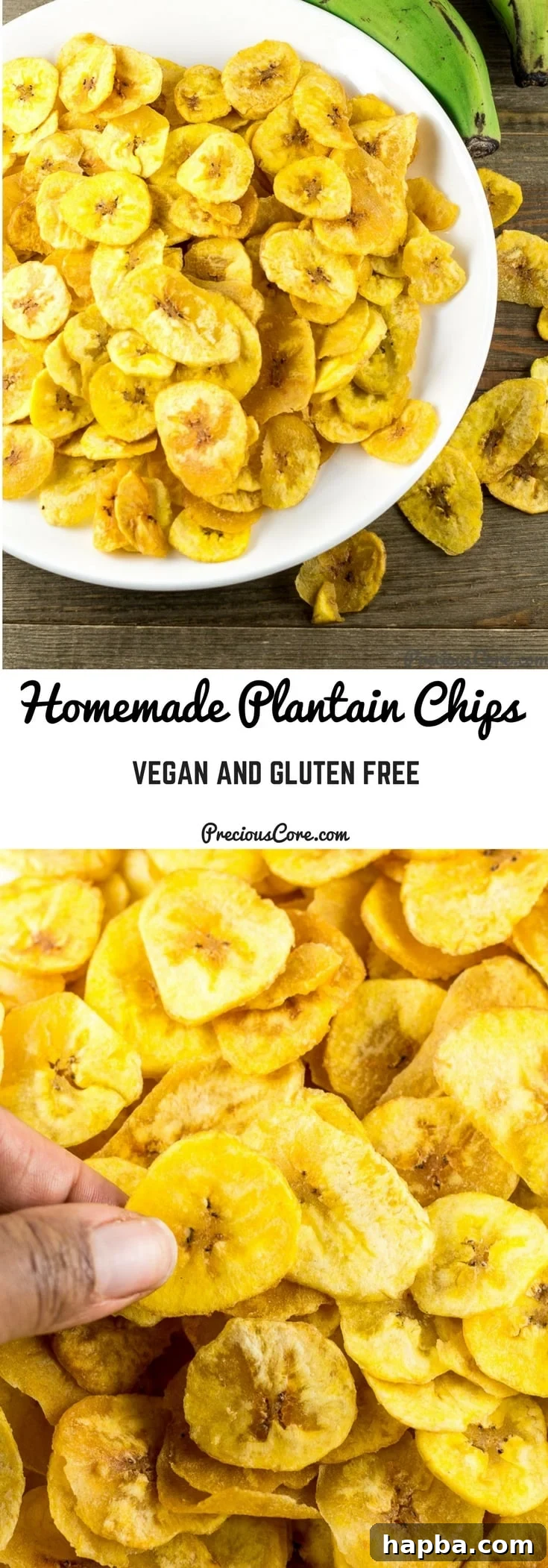
Pin this recipe to save for later:
Writing down your vision is one of the most practical steps you can take. Write it down, read it every day, and let that vision continually inspire you.