
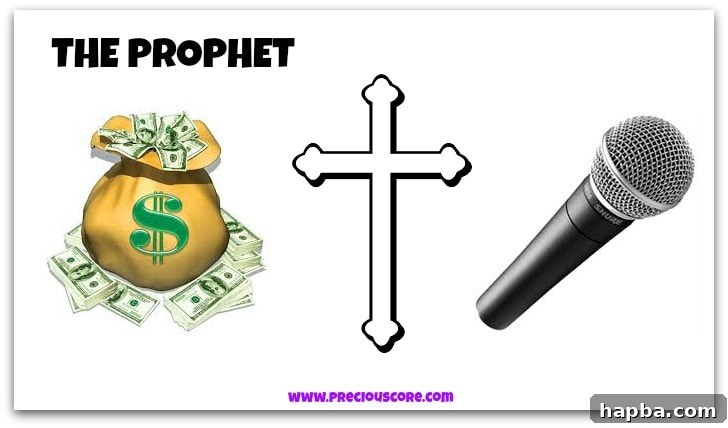
The Unfolding Drama of a Contemporary Prophetic Service: Faith, Finances, and Miracles
In the heart of a bustling urban landscape, within the brightly lit confines of a modern church sanctuary, a weekly ritual of faith, hope, and fervent expectation unfolds. The air hums with anticipation, a prelude to a powerful display of spiritual conviction and communal worship. This isn’t just any Sunday service; it’s a dynamic encounter designed to uplift, inspire, and challenge its congregants on multiple levels, blending traditional teachings with charismatic manifestations.
The service begins with a familiar figure, often referred to simply as “the brother,” making his way to the altar. His demeanor is earnest, his purpose clear: to deliver a message foundational to the church’s principles. He adjusts his reading glasses, allowing a subtle gaze to sweep over the assembled faces before him. His voice, steady and commanding, fills the sanctuary as he begins his sermon, focusing on a cornerstone of biblical stewardship.
The Foundation of Giving: Tithing and Offerings
“Tithing is not merely a suggestion, my beloved brothers and sisters; it is a divine command from the Lord,” he declares, his words resonating with conviction. “It is a principle of honor, a recognition that everything we possess is a blessing from God. Therefore, we are called to return one-tenth of what He has graciously bestowed upon us back to Him, as an act of faith and obedience.” He pauses, allowing his words to sink in, observing the expressions of the congregation.
Sensing a need for reinforcement, he urges the worshippers to turn to Malachi chapter three, verse ten, a passage widely cited in discussions of financial giving within the church. With a practiced hand, he opens his leather-bound Bible, its well-worn pages bearing testament to years of dedicated study and devotion. In a voice that, while slightly croaky, carries profound weight, he reads aloud: “Bring ye all the tithes into the storehouse, that there may be meat in mine house, and prove me now herewith, saith the Lord of hosts, if I will not open you the windows of heaven, and pour you out a blessing, that there shall not be room enough to receive it.”
The passage hangs in the air, a powerful promise intertwined with an instruction. Following this scriptural mandate, he extends an invitation for the faithful to bring forth their tithes. A significant portion of the congregation responds, rising from their seats. Clutching white envelopes, symbols of their commitment and offering, they proceed towards the front of the sanctuary. As they kneel, a special moment of prayer is dedicated to them, invoking blessings and divine favor upon their lives and their obedience.
The spirit of giving continues as the brother then calls for regular Sunday offerings. Again, a stream of white envelopes makes its way to the stage, carefully placed into beautifully decorated baskets. This act of giving is not somber but jubilant, accompanied by uplifting singing and spontaneous dancing, transforming the collection into an act of joyous celebration and heartfelt worship, embodying the community’s gratitude and faith.
The Dawn of a Prophetic Encounter
As the giving concludes, the brother gracefully hands the microphone to the senior pastor. The atmosphere subtly shifts, charged with a new layer of expectation. The pastor’s voice, clear and resonant, announces with palpable excitement that today’s gathering is a “prophetic service.” This declaration electrifies the room, preparing hearts and minds for an experience beyond the ordinary.
He instructs the congregants to engage with their neighbors, not just in a casual greeting, but with a declaration of faith. In a powerful, unified chorus, voices rise across the sanctuary, proclaiming, “My blessing will be greater than yours!” This communal affirmation sets a tone of competitive faith and individual expectation for divine favor, amplifying the collective energy of the service.
The pastor then calls for everyone to rise, preparing to receive “the prophet.” Immediately, the entire congregation stands, eyes gleaming with eagerness and belief. Moments later, a slender, brown-skinned young man, seemingly in his late twenties, steps forward. Clad in a striking, bright white cassock that seems to amplify his presence, he grabs the microphone with an air of practiced confidence.
“Somebody give God praise!” he exclaims, his voice cutting through the rising excitement. The response is instantaneous and overwhelming: a cacophony of shouts, screams, and declarations of “Oooooh Yaaaaay!!! Alleluyah! Yes! Yes! Yes! Uhhhhh!” Each utterance is a raw expression of fervent devotion, escalating the collective energy to a fever pitch. The prophet, feeding off this energy, urges them further: “Look, I want you to praise God more than you have ever done before!” The ensuing screams become deafening, signaling that the spiritual “show” has truly begun.
The prophet begins to sing, his voice melodic and strong, as he paces with dynamic energy from one end of the altar to the other. He then swaggers down the aisle, his white cassock swaying with each confident stride, creating a visually compelling spectacle that complements his vibrant performance. His movements are fluid, almost theatrical, captivating the attention of every eye in the room.
Transitioning from song, the prophet delivers a general speech on the transformative power of Christianity. “Listen to me,” he declares, his voice now imbued with a profound seriousness, “salvation is the absolute best thing that can happen to anybody! It is a gateway to a life redefined by divine purpose and boundless hope.” The congregation responds with enthusiastic shouts of agreement, their collective voices echoing through the hall. Prominently, a woman standing at the back, her face beaming with an almost ecstatic joy, shouts her assent. Her expressions of agreement are punctuated by the sheen of oil glistening over her carefully applied foundation. Occasionally, she hobbles across the hall on her towering six-inch heels, her movements a testament to her unbridled enthusiasm, despite the impracticality of her footwear.
Individual Prophecies and Manifestations of Power
With an abrupt shift in focus, the prophet beckons to a brother seated in the first row, impeccably dressed in a black suit. The brother, visibly moved, makes his way to the stage. The prophet fixes his gaze upon him and begins to speak, his voice now imbued with an otherworldly authority. “I see great things happening in your life! God is about to do something truly extraordinary, something that will utterly surprise you and transform your path,” he prophesies, painting a vivid picture of future blessings and divine intervention.
He then lays his right hand firmly on the brother’s forehead, a gesture imbued with spiritual power, and gives a gentle push. The brother stumbles backward a few steps in quick succession. Another church member, strategically positioned behind him, is ready to catch him should he fall. The brother falters, maintaining his balance but clearly swayed by the spiritual force. “Fire!” the prophet shouts, his voice booming with triumphant declaration. The congregation erupts in applause, an affirmation of the perceived divine energy at work.
Next, the prophet turns his attention to a sister adorned with a scarf so voluminous it obstructs the view of those seated directly behind her. He begins to “see” things about her in the spirit, relaying these unique insights to the heavily accessorized woman. While specific in detail to her situation, the prophetic language he uses bears a striking resemblance to the declarations made earlier to the brother in suit, suggesting a pattern in his ministry. In a dramatic turn, the prophet retrieves a pristine white bed sheet and carefully spreads it across the altar. He then procures a spray bottle and mists a liquid over the sheet. He commands the woman to walk upon it. With an air of majestic grace and unwavering faith, she steps onto the sheet. The congregation, mesmerized, claps and cheers, celebrating what they perceive as a direct encounter with divine power.
A Call for Healing and the Sowing of Seeds
The service then transitions into a segment dedicated to healing. The prophet issues a compelling call for the sick and afflicted to move forward. A number of individuals, seeking divine intervention for their ailments, converge at the front. Among them is a prominent figure within the church, the prophetess herself, who had recently been struck by a mysterious illness that left her profoundly swollen and almost unrecognizable. With hands raised high in supplication, they await the prophet’s touch and prayer.
He moves among them, praying intensely. In a continuation of his earlier method, he pushes several of the supplicants, mirroring the action performed on the brother in suit. As they fall, caught by helpers, the prayer is deemed complete, and the congregation once again claps in collective affirmation. A select, privileged few are then invited to walk upon the special white bed sheet, an act symbolizing a deeper cleansing or a more profound reception of divine grace.
With the healing session concluded, the prophet’s attention shifts once more, this time to a financial appeal. “It is now time to sow your seed,” he announces, his voice firm yet inviting. “Just come forward and sow your seed. If you do not have cash here, you could write a check.” This call is met with a swift response. Members of the congregation reach for their checkbooks, diligently filling them out, while others retrieve their familiar white envelopes. A diverse group of “seed sowers” approaches the altar, but a common thread unites their actions: their “seed” is invariably monetary, an investment of faith for future blessings, financial or otherwise.
After a powerful display of prophecy, healing, and the collection of offerings, the prophet prepares to depart the stage. He gathers his now infamous white bed sheet, holding it close to himself, his lips moving in a quiet, almost inaudible mumble, perhaps in prayer or personal reflection. His exit marks the climax of the prophetic segment of the service, leaving the congregation buzzing with a potent mix of spiritual fervor and reflection.
Continuing the Spiritual Journey: Post-Service Access
Following the prophet’s departure, the senior pastor steps back onto the stage, bringing the service to its formal close while also extending an intriguing invitation. “All those who desire to see the prophet for further personal consultation can do so after the service,” he declares, adding a crucial condition that resonates with the earlier appeals. “However, you must bring a prophetic seed with you.” He repeats this instruction for emphasis, ensuring its message is clearly received: “If you want to see the prophet after service, you are welcome to come to my office, but make sure you come with a prophetic seed.” This final announcement subtly reinforces the transactional nature of accessing heightened spiritual interaction, a common practice in many contemporary charismatic ministries.
The service concludes, leaving congregants to ponder the powerful sermons, the vibrant worship, the compelling prophecies, and the tangible acts of giving that defined their spiritual experience. It is a testament to a modern approach to faith, where the sacred and the immediate intertwine, promising divine intervention and blessing for those who participate fully in its dynamic rituals.